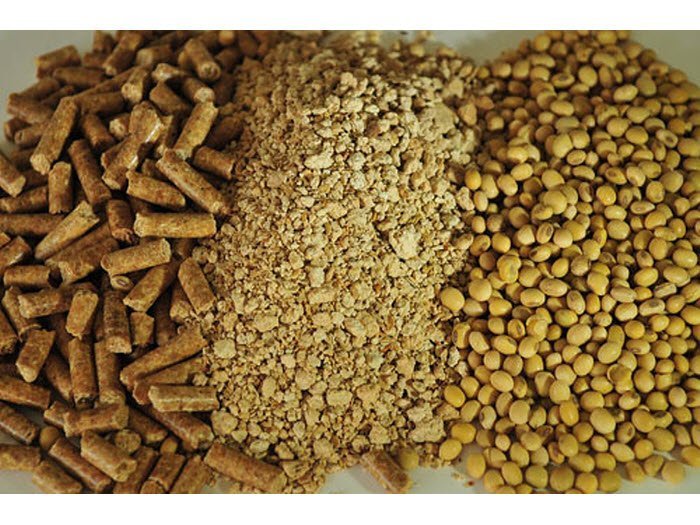
Soybeans are the most widely grown oilseed crop in the world.
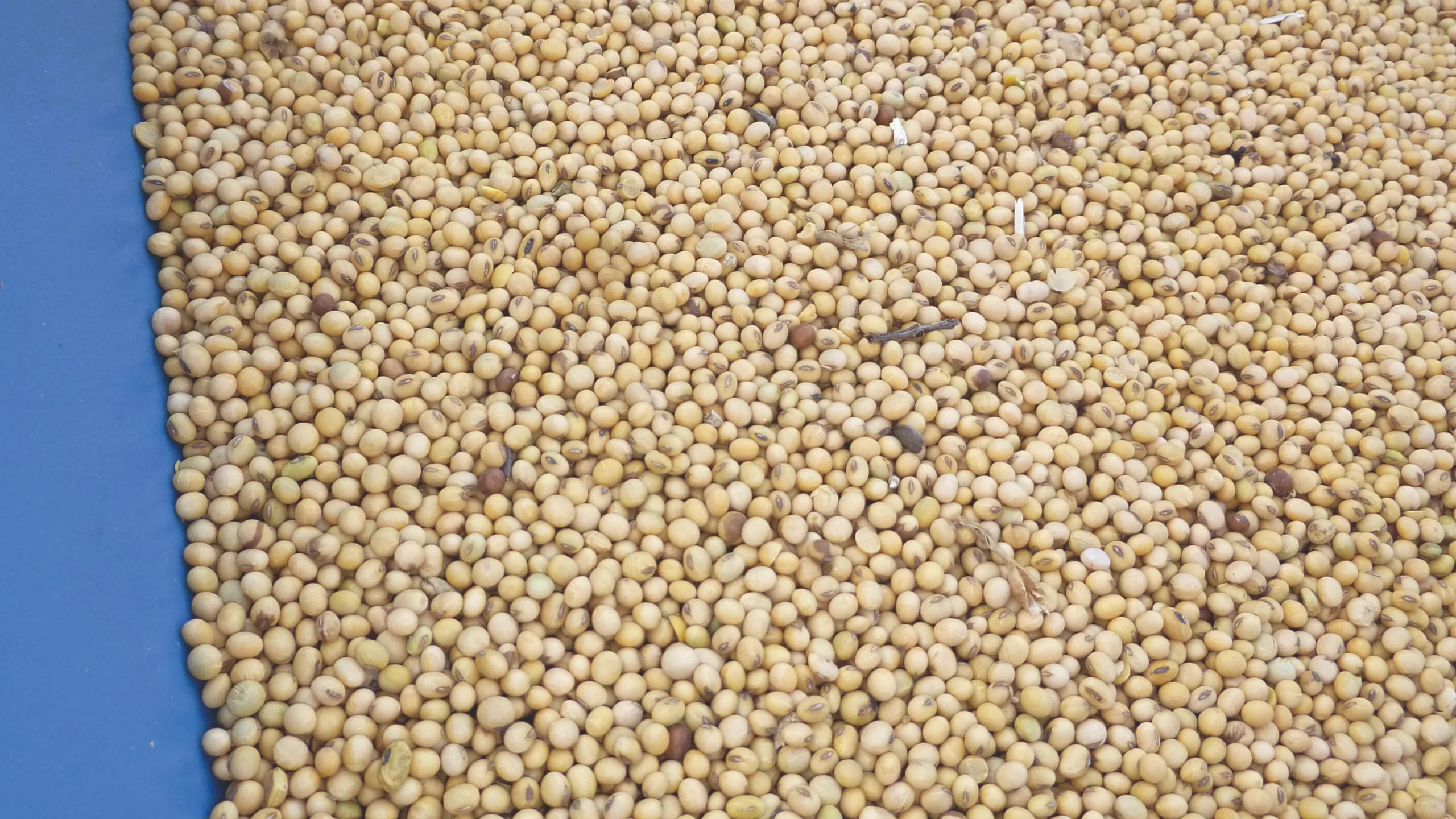
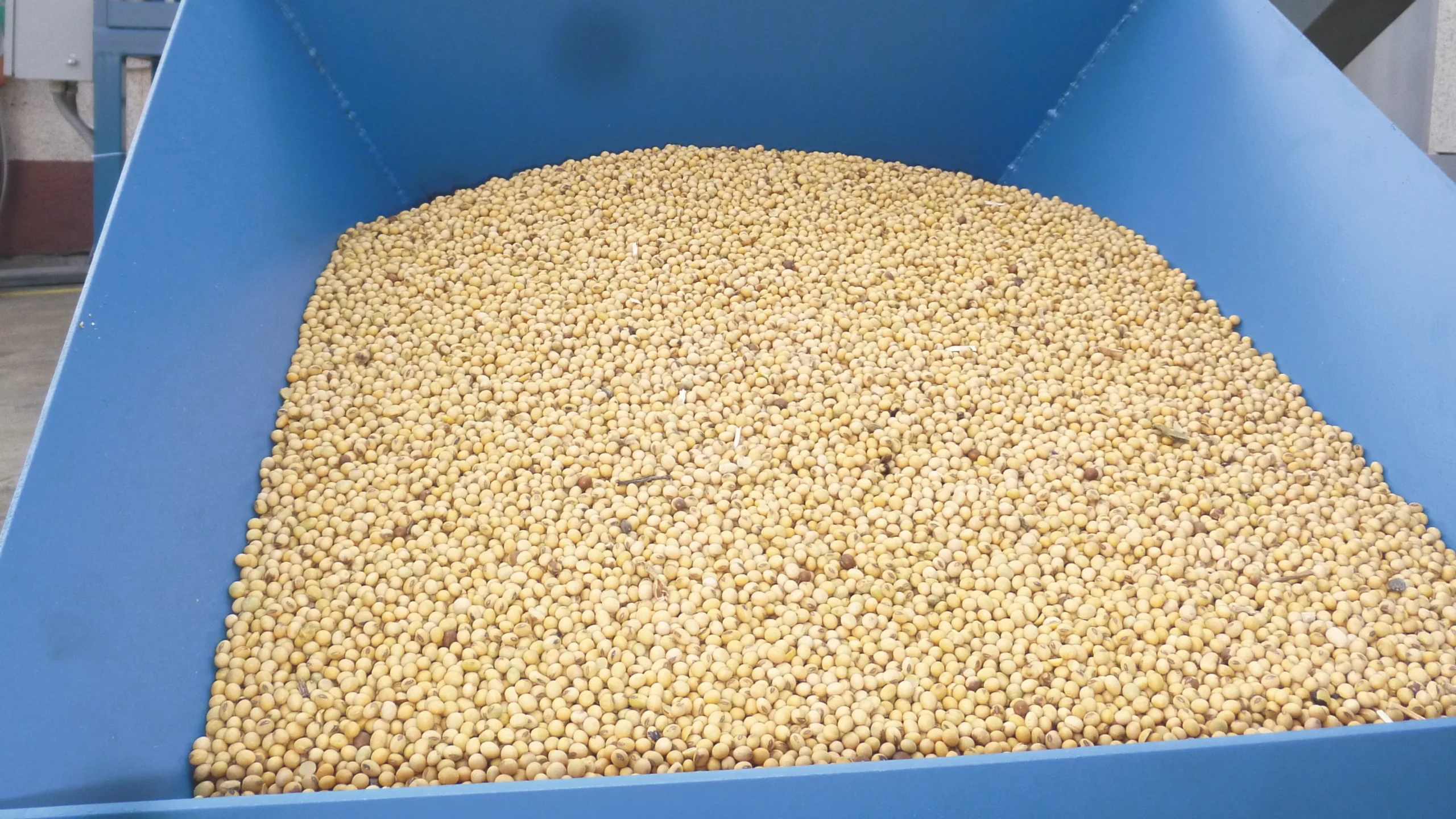
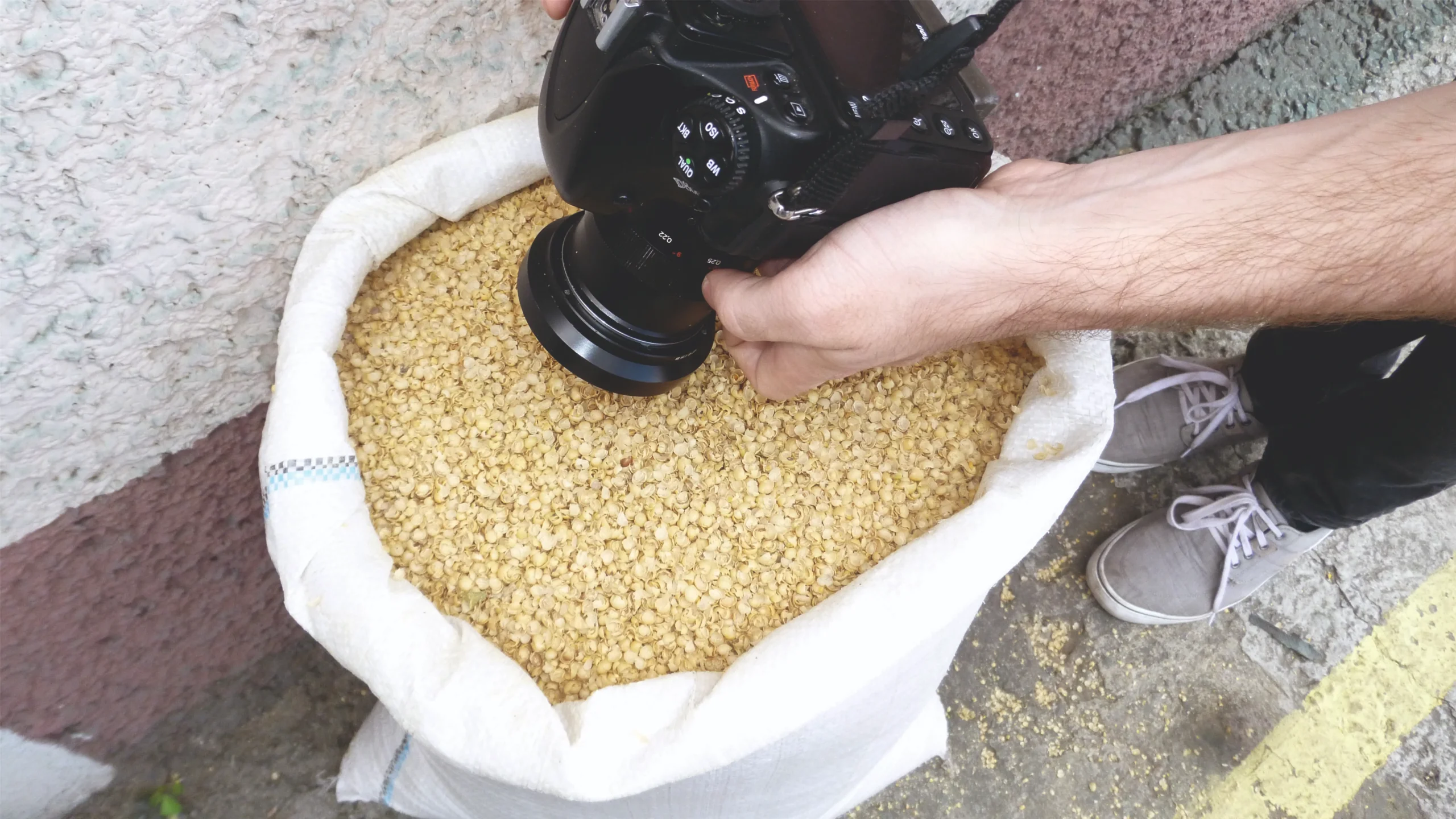
Soybeans before processing
However, all the soy is used exclusively in processed form.
Soybeans are processed to achieve the following technological objectives:
- reduction of harmful substances in soybeans – trypsin inhibitors (urease activity)
- increased digestibility of full-fat soybeans
- increased protein content in soybean meal
- production of soybean oil
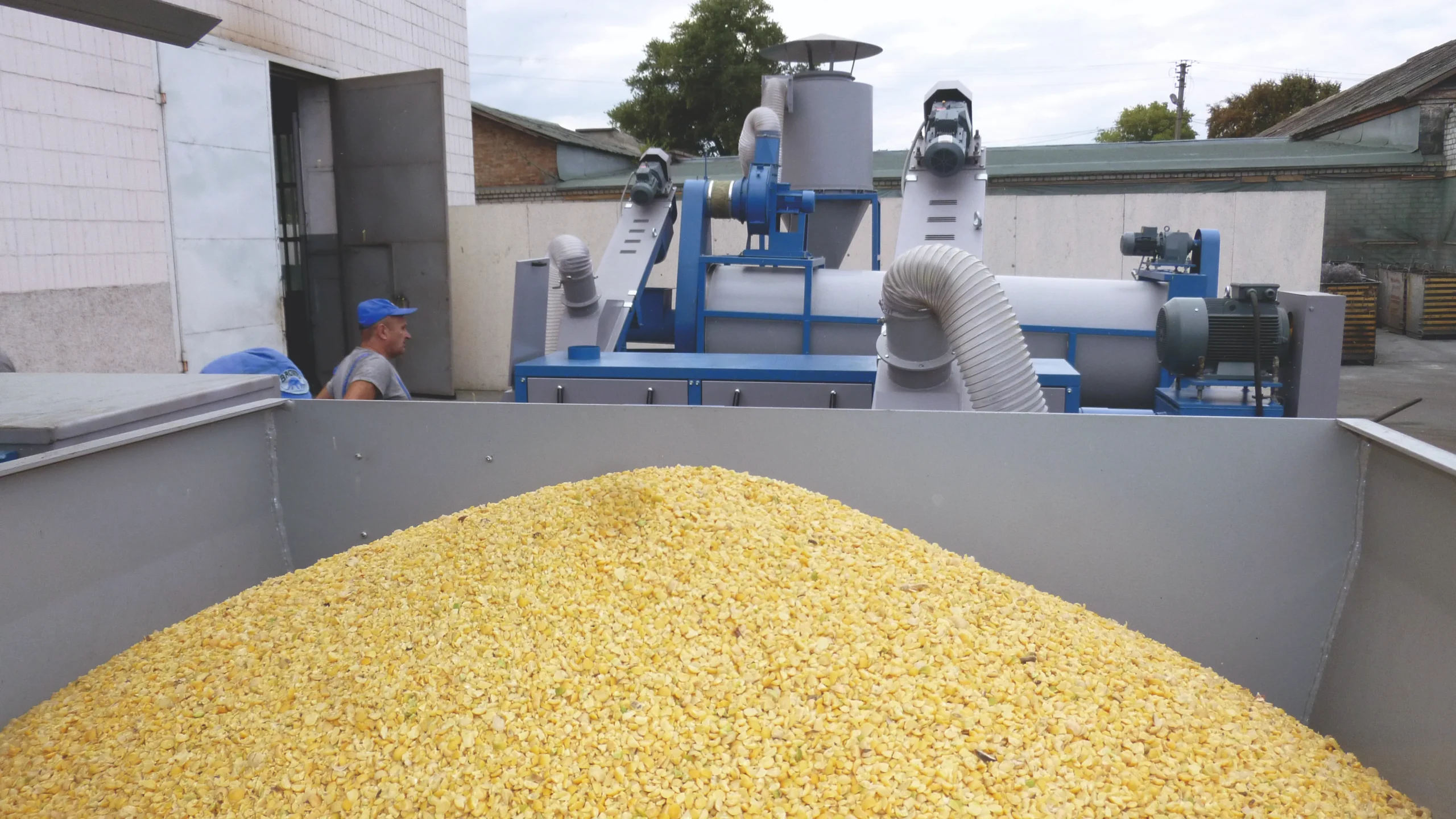
To increase the protein content of the product, soybeans are separated into hulls (5–7%) and kernels (93–95%) in a crushing and dehulling complex.
This is done prior to extrusion.
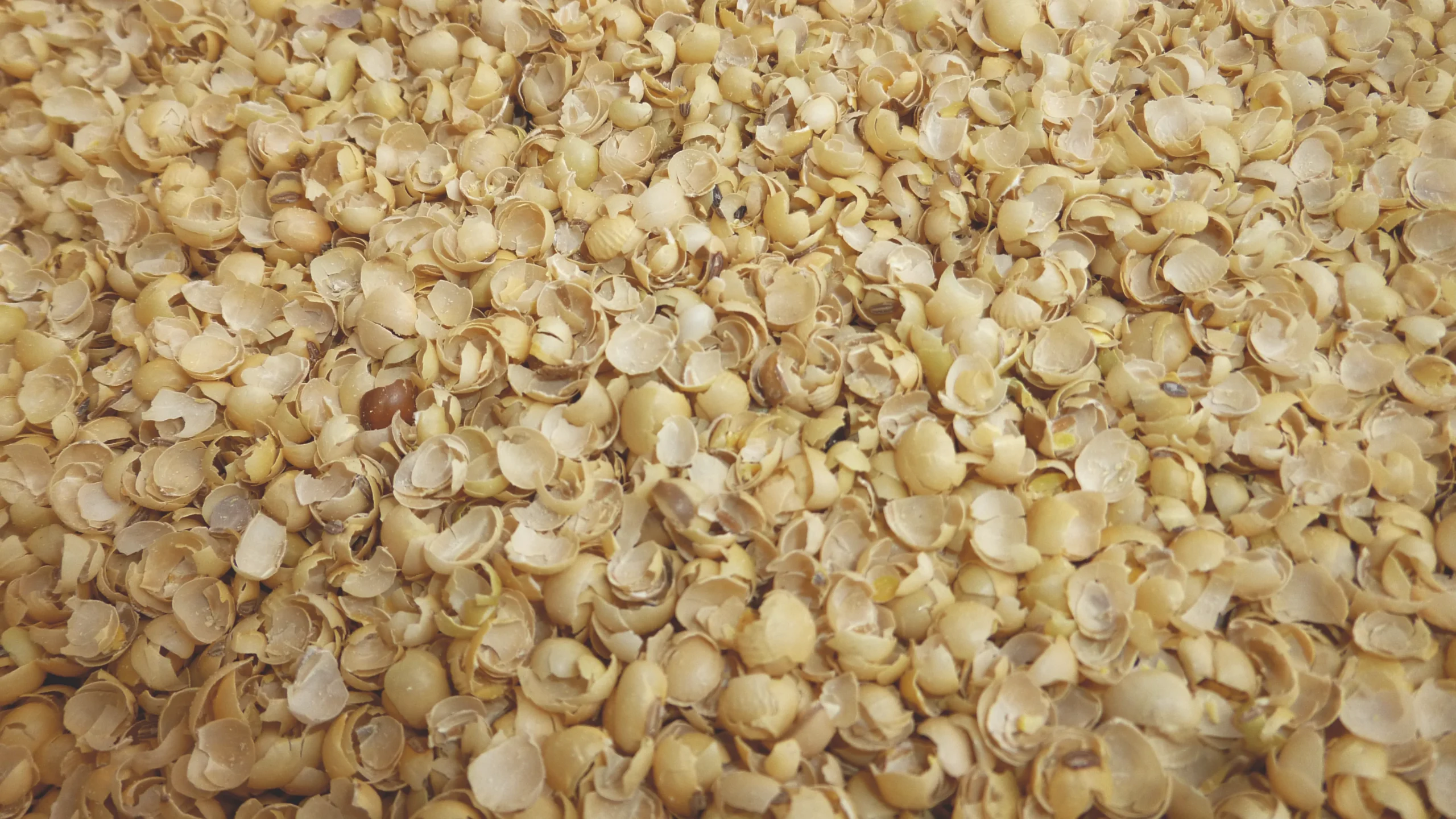
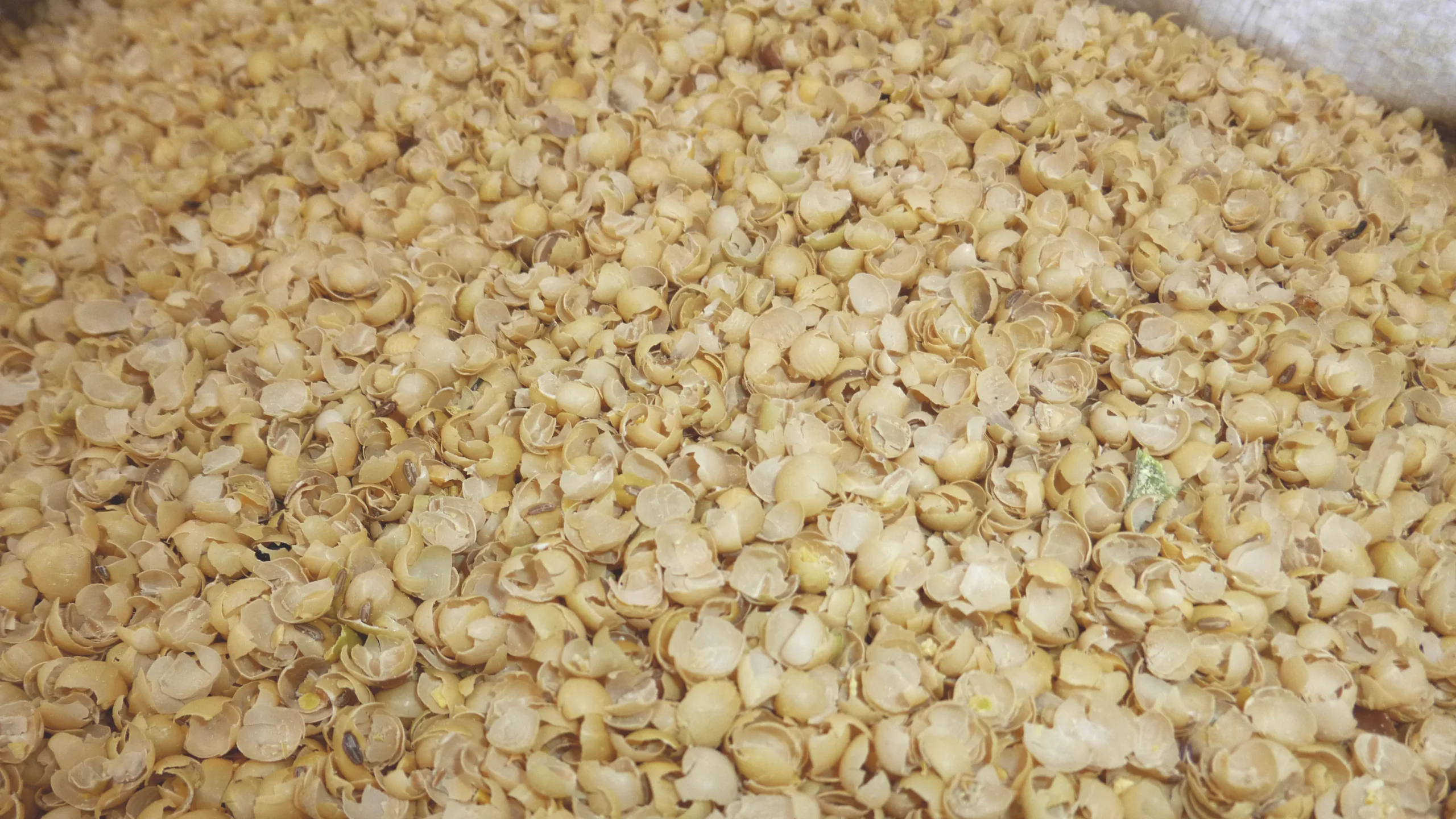
Soybean hull
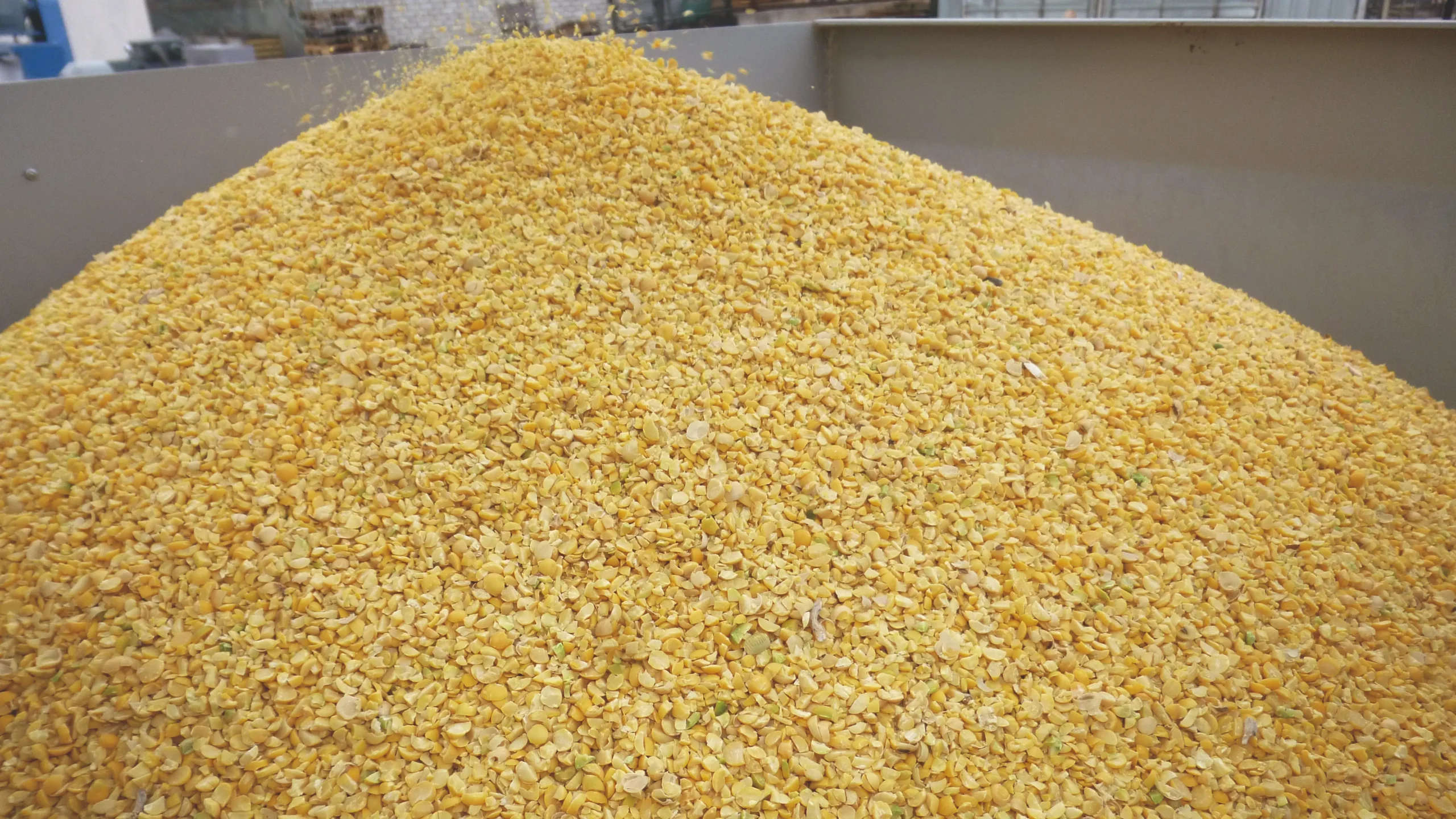
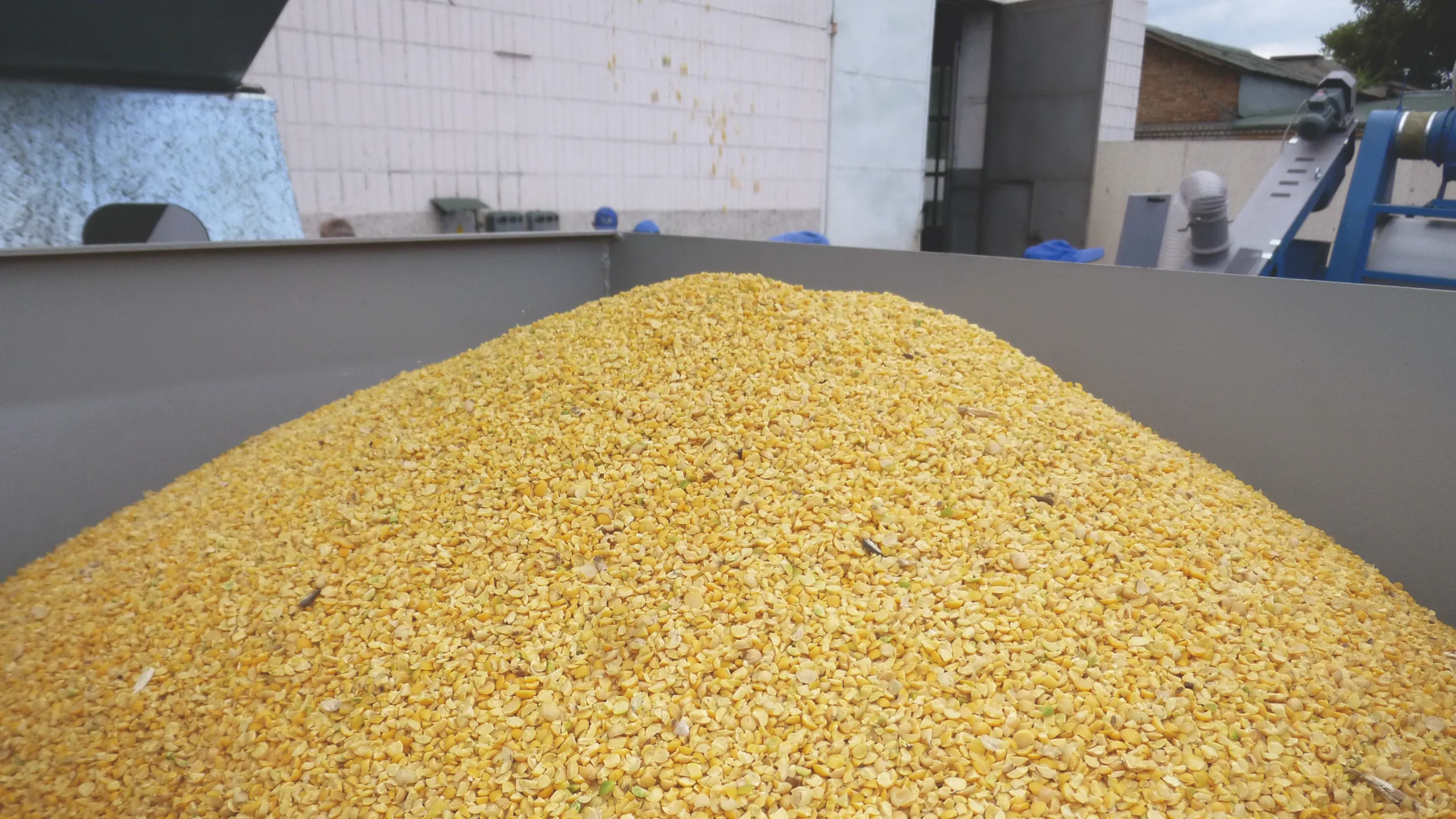
Soybean kernel
Without treatment, the urease level in soybeans is 2–3 pH.
Consumption of such a product (or its use as animal feed) leads to pancreatic dysfunction in humans or animals.
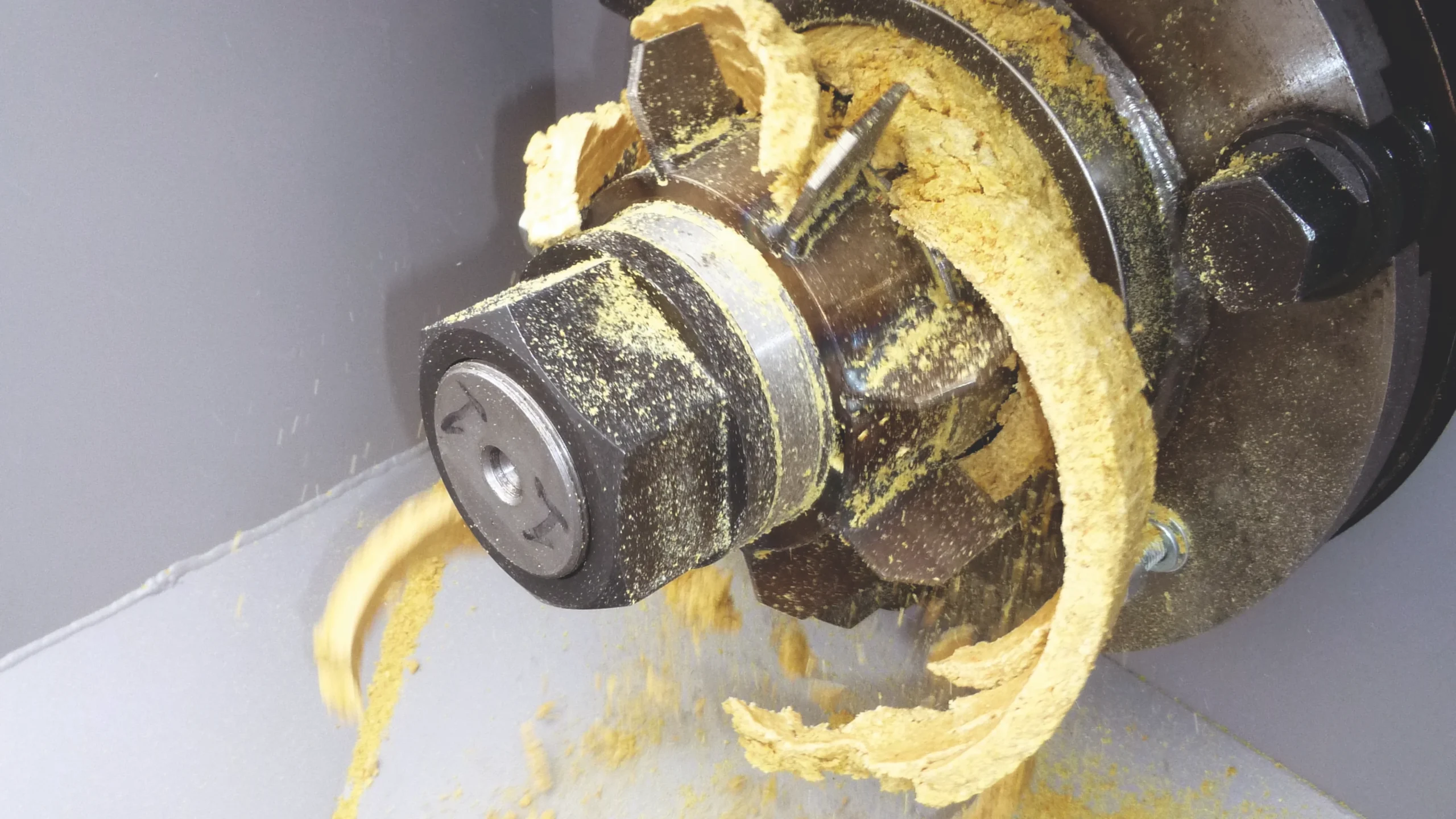
Grinding and short-term processing (up to 30 seconds) at high temperatures (120–150°C) and pressures (up to 30 atm) in an extruder reduce the urease level to 0.05–0.2 pH units.
Extruded full-fat soy is free from harmful substances—specifically, trypsin inhibitors.
It is ready for consumption or use as animal feed.
It retains:
- high-quality soy protein (up to 35%)
- soybean oil (up to 25%)
Extrusion ruptures the fat cells in soybeans, resulting in a product that feels oily to the touch. On the one hand, this makes it significantly easier to extract oil from full-fat soy and improves its digestibility. On the other hand, the ruptured fat cells are directly exposed to atmospheric oxygen and oxidize rapidly. While raw soybeans can be stored for up to 18 months, full-fat soy can be stored for no more than one month after extrusion.
Further processing of extruded soybeans will make it possible to:
- extend shelf life and reduce the rate of product oxidation
- increase the protein content of the soybean cake (to 40–43%)
- obtain between 70 and 180 kg of soybean oil per tonne of soybeans
Upon exiting the extruder, the full-fat soybean product has a temperature of 120–150°C and releases moisture in the form of steam.
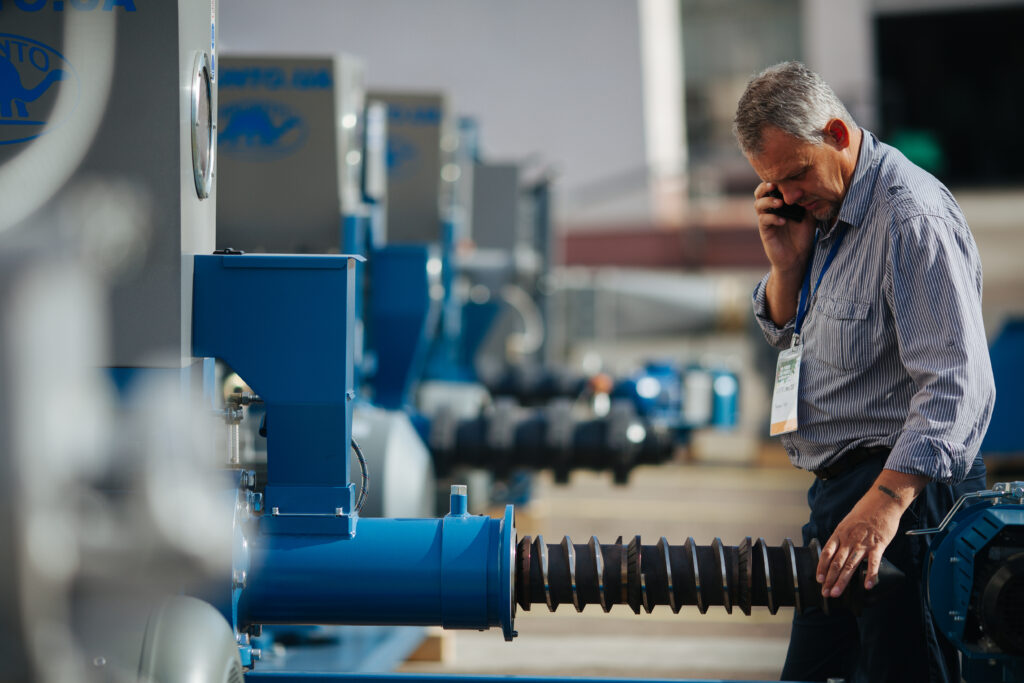
The extrudate enters a vented screw feeder and is conveyed to the oil press.
Inside the feeder, the product temperature drops to 90–110°C.
A damper integrated into the feeder allows for the regulation of the amount of steam either removed from or retained in the product. This is crucial for controlling the oil extraction process within the press.
The raw material enters the mechanical oil press and is compressed within the press cage.
Soybean oil is squeezed out through the gaps in the press cage.
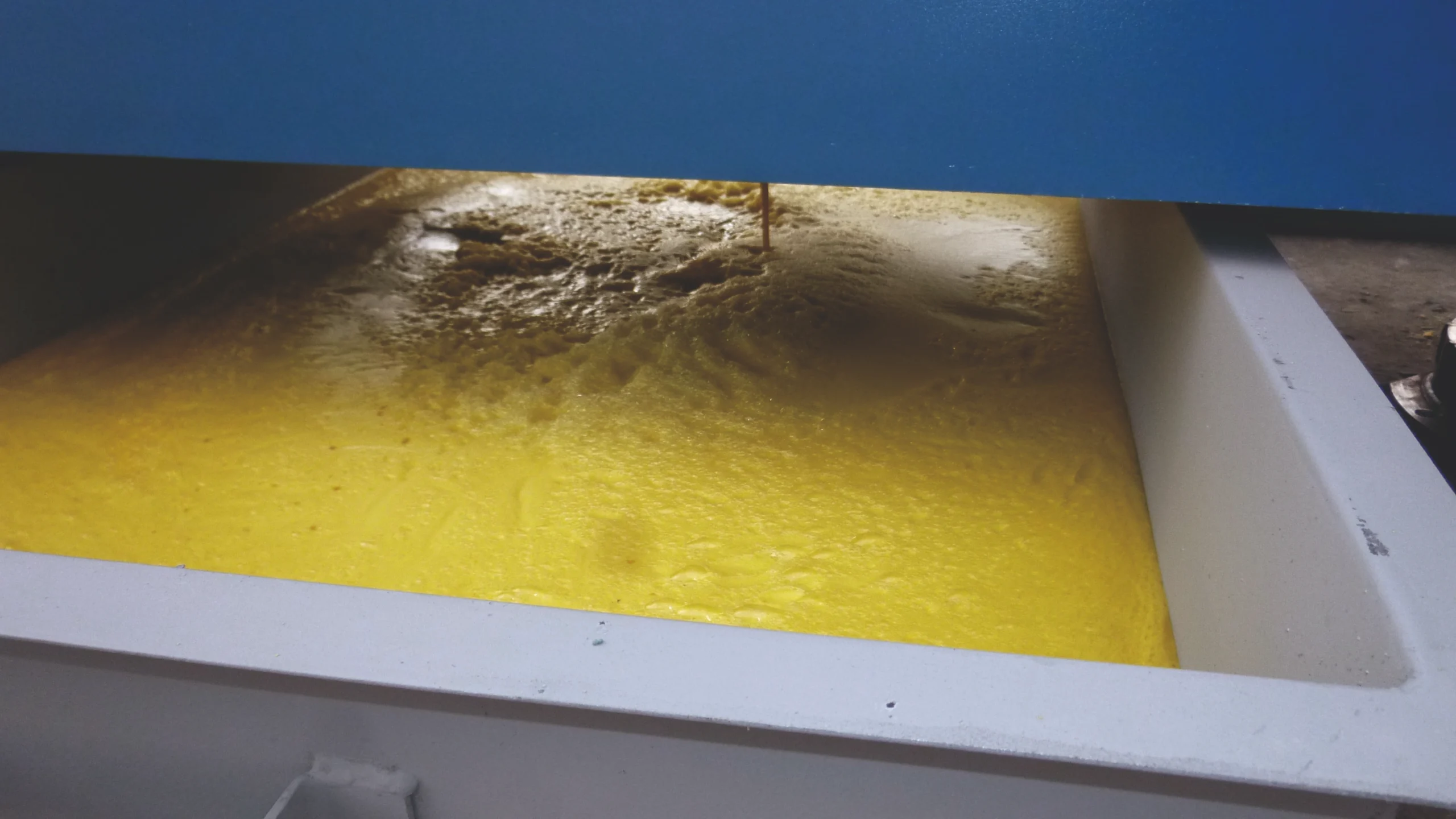
Soybean oil flows from the press
After the extraction of soybean oil, soybean cake heated to 100–120°C (with an oil content of 7–8%) emerges from the press.
Soybean cake is valuable due to its protein content of up to 40–43%.
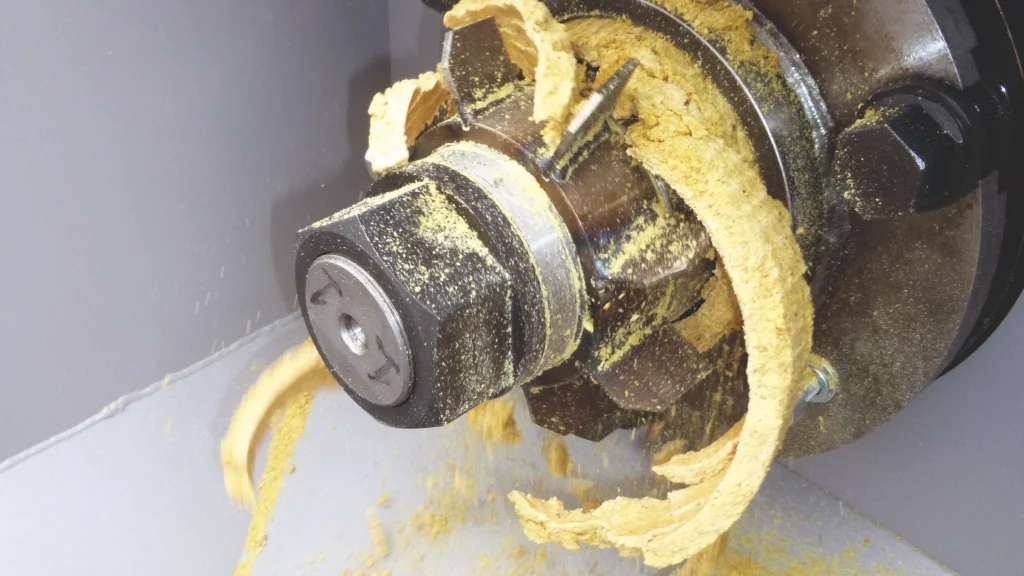
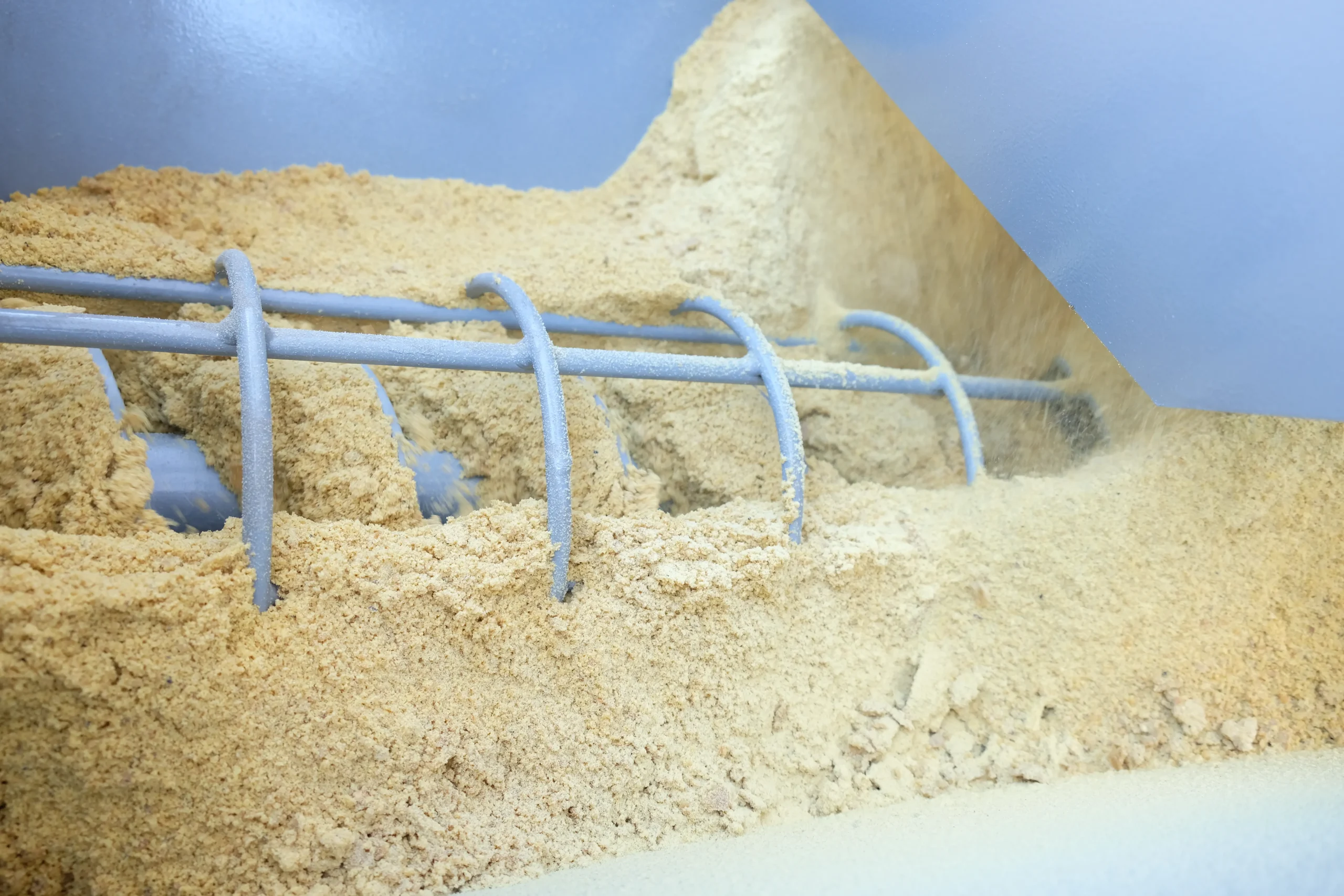
Soybean meal (post-oil extraction)
The oil cake is transferred from the oil press to a cooler. There, its temperature drops from 100–120°C to ambient temperature plus 10–15°C within 2–3 minutes.
Rapid cooling protects the proteins in the oil cake from structural degradation.
Once cooled, the oil cake can be stored for several months without loss of quality.
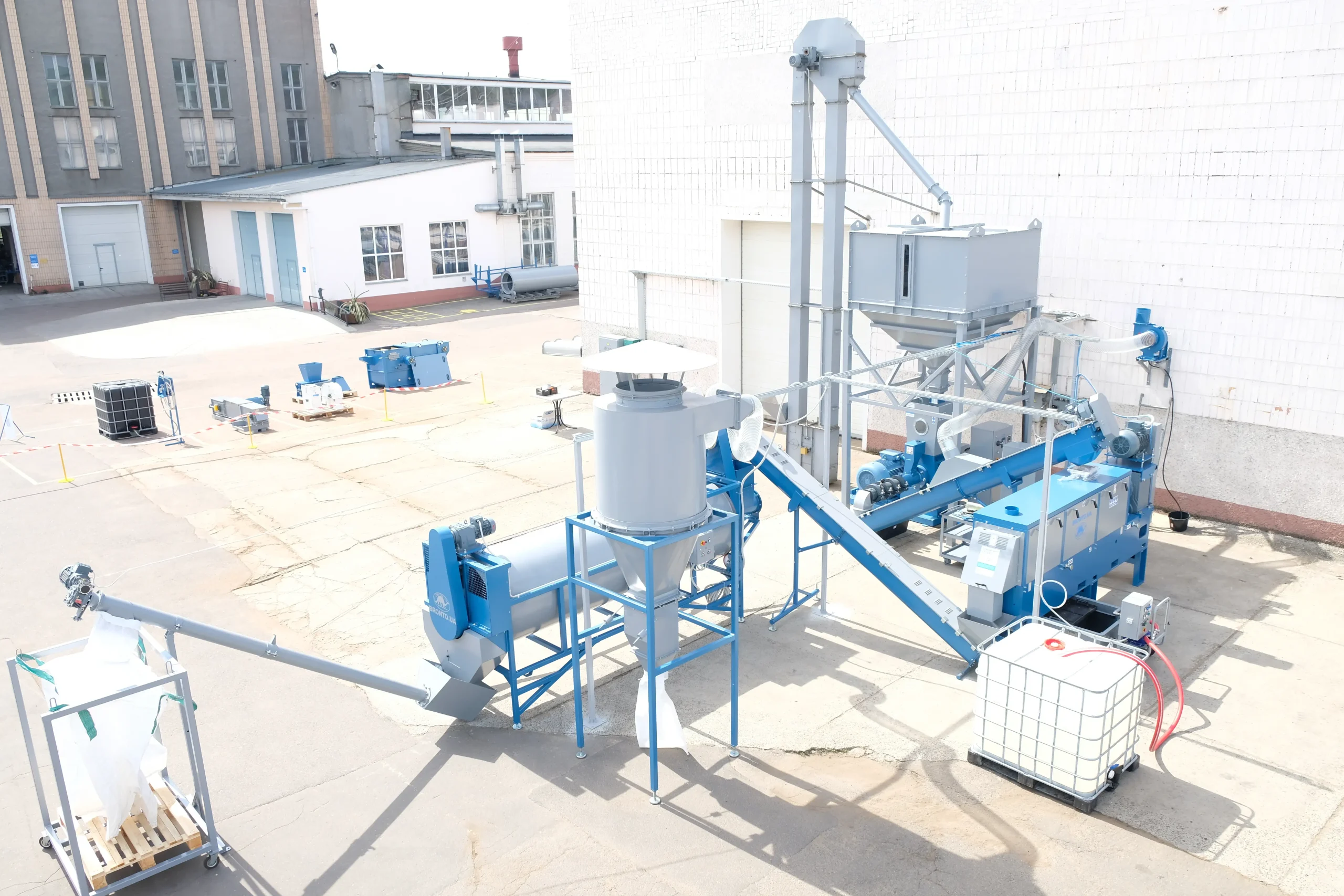
The fundamental technological chain for soybean processing looks like this:
dehulling crusher – extruder – ventilated feeder – oil press – meal cooler