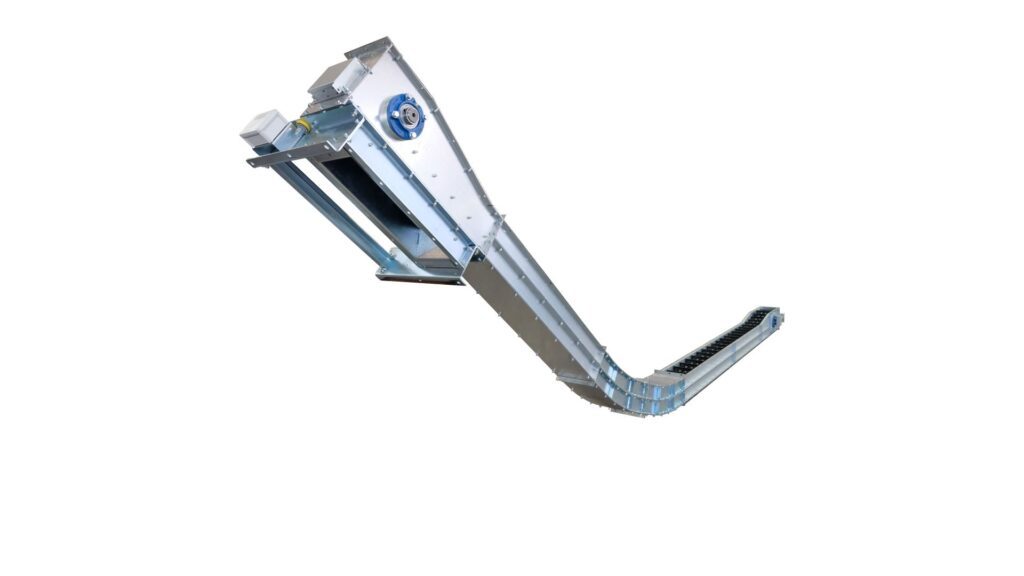
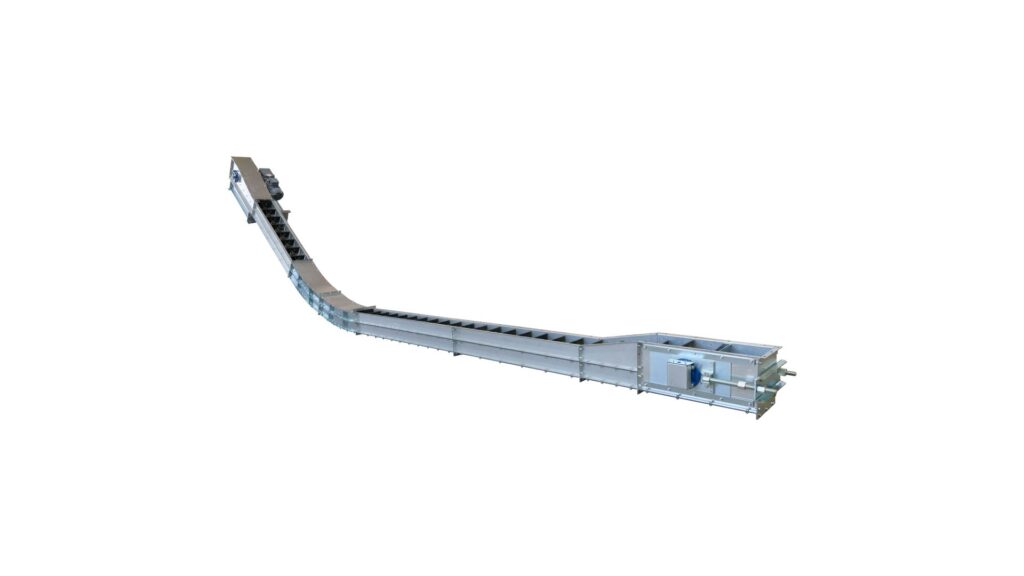
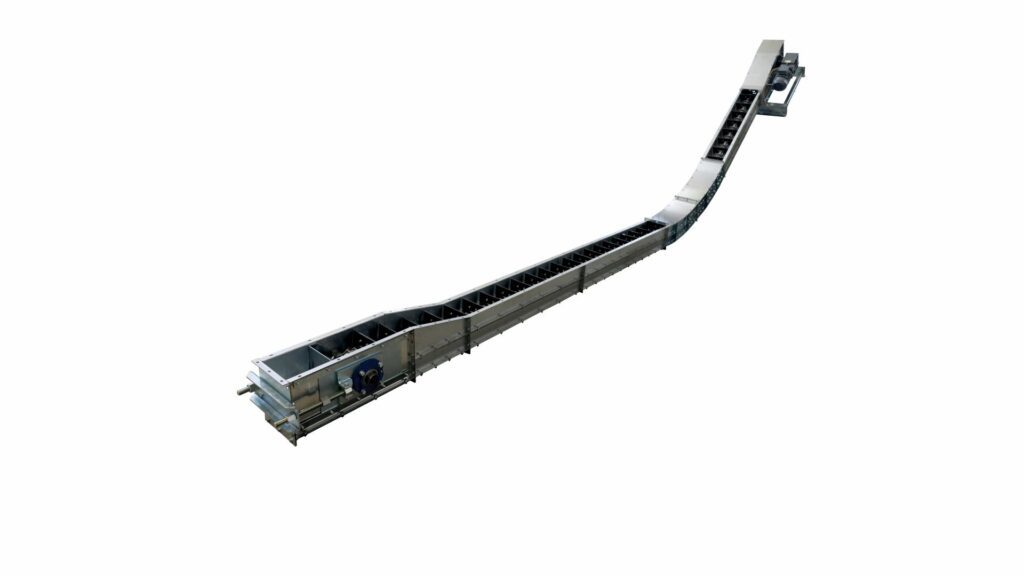
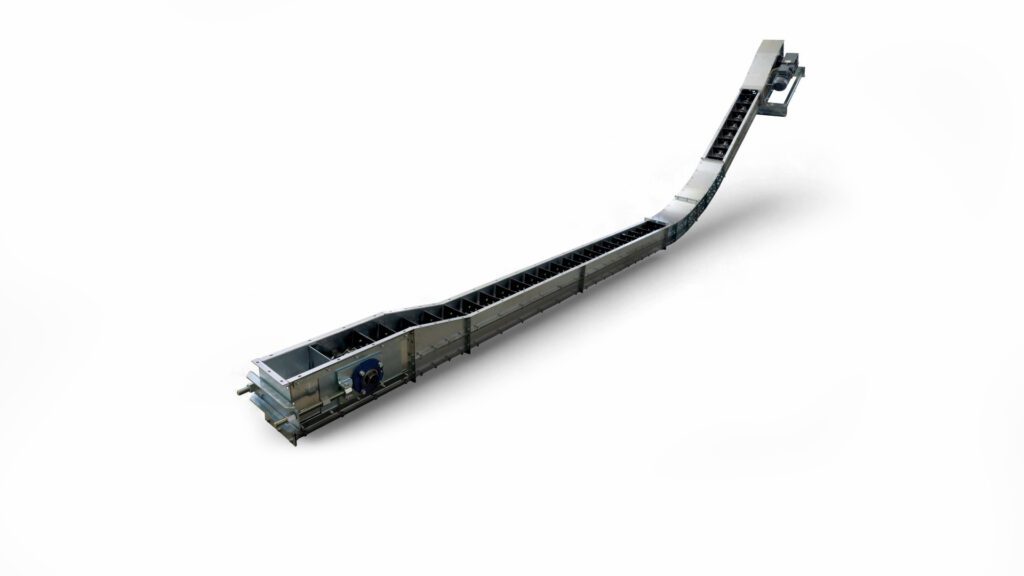
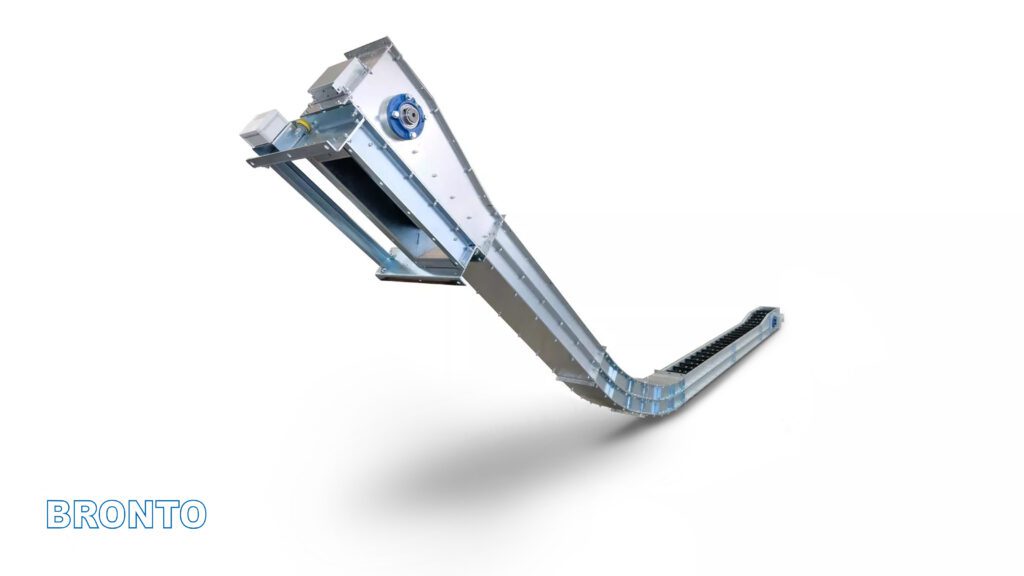
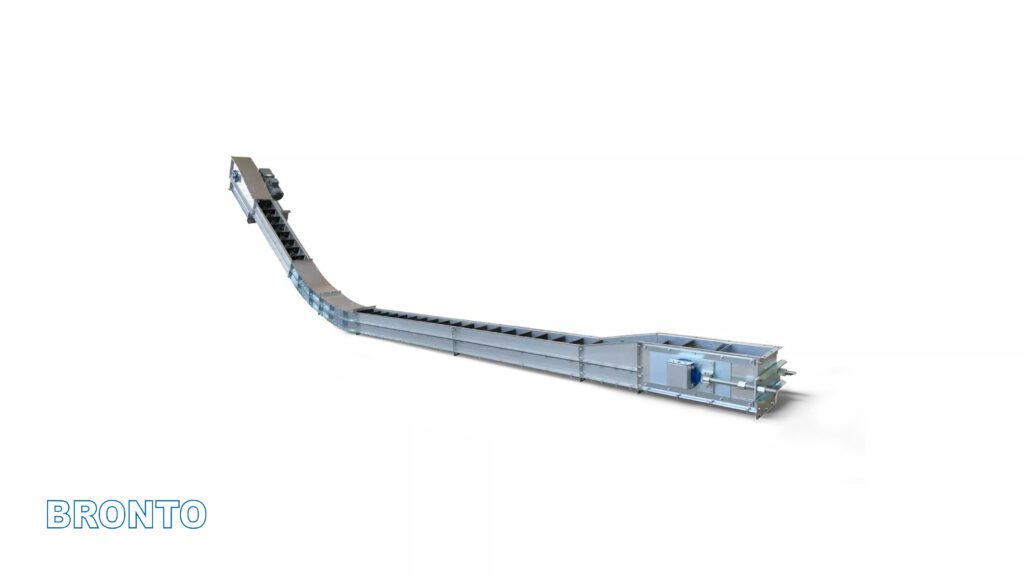
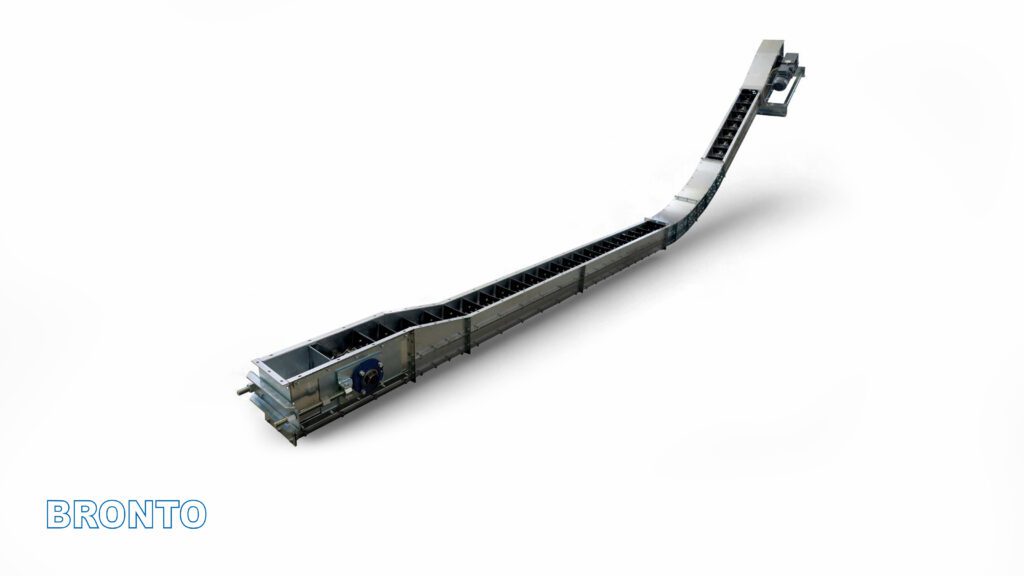
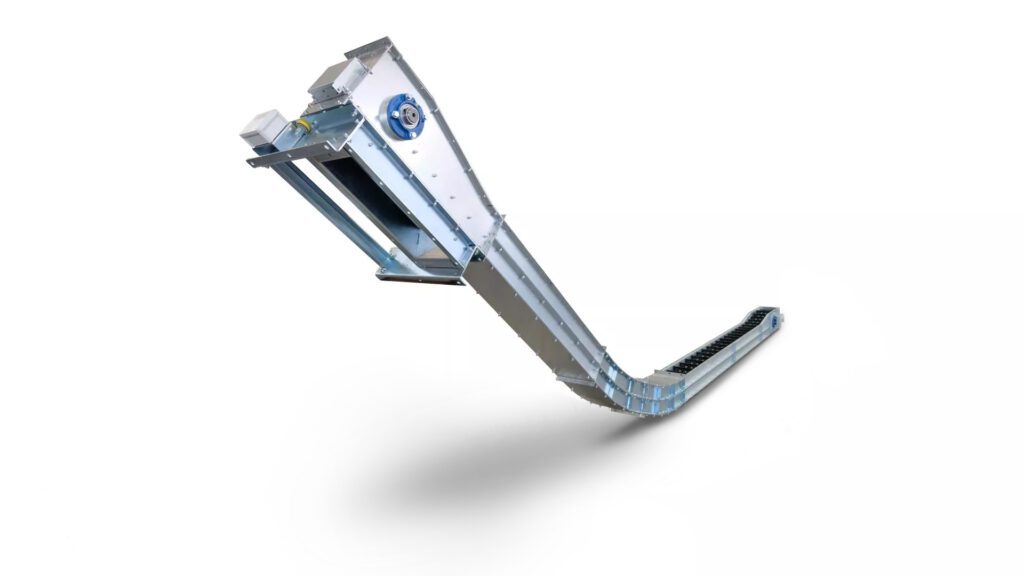
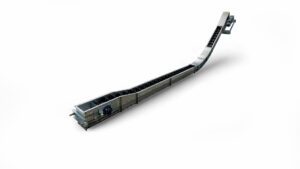
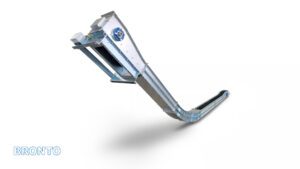
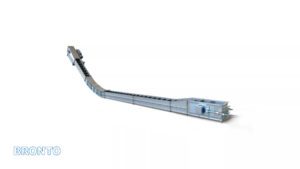
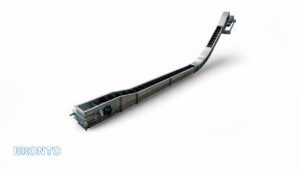
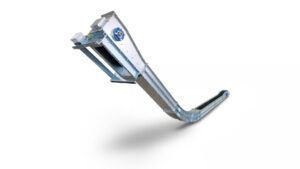
This type of conveyor got its name “Gooseneck” due to its unique design. It is equipped with intermediate sections that allow you to smoothly change the direction of movement of the raw material – from completely horizontal to inclined, at an angle of up to 60°.
How does it work and what does it give?
Instead of using two separate mechanisms—one for horizontal movement and one for vertical lifting—the Gooseneck performs both functions simultaneously.
This design allows you to effectively:
- Collect raw materials into one line, sometimes even from under several units in the shop;
- Lift the raw materials to the required height (maximum 10 meters).
Your direct savings
The main advantage of this approach is significant cost optimization. Using one transport mechanism instead of two provides:
- Energy savings: One drive consumes significantly less than two.
- Space saving: The design is much more compact, freeing up valuable space in the room.
- Cost reduction: Costs for purchasing, installing and maintaining the entire production line are reduced.
Additional features: Flexibility of raw material intake
For maximum adaptability, the conveyor can be equipped with horizontal sub-hopper sections.This allows you to organize the collection of raw materials directly from:
- Landfill pits (in acceptance areas).
- Operational tanks and silos.