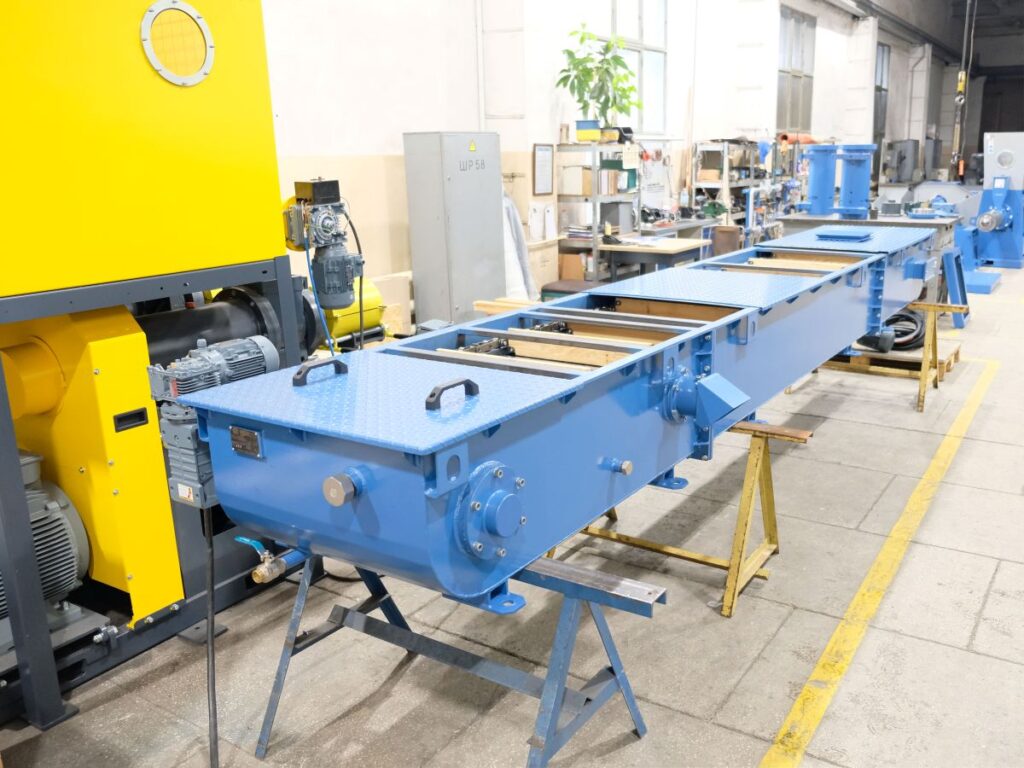
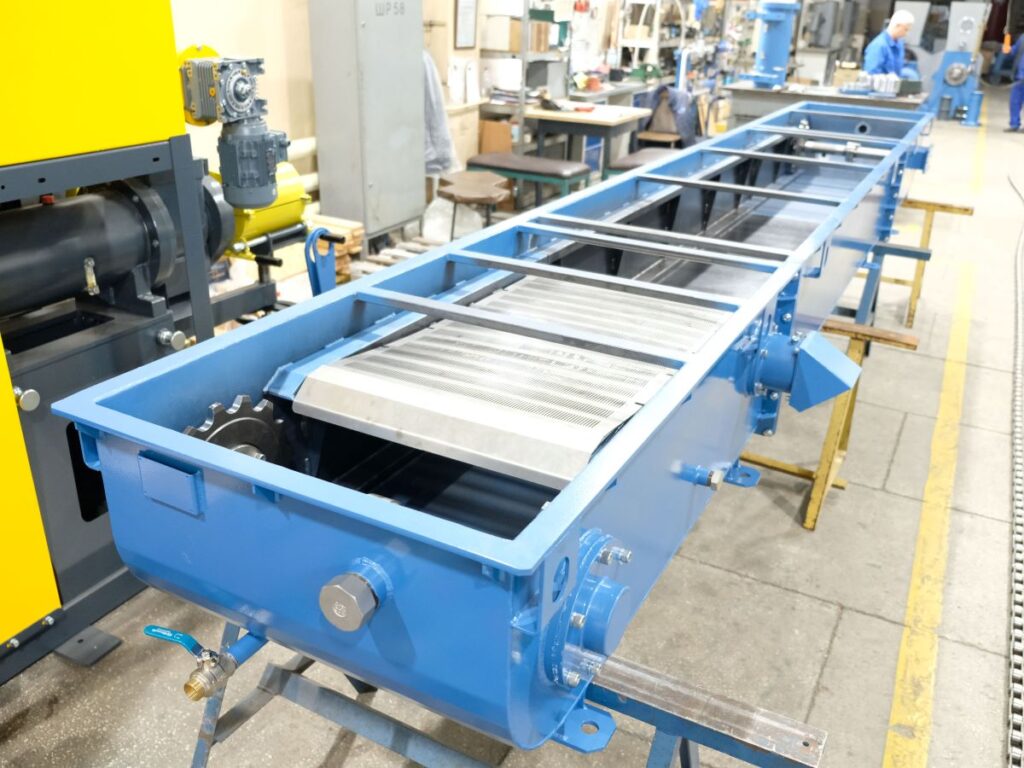
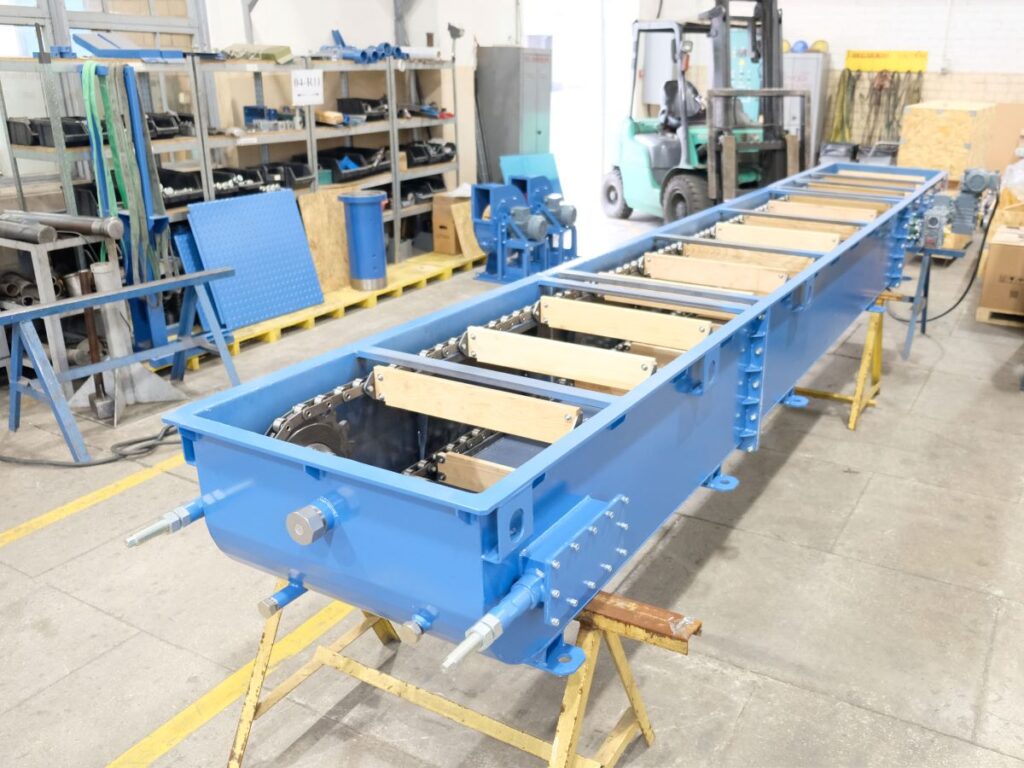
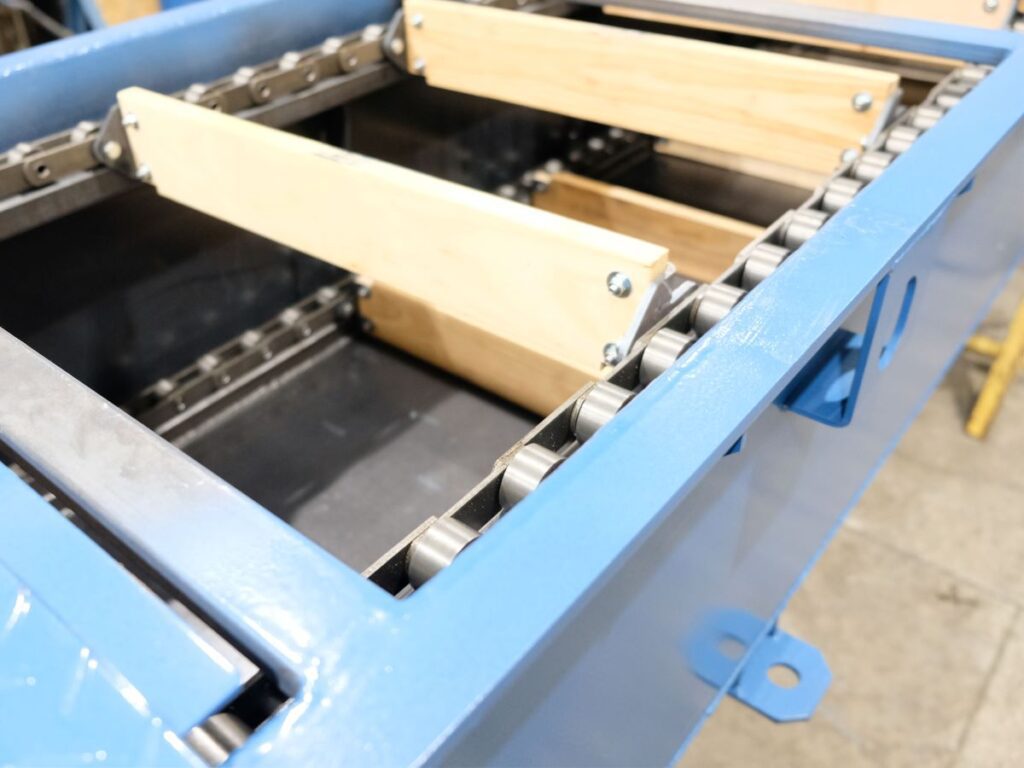
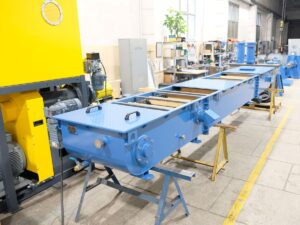
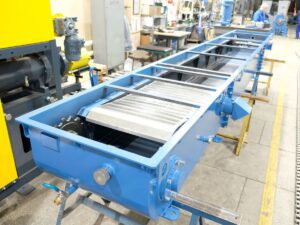
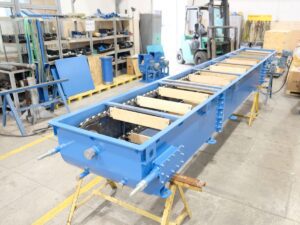
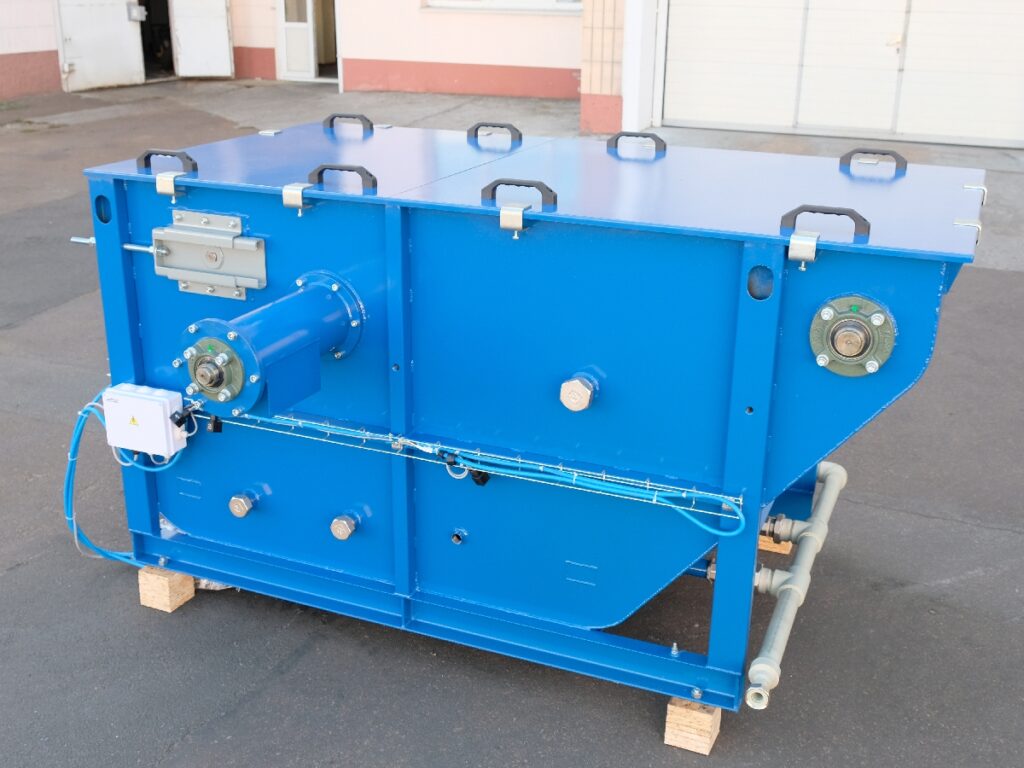
The mechanical oil separator MOS-1000 is designed for preliminary purification of vegetable oil from debris before its filtration. When oil with debris passes through the separator, 60 – 80% of debris is removed.

1 – Drive section
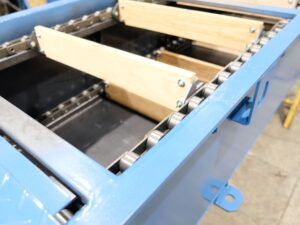
2 – Scraper conveyor
3 – Scraper conveyor drive
4 – Auger drive
5 – Tension section
6 – Oil pump
7 – Grate
8 – Intermediate section
9 – Sludge removal screw
10 – Sludge removal pipe
11 – Cover
12 – Funnel
13 – Drive shaft
14 – Tension shaft
The separator housing is a rectangular (in plan) container, which is divided into sections – drive section 1, tension section 5 and intermediate sections 8. Depending on the layout, there may be 1, 2 or no intermediate sections at all. Along the perimeter of the vertical section of the separator, a scraper chain conveyor 2 runs along its entire width, consisting of chains with scrapers attached to them. The chain is tensioned on sprockets located on the drive shaft 13 and tension shaft 14. The drive 3 of the scraper conveyor is a gear motor. Untreated pressed oil enters the housing container through funnels 12, where preliminary settling occurs. Suspended particles settle to the bottom, where scrapers moving with the chain transport them first horizontally to the right, and then upwards until they are overloaded onto the perforated surface of the grid 7. The oil captured with the sediment flows here, and the sediment is transported further along the surface of the grid to the sediment removal screw 9.
The separator housing is also an operational container with lower and upper level sensors, from which the purified oil is periodically removed by the oil pump 6, further into the system or for storage.
Complete emptying of the separator housing occurs by switching the corresponding taps:

I – clean oil intake valve (open in operating mode)
II – complete oil removal valve (closed in operating mode)
III – drain pipe.
IV – emergency overflow pipe.