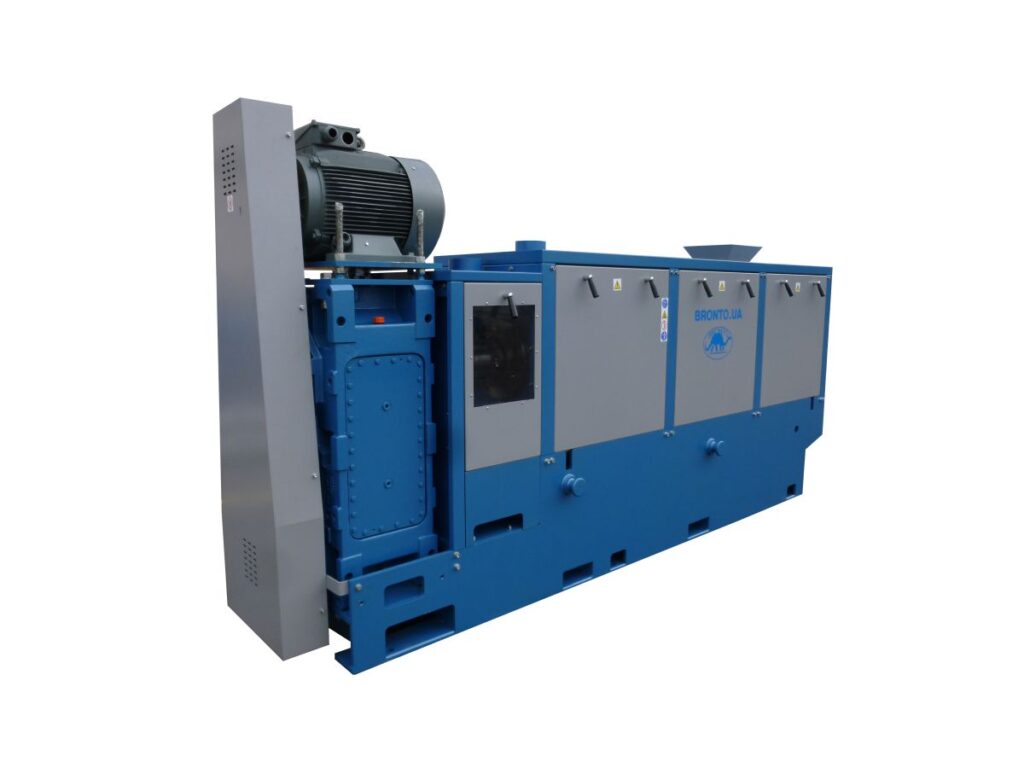
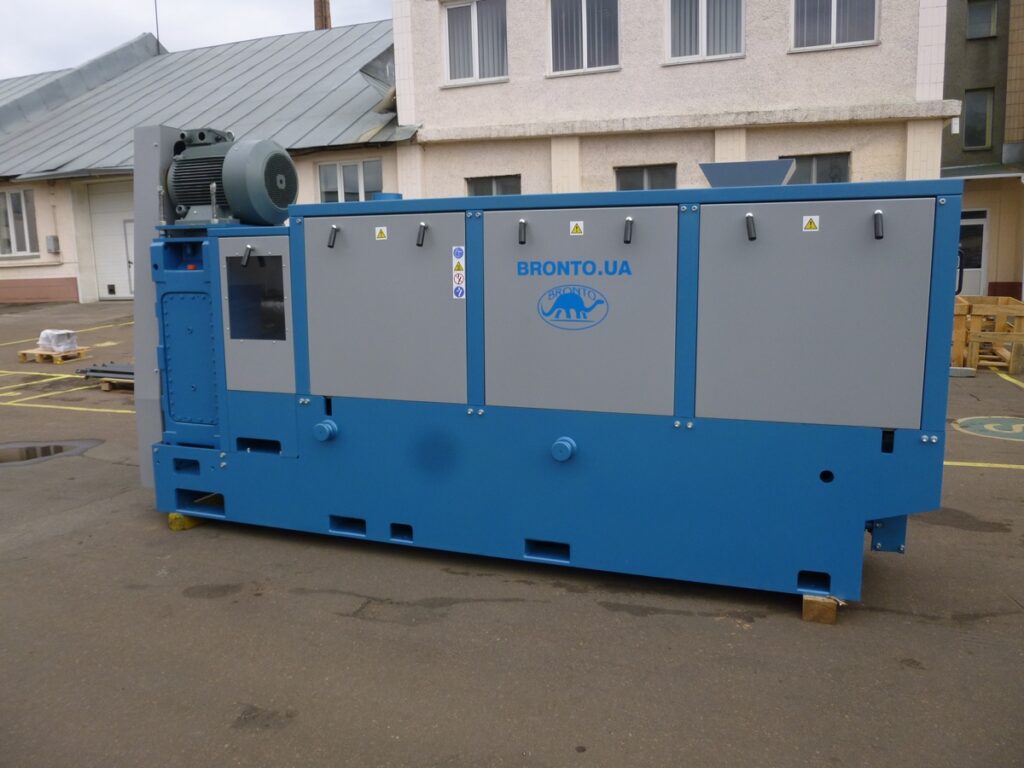
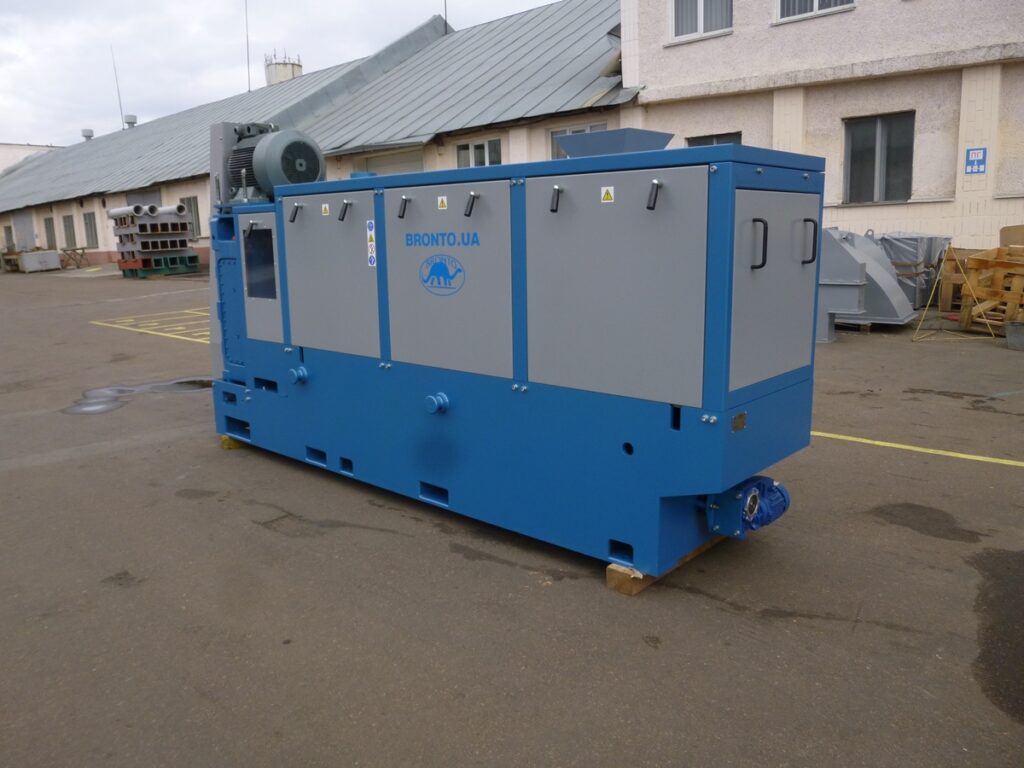
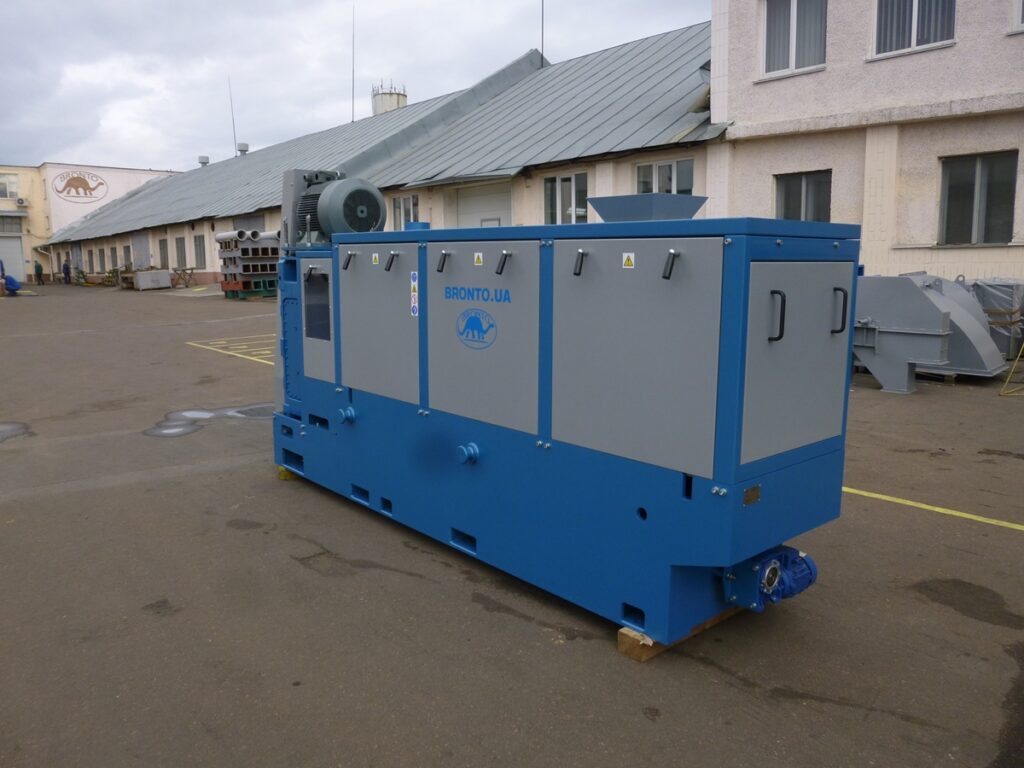
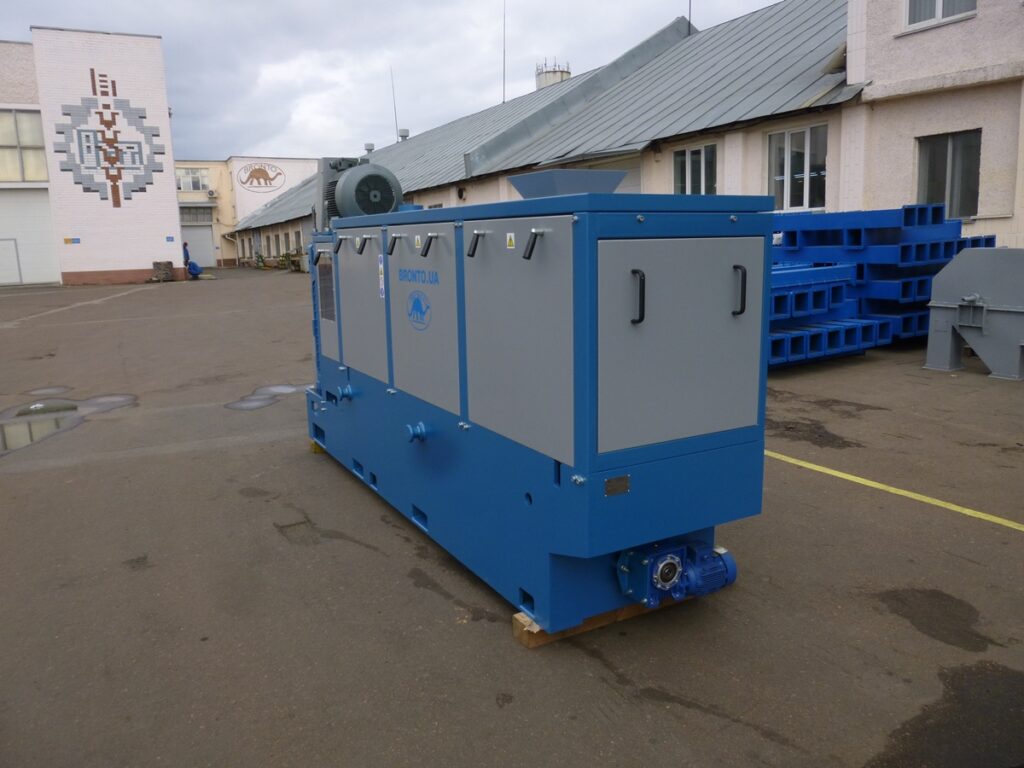
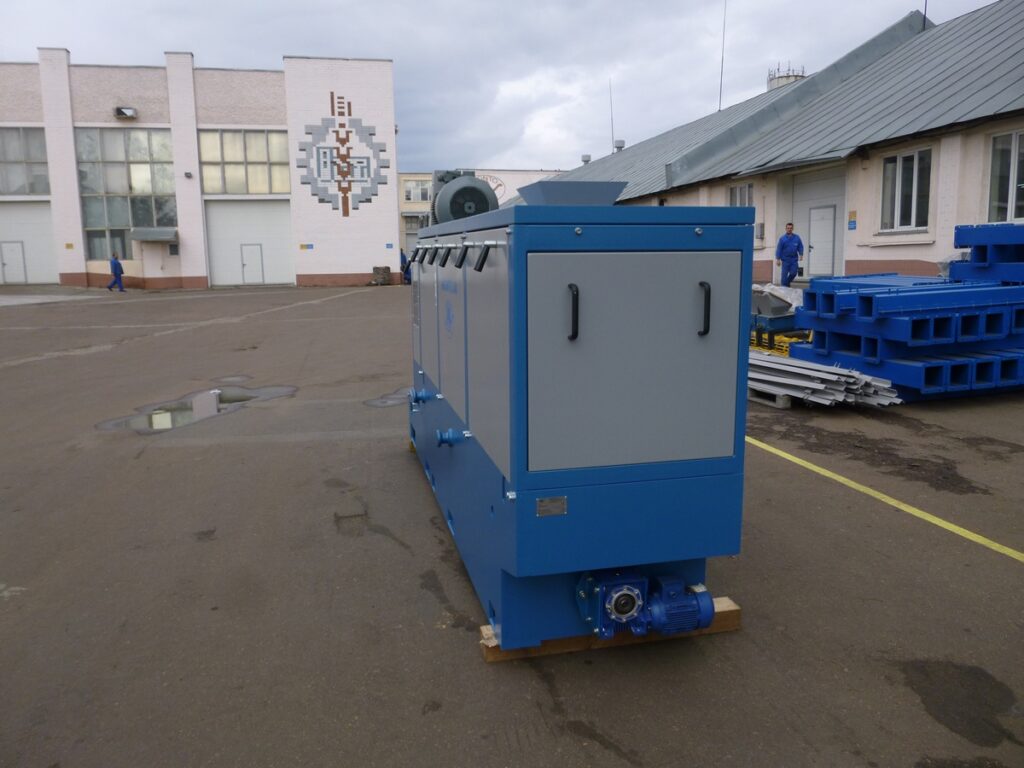
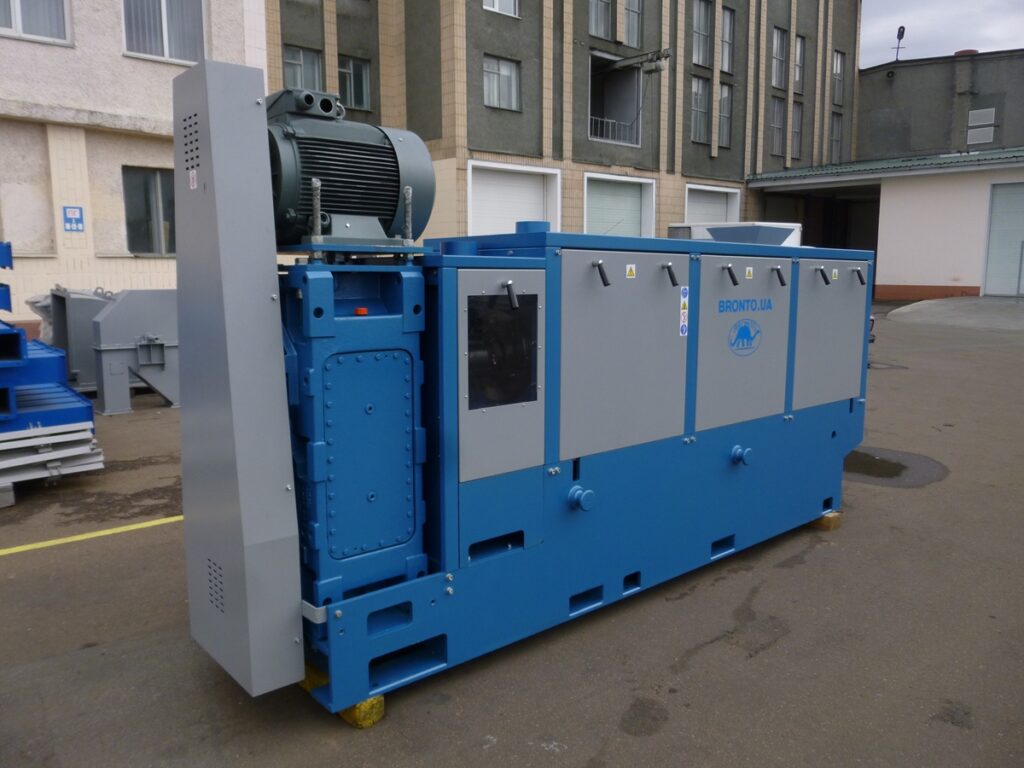
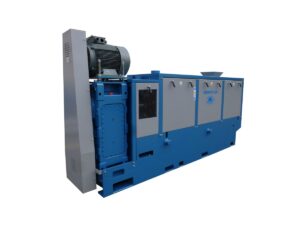
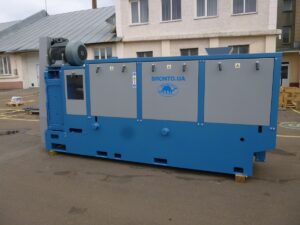
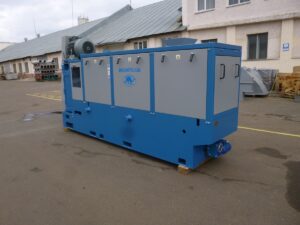
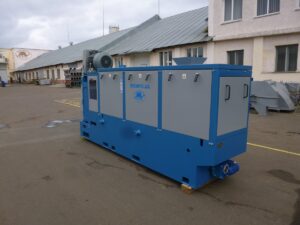
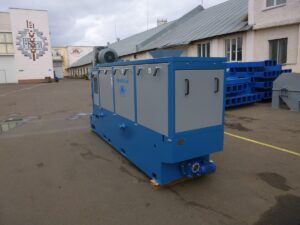
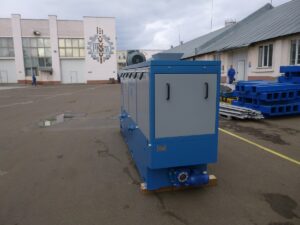
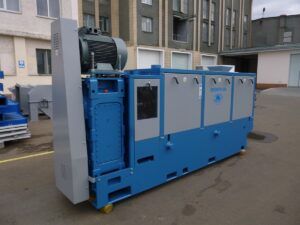
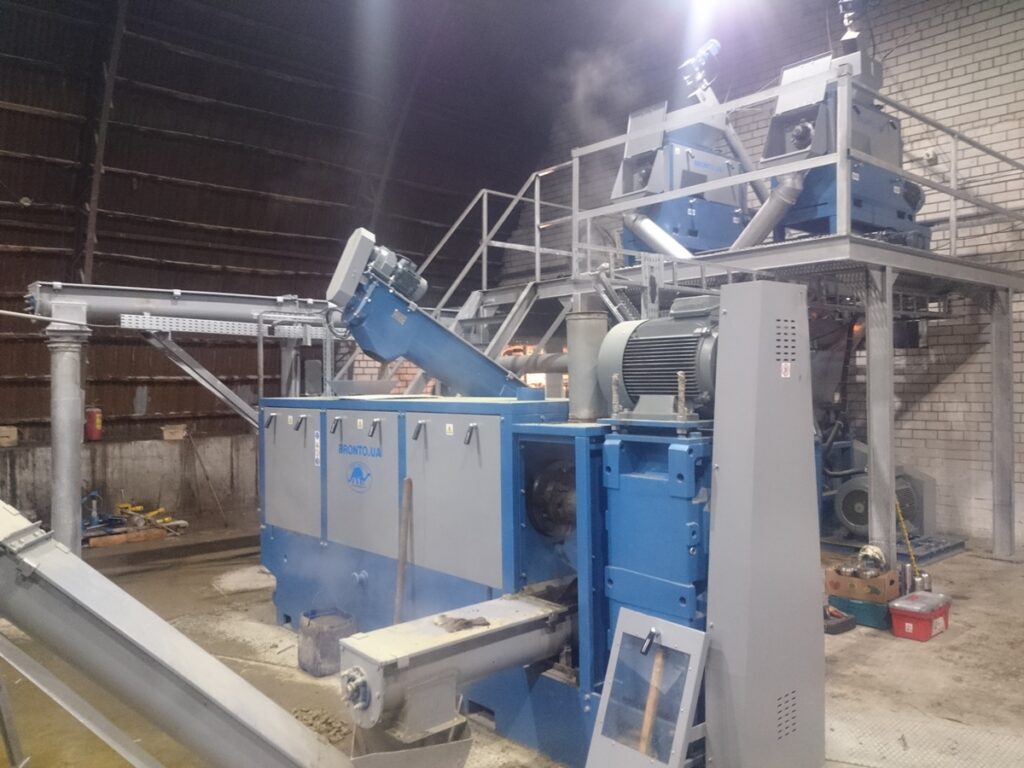
The press is intended for completing the oil pressing line from oil crops (rapeseed, sunflower) as a first pressing press.
The raw material is fed into the receiving funnel.
The electric motor through the V-belt transmission and the reducer turns the screw shaft, which feeds the raw material into the seer chamber and further transports it in the direction of the output unit.
In the direction of movement of raw materials, the inner diameter (diameter of the depressions) of the screws increases, and the pitch of the screw surface decreases, which leads to a decrease in the free volume of the chamber for raw materials. As a result, the raw material is compressed, which is accompanied by the release of oil.
The oil comes out through the slits of the sight chamber and drains into the pan. The cake coming out of the viewing chamber is crushed and removed from the press into the workshop cake transportation system.