EN

Breading production lines

continuous and reliable breading production

Processing products

BREADING

from

3 t/d

0,8 to 5 mm in size

TECHNICAL SUPPORT ALL OVER THE WORLD

We manufacture machinery that seamlessly integrates into a complete breading production line, tailored to meet our clients’ specific needs

Main steps:

  • blending of raw materials with other ingredients;
  • extrusion cooking of the mixture;
  • drying the extrudate;
  • crushing into crumbs;
  • cooling and sieving

More information about breading production

How to make breading?

We offer an efficient method for producing breading through extrusion cooking. It allows raw materials to be turned directly into breading. Extrusion cooking uses high heat and short processing times to mix, cook, and form food by pushing it through a die with a rotating screw.

Extruded breading is produced from various types of grains (corn, buckwheat, semolina, millet, rice, barley, wheat) without the addition of salt, sugar, or any additives.

There are several crucial steps that ensure successful extrusion cooking:
  • Raw Material Preparation: the flour you choose to use must be sieved according to the standards
  • Tempreature and Moisture Control: temperature must be adjusted to your raw material and moisture regulated depending on the season
  • Keeping Your Equipment Clean: daily cleaning ensures smooth operation and a high-quality final product.

Steps of breading extrusion:

1

Raw material preparation:

  • The flour must pass through a separator to remove large foreign objects and lumps.
2

Mixing and pre-conditioning:

  • Additives, seasonings, salt, etc. are added according to the breading recipe;
  • The mixture is moistened to 15–22% and heated.
3

Extrusion:

  • The mixture is kneaded under pressure and heated for 30–40 seconds;
  • The raw material is plasticized;
  • The product, heated to 100–130 °C, exits the working part of the extruder and expands in volume by 1.5–2 times;
  • The product is cut with a knife divider into pieces 15–30 mm long.
4

Drying and cooling:

  • The pieces of extruded breading are dried to 8–10% moisture.


5

Grinding:

  • The dried extrudate passes through a roller crusher and is crushed to a fraction of 2-4 mm.
6

Sorting:

  • In a sieve separator, fractions less than 2 mm and more than 4 mm are removed from the product;
  • The fraction less than 2 mm is returned to the raw material preparation stage, and the fraction more than 4 mm is sent for re-grinding.
7

Packaging:

  • The finished breading is packed in bags or sacks, depending on the order parameters.

LAYOUT SOLUTIONS

Our equipment meets your space

ENVISION & PREDICT

Making a layout ahead of time helps you picture the project. It also gives you a clear idea of what is needed for construction, where equipment will go, how much energy will be used, and how materials will move through the facility.


It helps answer these questions:

  • if your premises, territory, access roads and power substation are suitable for the implementation of the project;
  • what is the project budget.

LAYOUT SOLUTION - WHAT IS IT?

Includes:

  • our specialist’s visit to your site;
  • measuring the premises;
  • coordinating your vision, capabilities and resources;
  • making a draft of the technological line – for the conditions of your site;
  • preparing a specification of the necessary equipment – for your conditions.

CONTACT OUR EXPERTS

TECHNICAL SUPPORT

We ensure this

1

Project approval

  • Experiments/runs on your raw materials;
  • Layout solution as BRONTO equipment will be placed in your premises;
  • Consultations on requirements for premises, raw materials and equipment.
2

EQUIPMENT INSTALLATION AND START-UP CHIEF

  • APPLICATION for commissioning;
  • Consultations on commissioning.
3

WARRANTY SERVICE

  • APPLICATION for warranty service;
  • Advise on improvements / changes that you find useful in BRONTO products.
4

AFTER-WARRANTY SERVICE

  • Equipment repair;
  • Do-it-yourself repair consultations;
  • Spare parts sales.
Articles

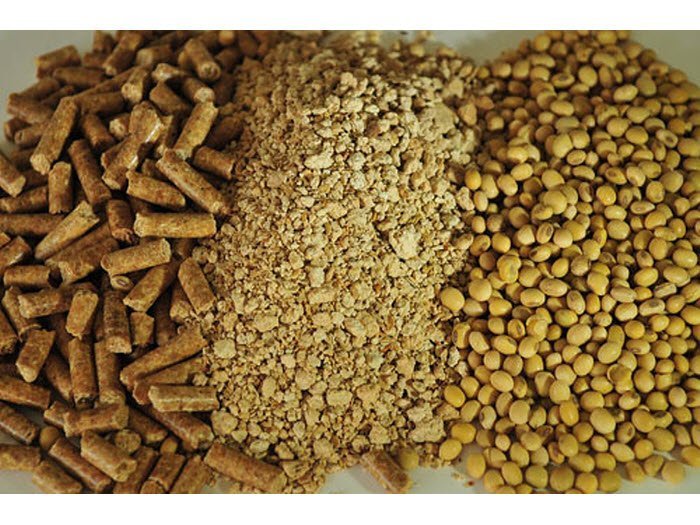
Feed Soy Concentrates Based on Extruded Grain

One of the key limiting factors in improving compound feed quality is the deficit of protein raw materials, a replenishable source of which is the grain of leguminous crops. Legumes (lupines, vetches, field beans, field peas, soybeans, chickpeas) contain 25% to 40% protein, 37–45% starch, 1.5–4.5% fat, vitamins, and micronutrients. The proteins of leguminous crops are characterized by good solubility: water- and salt-soluble fractions account for 70% to 90% of the protein. The amino acid profile includes all essential amino acids, with methionine + cystine being the limiting amino acid. Seeds of vetch and field beans have lysine as their second limiting amino acid.
12.10.2026
work
Articles

Extrusion Preparation of Grain Raw Materials in Pet Food Production

The market for pet food (dogs and cats) is one of the most dynamic and profitable segments of the feed-milling industry. While the profitability of traditional compound feed for farm animals typically ranges from 5% to 15%, the production of dry pet food achieves a profitability of 50% to 250%.
12.10.2026
Oil crops processing

Has the upper limit of urease activity been revised?

There is currently frequent discussion regarding lowering the upper limit of permissible urease activity to 0.050 pH units.

09.10.2026
FAQ: questions

MOS-500 Separator Discharge Timing

A common question arises: How long does it take to fill and empty the MOS-500 mechanical oil separator?

05.10.2026

CONTACT OUR EXPERTS

Our site uses cookies.

This site uses cookies to save your preferences and personalize advertising offers. By clicking “Agree”, you consent to the use of cookies and accept our privacy policy.

Privacy Policy