What types of animal feed can BRONTO equipment produce?
The same BRONTO technological platform — a single-screw extruder, belt dryer, vacuum cooler and pellet cooler — allows for the production of feed with completely different purposes, depending on the recipe and various settings. The difference lies not in the equipment itself, but in how it is configured: the extrusion temperature, the degree of pellet expansion, the moisture content of the mixture and the method of adding fats determine whether the line will produce dry dog food, floating pellets for tilapia or complete feed for poultry. Let’s take a look at the types of feed that are actually produced on BRONTO lines.
1. Pet food (dogs, cats)
The extruded pet food production line is one of the company’s core configurations, with a capacity ranging from 250 to 2,000 kg/hour (from 4.8 tonnes/day).
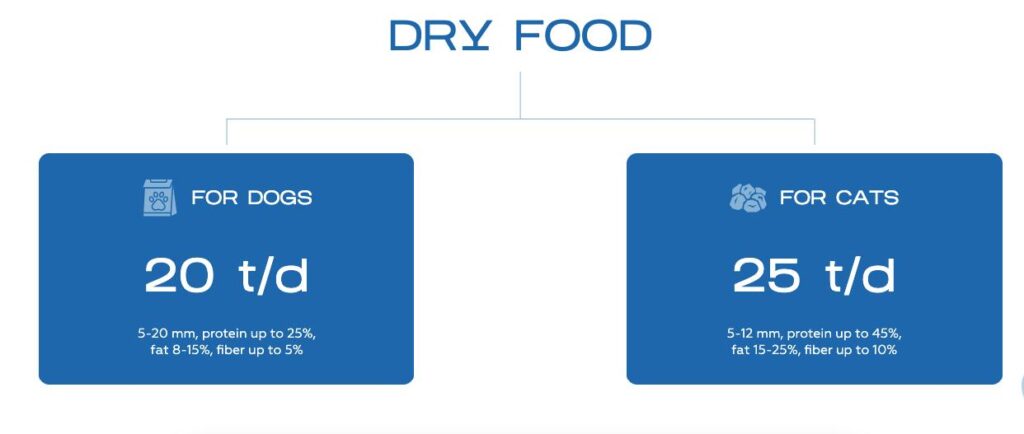
Raw materials for the recipe: meal or oilcake, cereals, meat-and-bone meal, cereal-based yeast, fats, protein-vitamin-mineral supplements and flavourings. After extrusion, the pellets undergo gentle drying to a moisture content of 8–10 per cent, vacuum fat saturation in a coater (an additional 5–30 per cent fat according to the recipe) and final cooling — to prevent moisture condensation in the packaging.
2. Fish and shrimp feed (Aqua feed)
A separate production line — for commercial aquaculture, also with a capacity of 250–2,000 kg/hour. The key technological difference here is the control of pellet buoyancy, which is why the line produces three physically distinct types of feed:
Floating feed — remains on the water’s surface; for carp, tilapia, catfish, ornamental fish and most warm-water species. It allows for visual monitoring of feeding behaviour and feeding rates.
Slow-sinking feed — the most complex to produce, as it requires precise control of the expansion rate (reducing the process temperature, cooling the screw section of the E-1500 extruder, and regulating pressure) to ensure the pellets neither float nor sink to the bottom immediately. It is used for trout, sturgeon and fish inhabiting the middle water layers.
Sinking feed sinks rapidly to the bottom; it is suitable for sturgeon, prawns and bottom-dwelling species.
Indications for use:
The technology takes into account the requirements of closed water supply systems (CWSS) — as slow-sinking feed contaminates the water with ammonium and phosphates to a lesser extent than brittle pellets, which disintegrate at the bottom.
3. Complete pelletised feeds for farm animals
The same extrusion principle is applied to the production of balanced dry feeds for farm animals and poultry — based on meal, oilcake, cereals, meat-and-bone meal, and vitamin and mineral premixes. In this context, extrusion serves a dual purpose: it forms the pellets whilst simultaneously heat-treating the raw materials, thereby reducing the content of pathogenic micro-organisms and anti-nutritional factors in the mixture.
What this means in practice
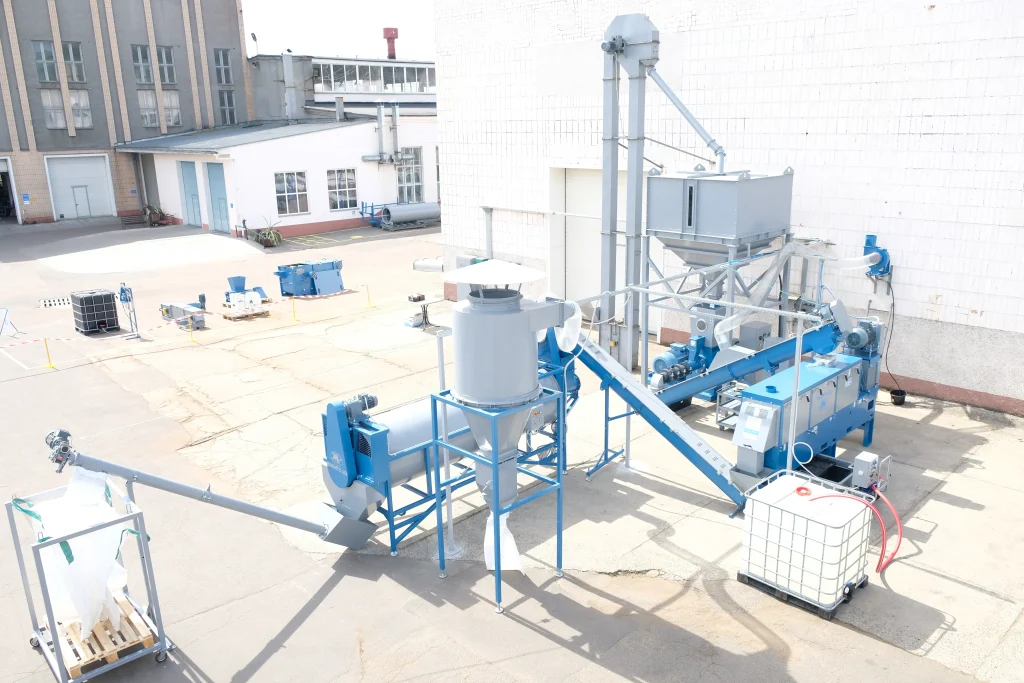
In short: a single BRONTO production platform (extruder + cooker + cooler) covers at least four areas of feed production — from premium pet food to industrial aquaculture and cattle feed. The key decision for the buyer is not ‘what equipment to buy’, but ‘how to configure the line for a specific recipe’, as it is the basic recipe (moisture content, fat content, grain content) that determines the configuration and productivity of a particular project.
Are you planning a feed production line for a specific market — pet food, aquaculture or cattle feed? Submit an enquiry at bronto.ua: our engineers will design a layout tailored to your recipe, raw materials and premises.
it might be interesting
SOYBEAN PROCESSING FLOW
Soybean processing flow:
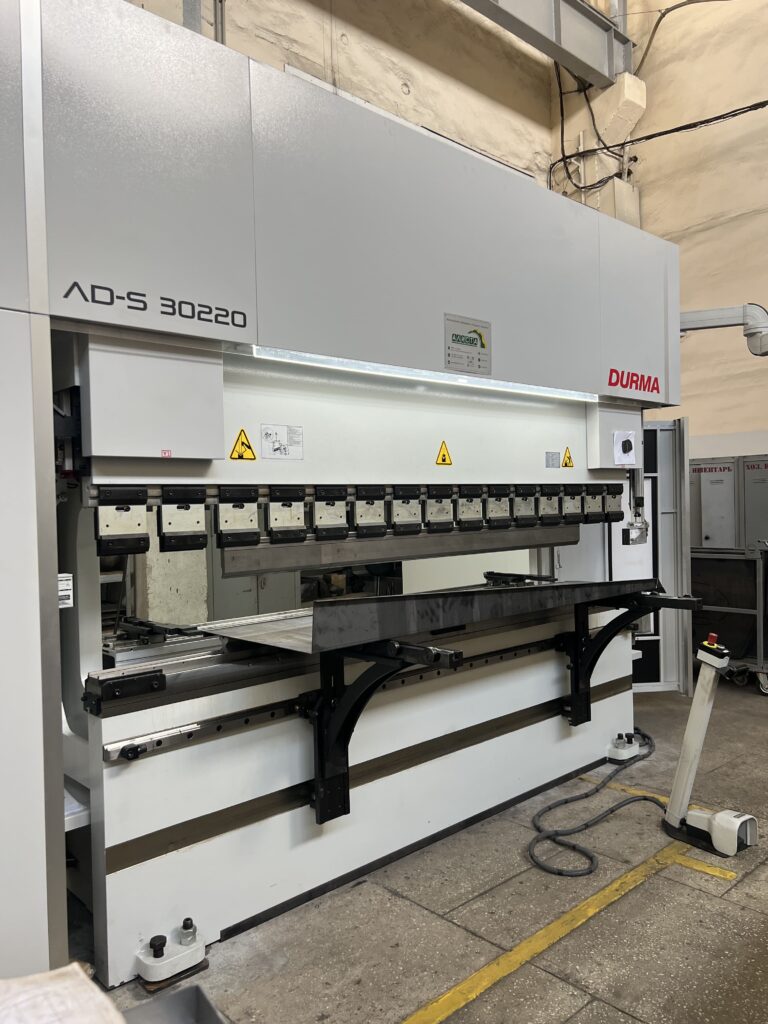
BRONTO Upgrades Production:
New CNC Press Brake by Durma for Faster, More Precise Equipment Manufacturing
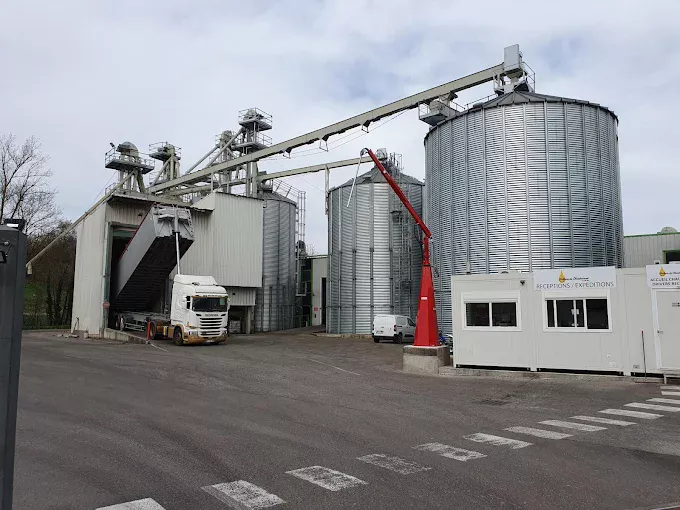
An automated soya oil production facility in France
how BRONTO helped Huilerie de Chambarand take its technology to the next level
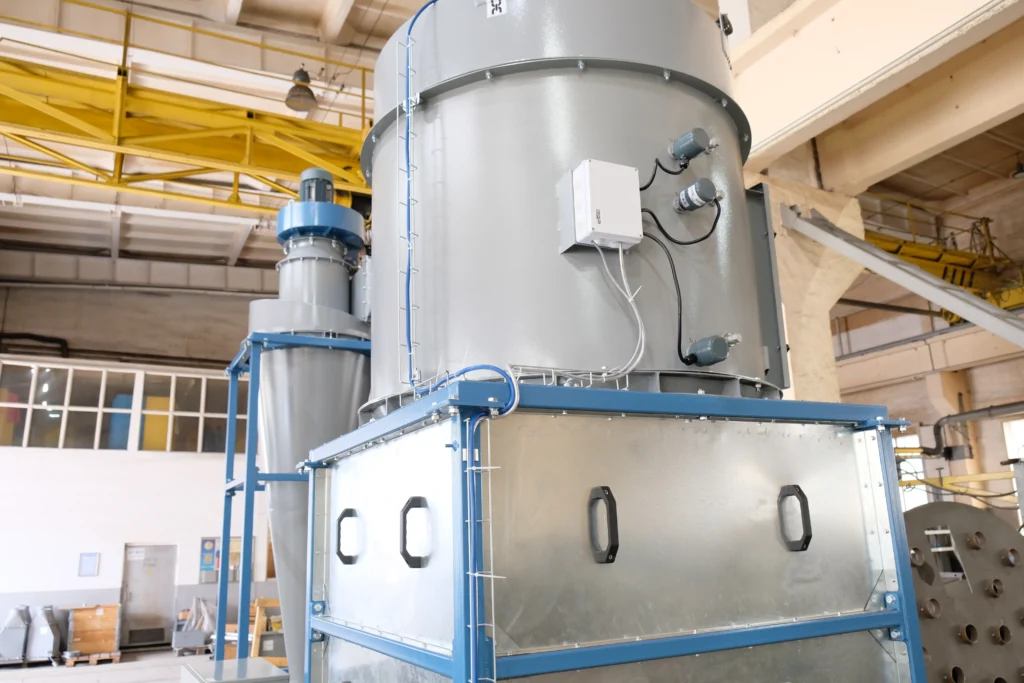
Commissioning of a new development
Our new product, the CH cooler, has been launched.