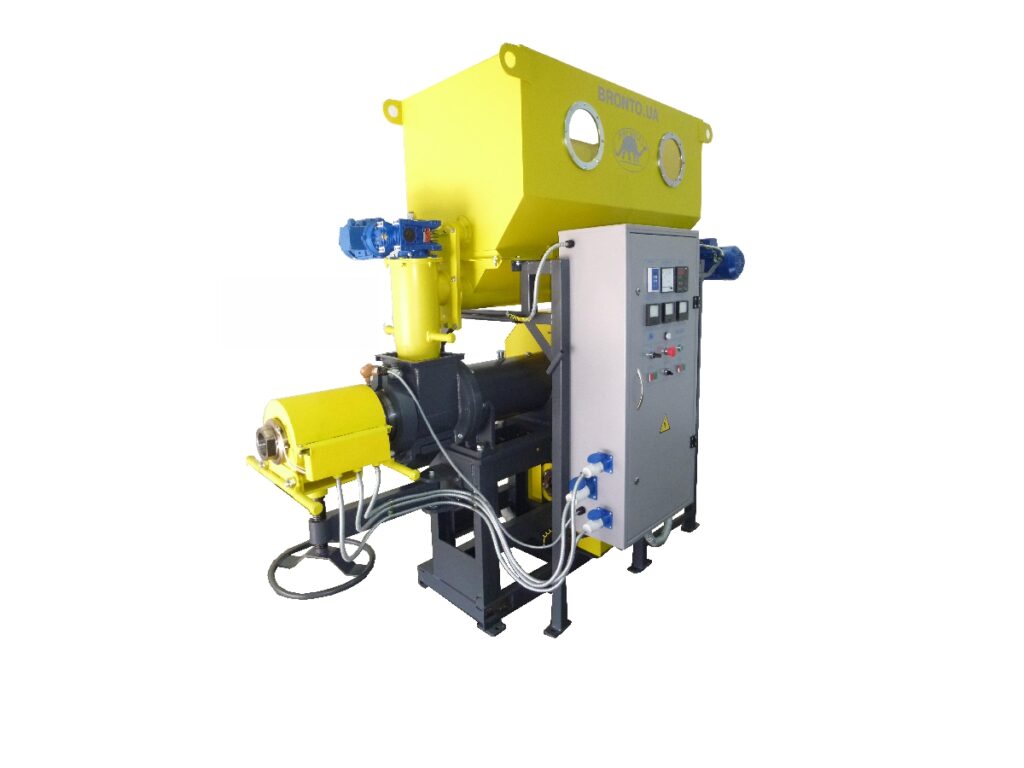
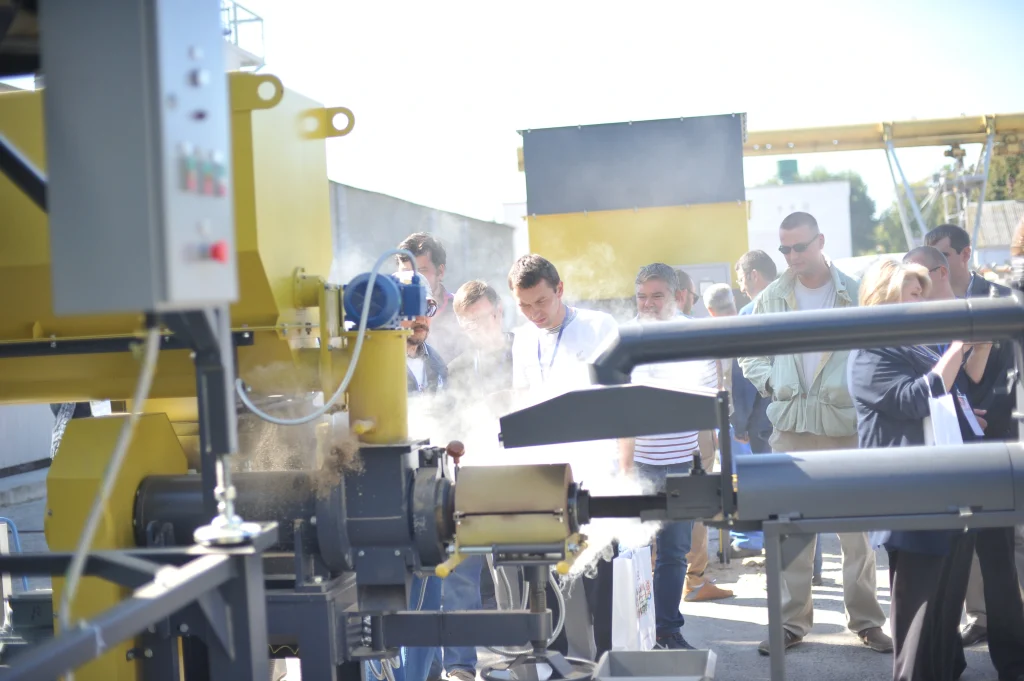
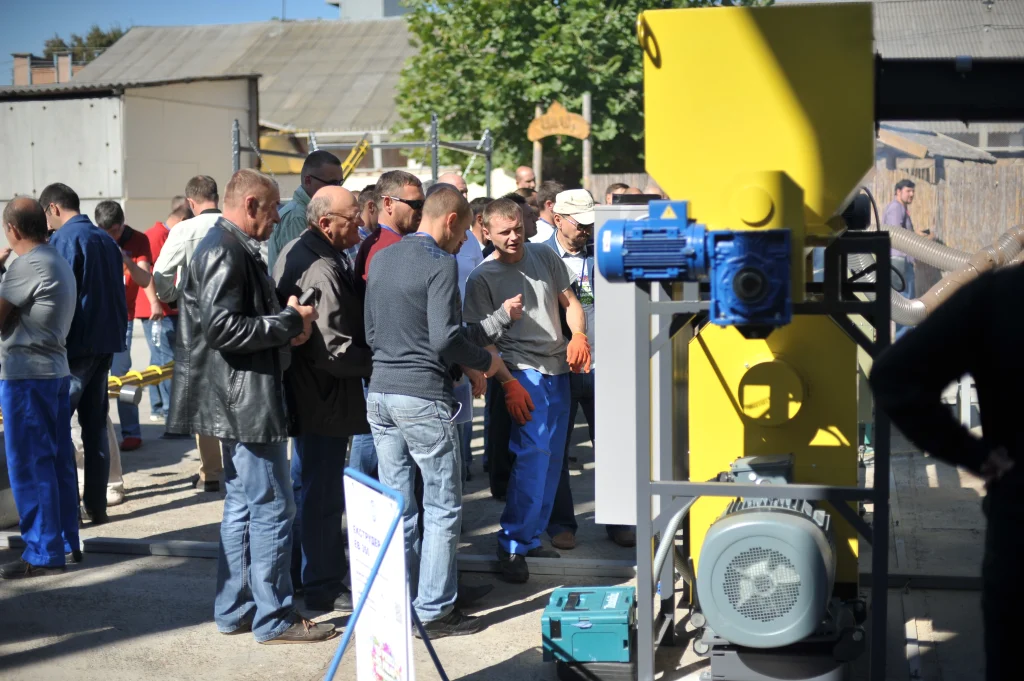
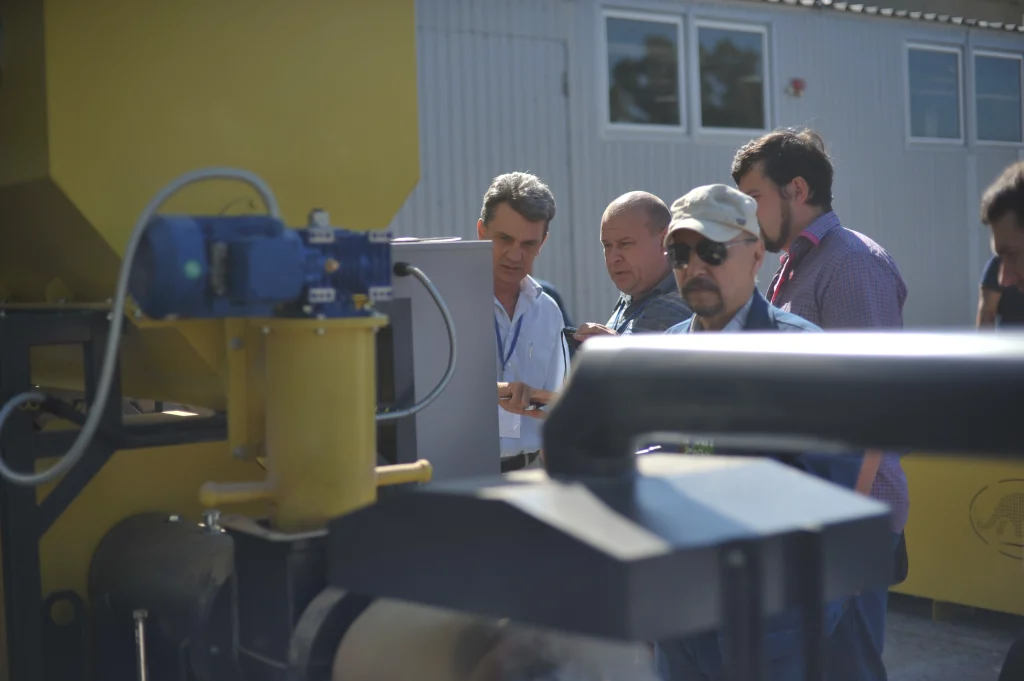
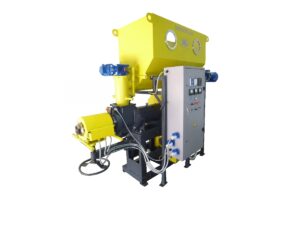
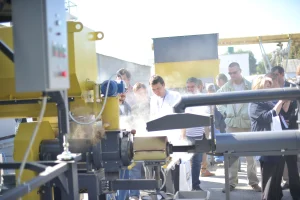
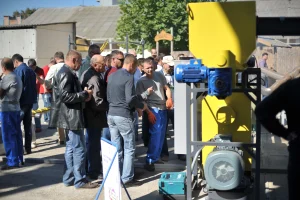
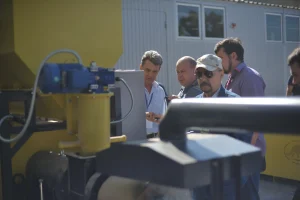
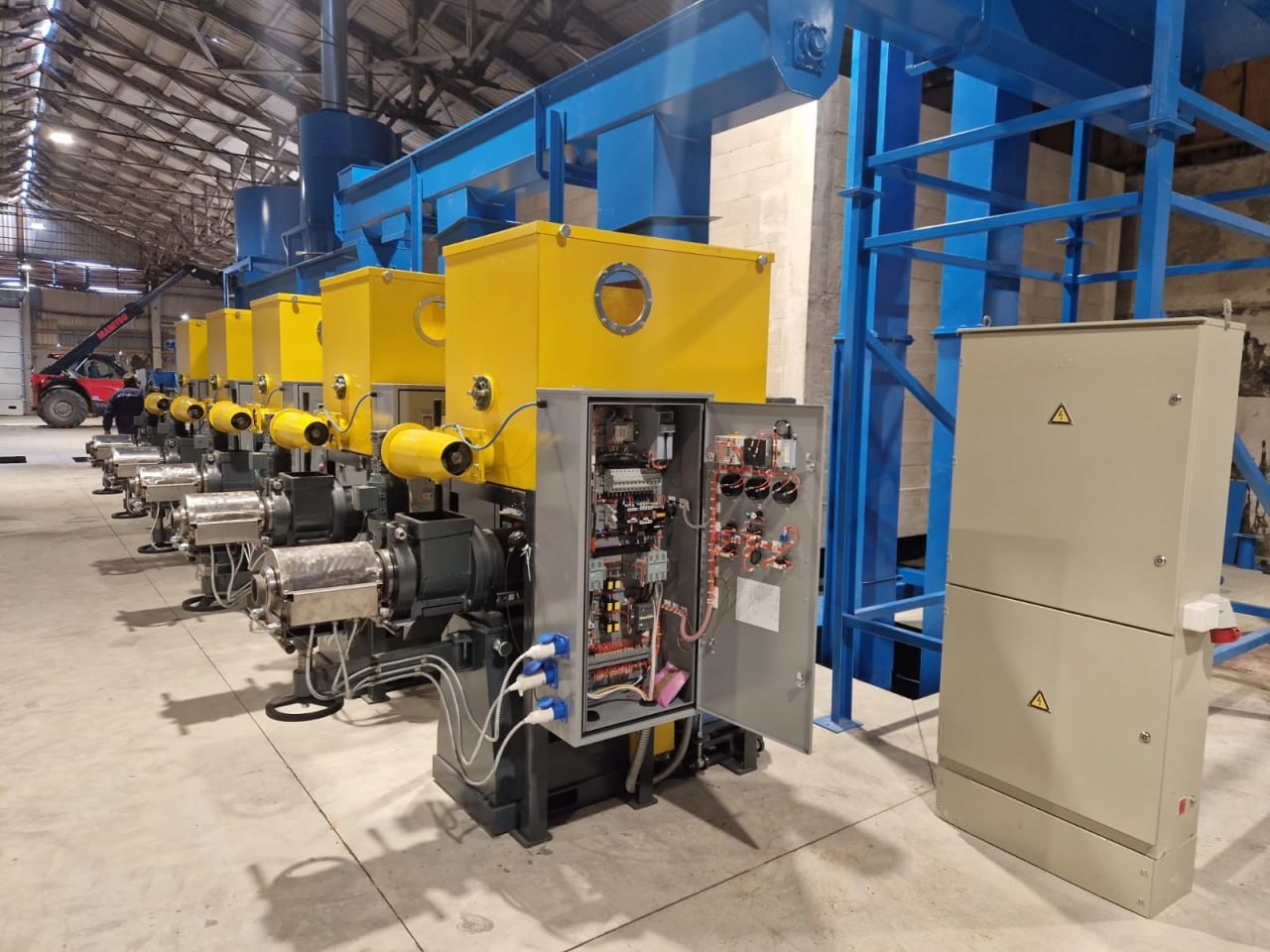
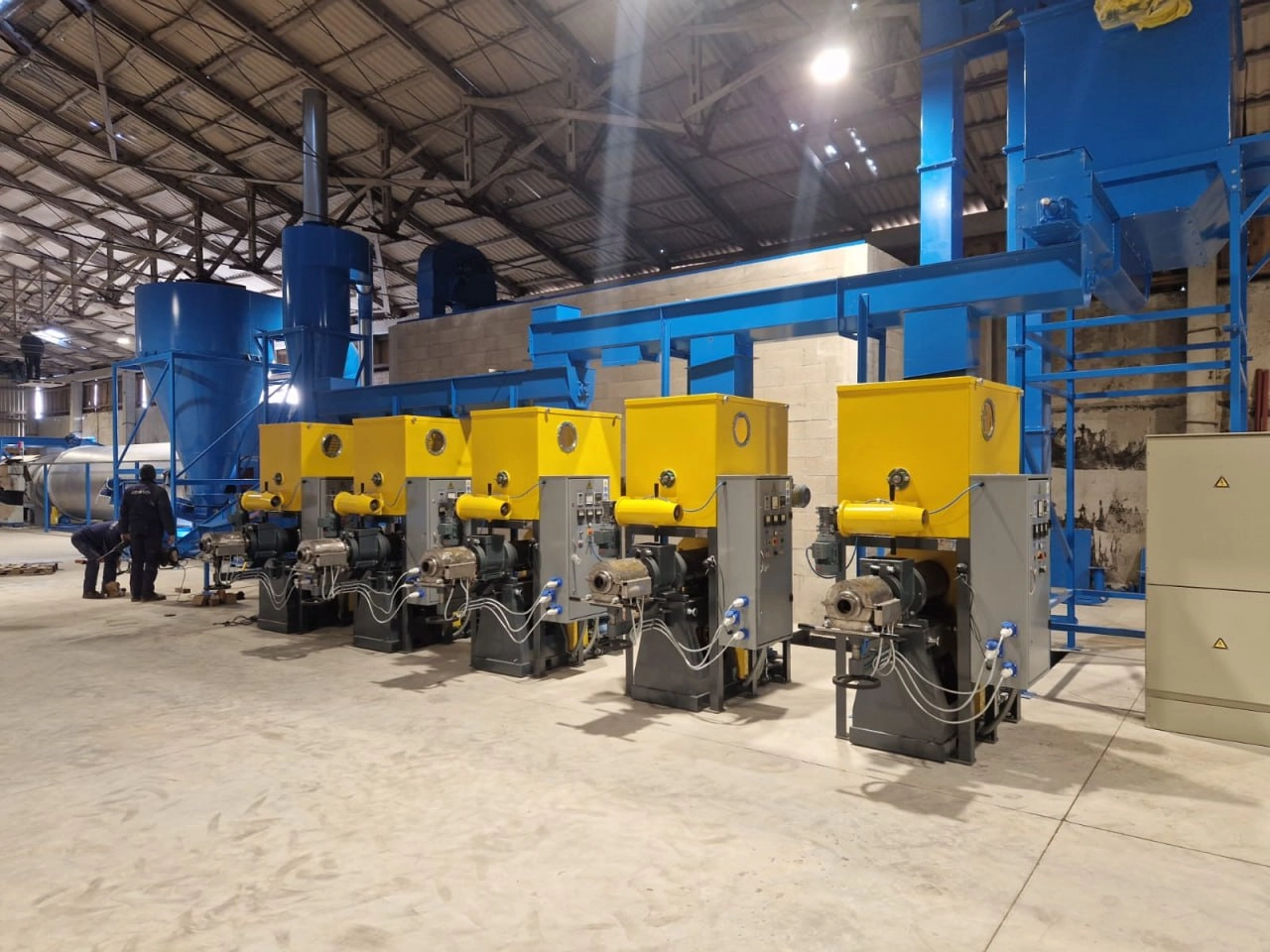
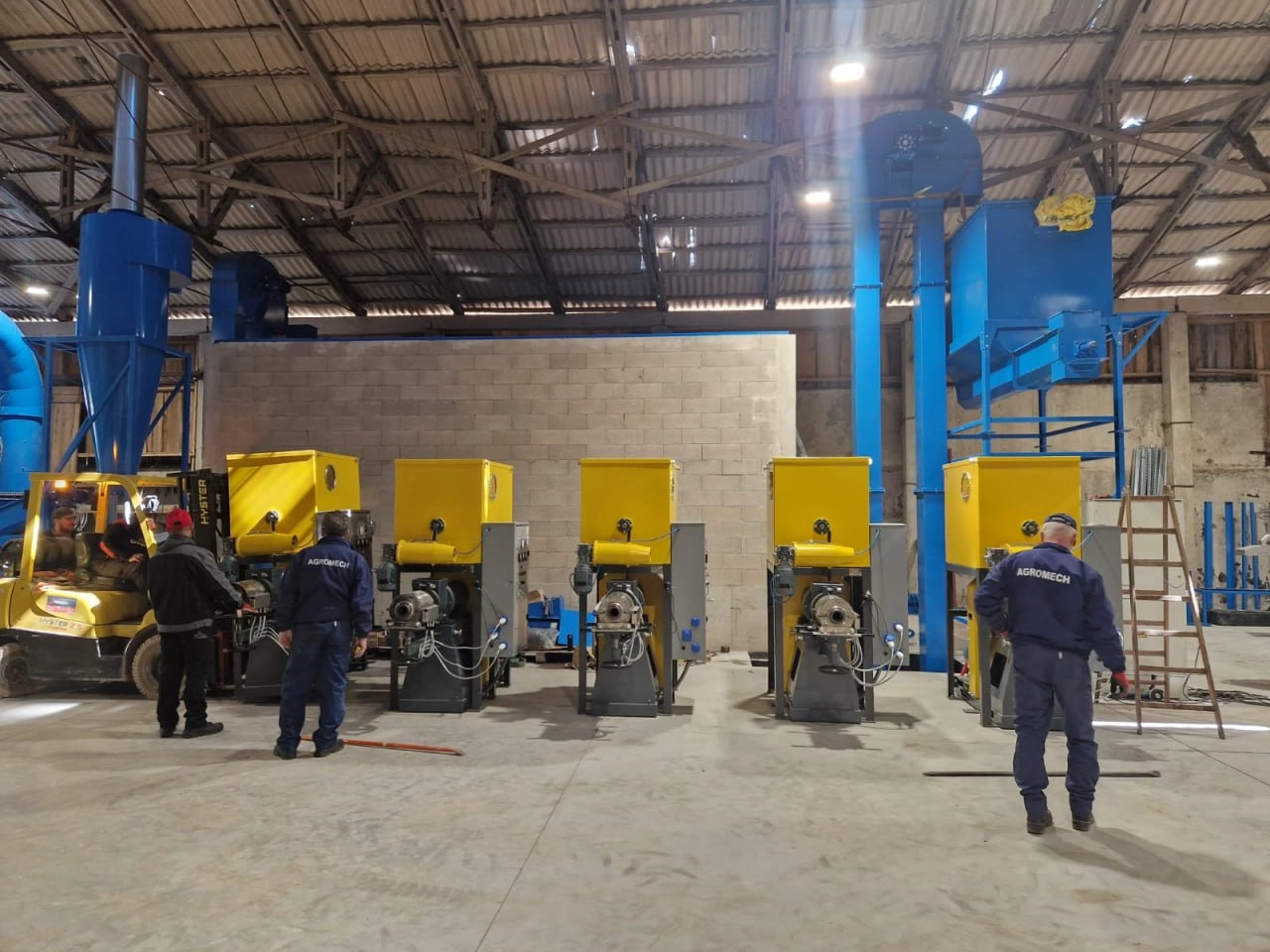


This extruder-press is used as part of technological lines for processing plant biomass into solid briquetted fuel.
Advantages of the extruder:
- recycles woodworking and agricultural waste
- designed for industrial processing of raw materials – for continuous and trouble-free operation

No additives are used to bond the briquette.
Manufacturing process:
The raw material is loaded into the press hopper.
Feeders at the bottom of the hopper feed the product into the working body.
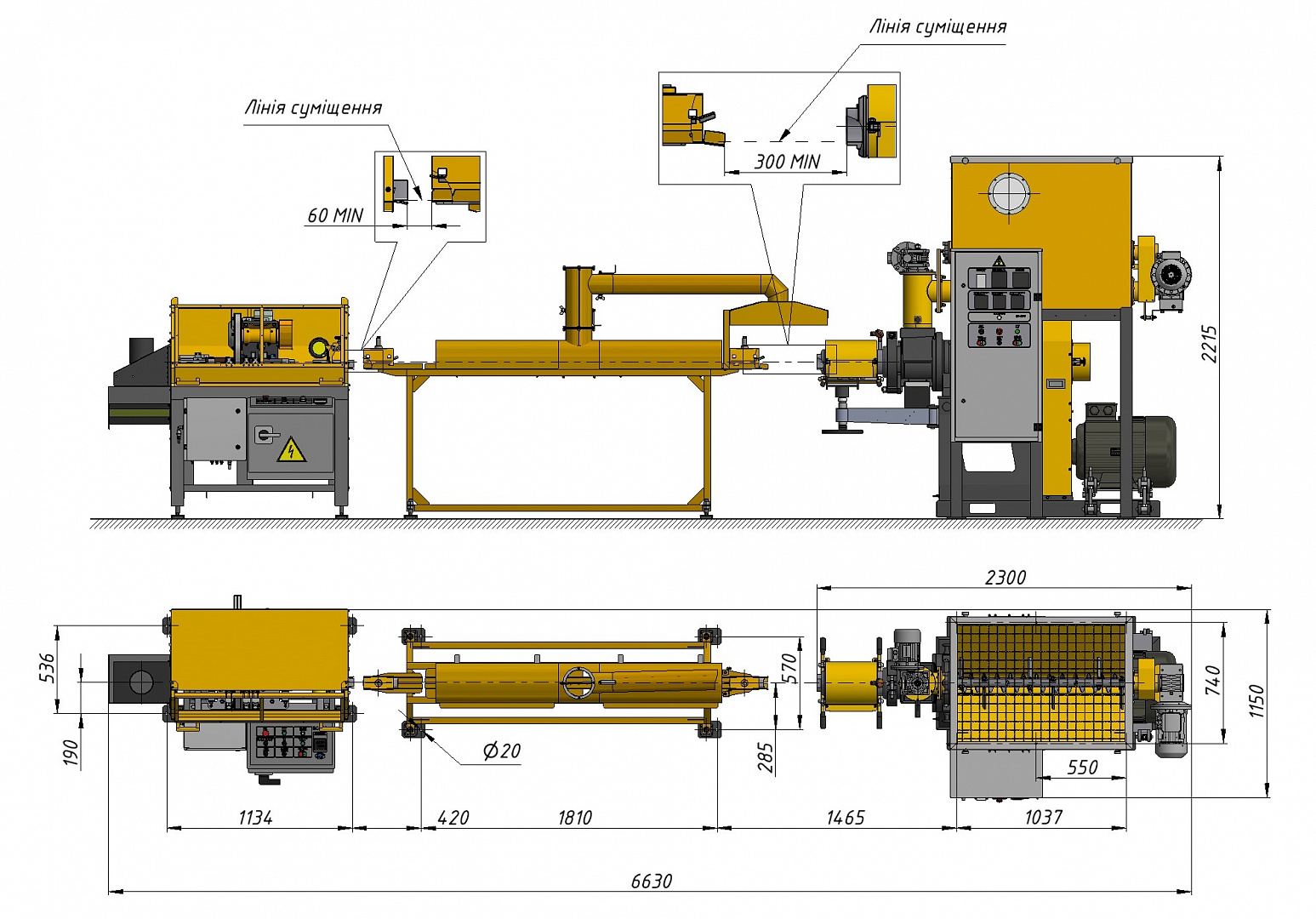
The raw material is pushed by a conical screw through the working body of the extruder.
The material is compressed to 1-1.2 t/m³ and takes shape.
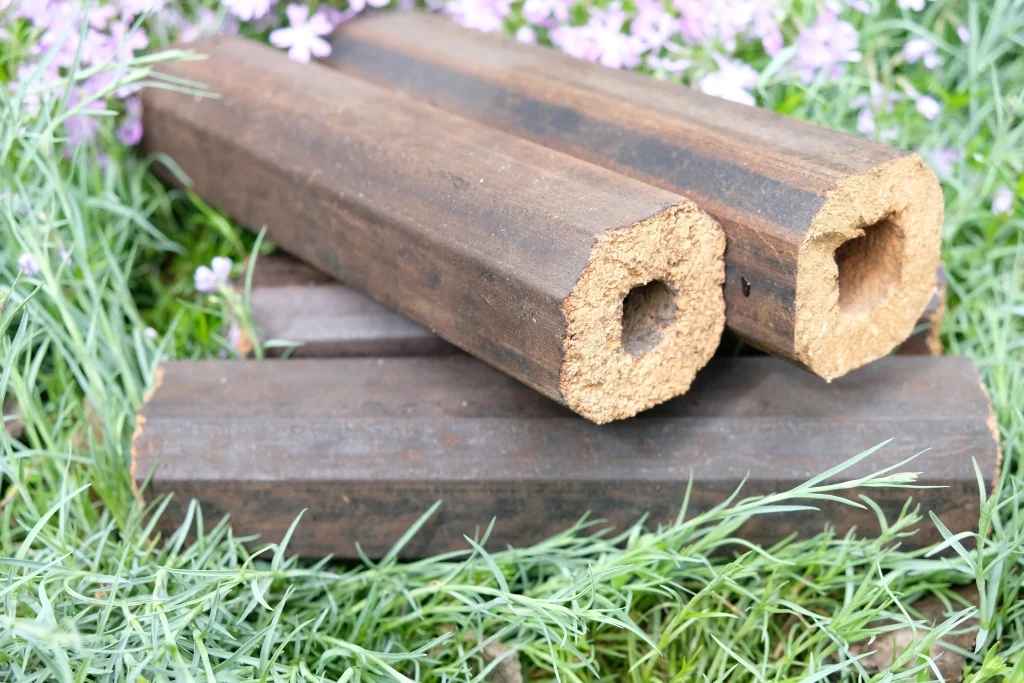
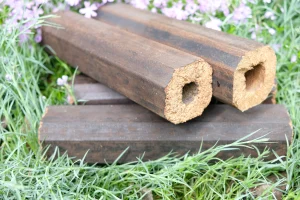
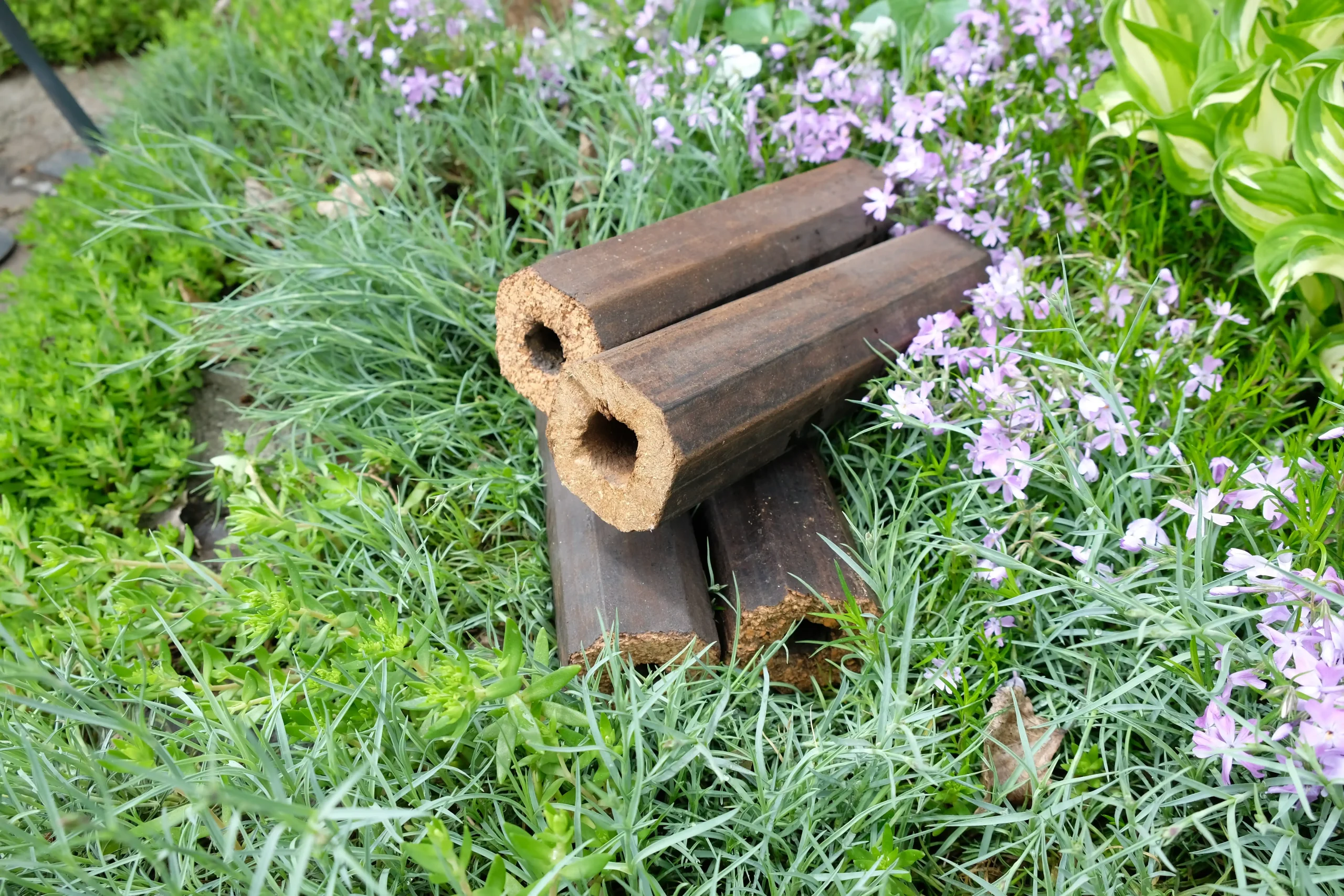
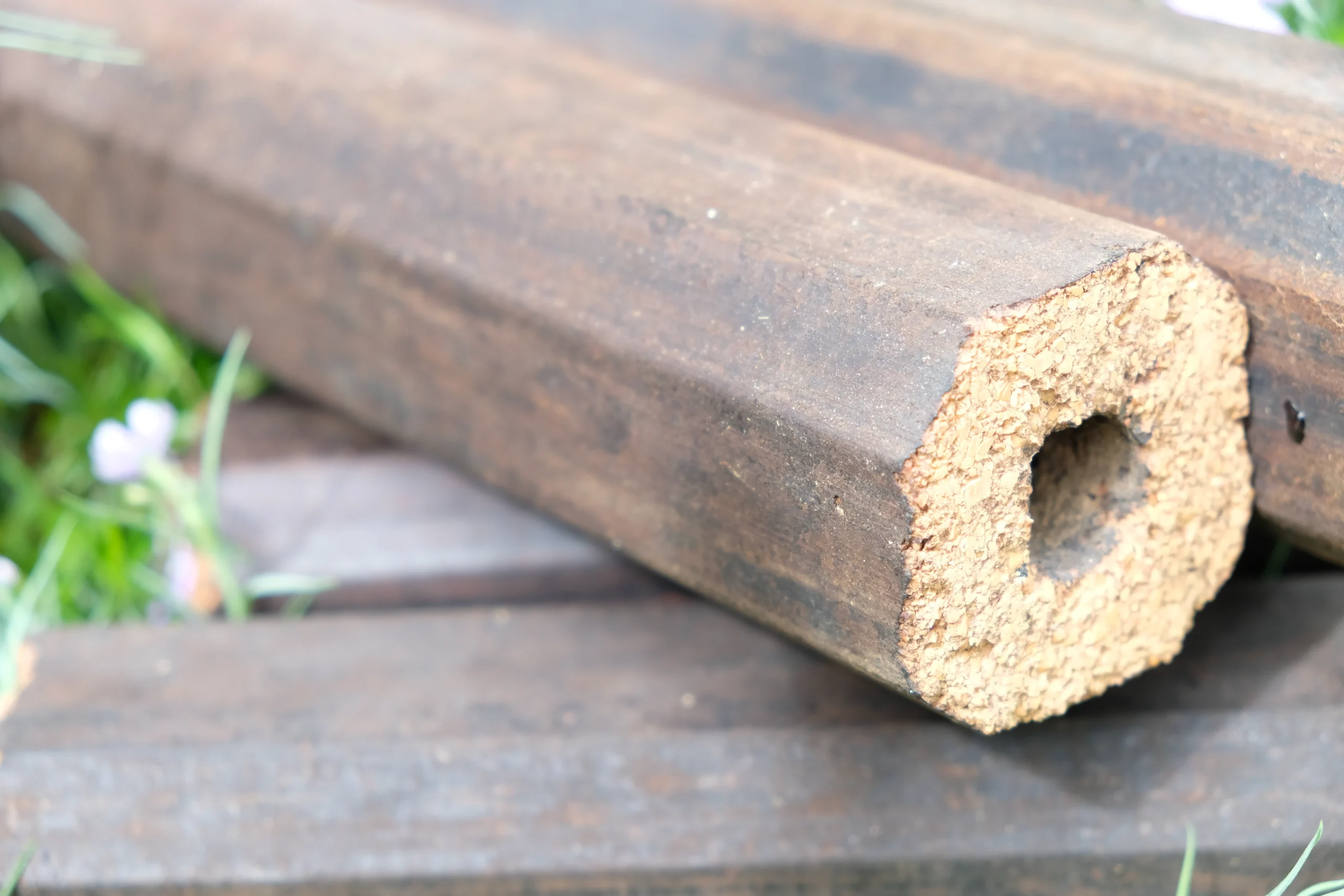
The cross-section of the briquette looks like a square 63 mm by 63 mm with chamfers and a 10-15 mm hole.
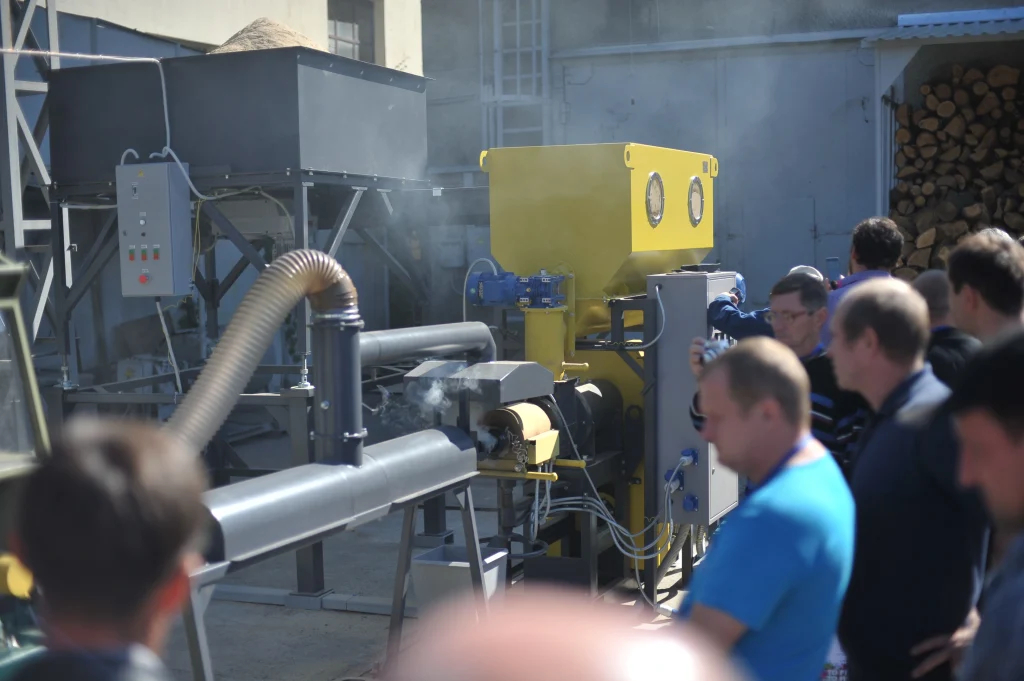
The fuel briquette moves along a square channel and is burned with furnaces. The processing temperature is 180-300 ºС.
This is done to separate lignin from plant raw materials.
This natural polymer glues the surface of the briquette, prevents moisture from penetrating, and makes the product resistant to destruction during transportation.
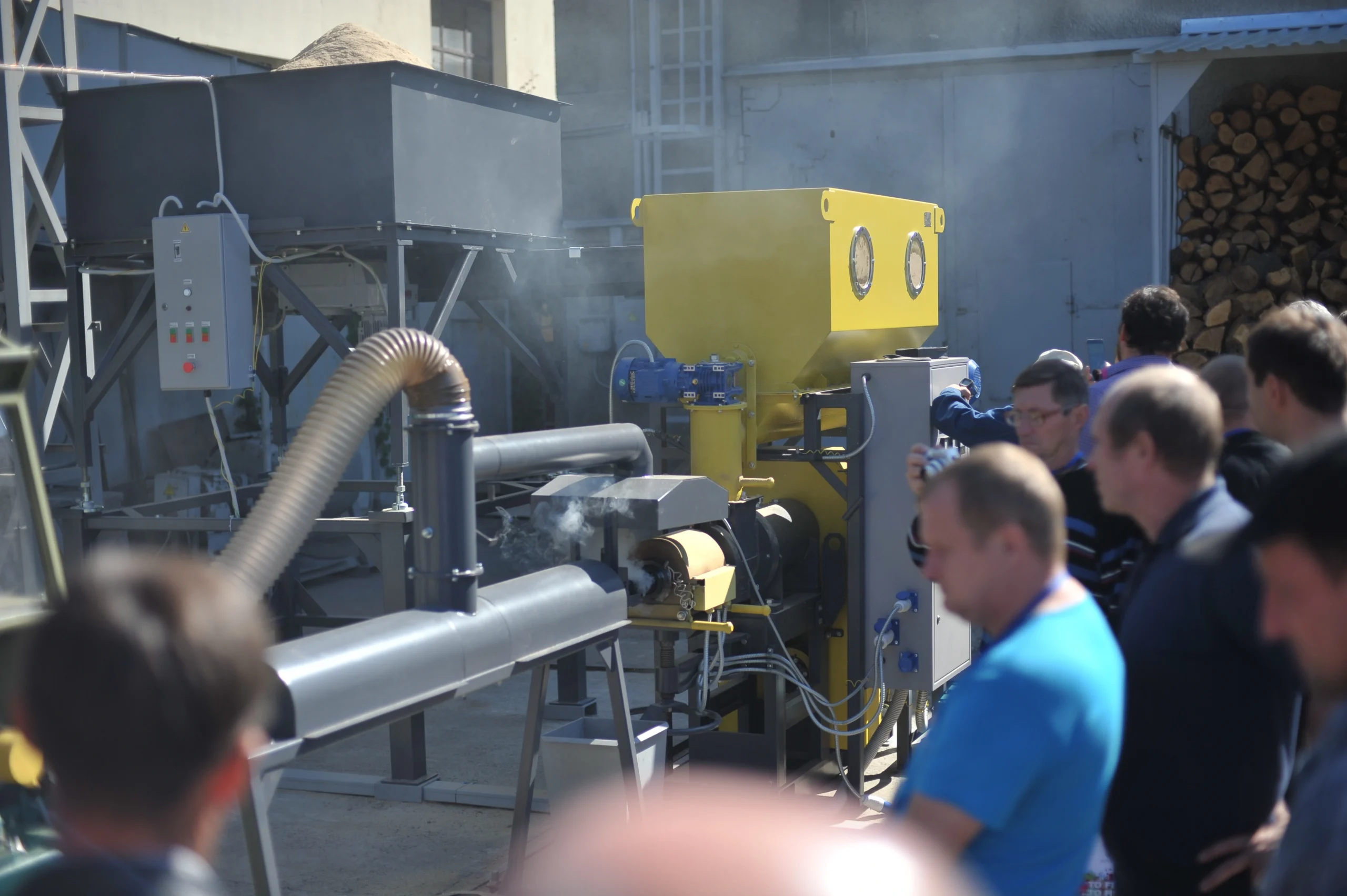
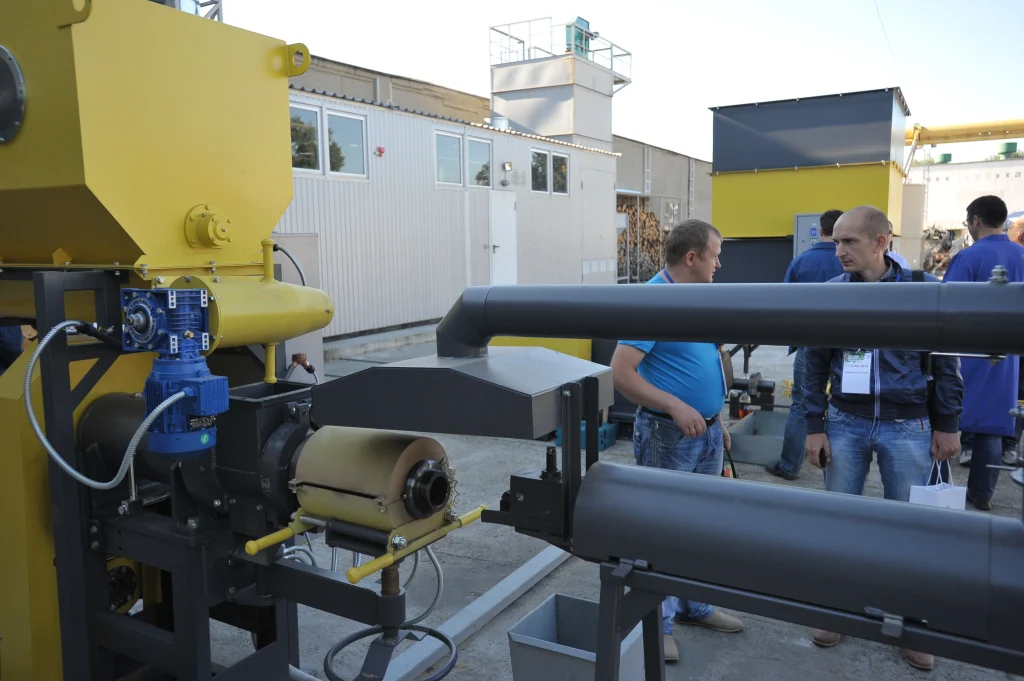
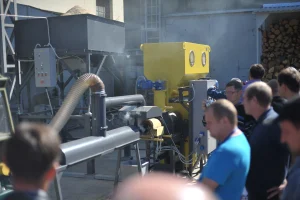
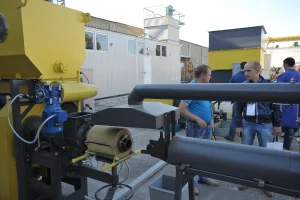
The biobriquette leaves the working body and moves along the cooler.
Clamps are mounted on the cooler.
They regulate the specific gravity of the fuel briquette during molding.
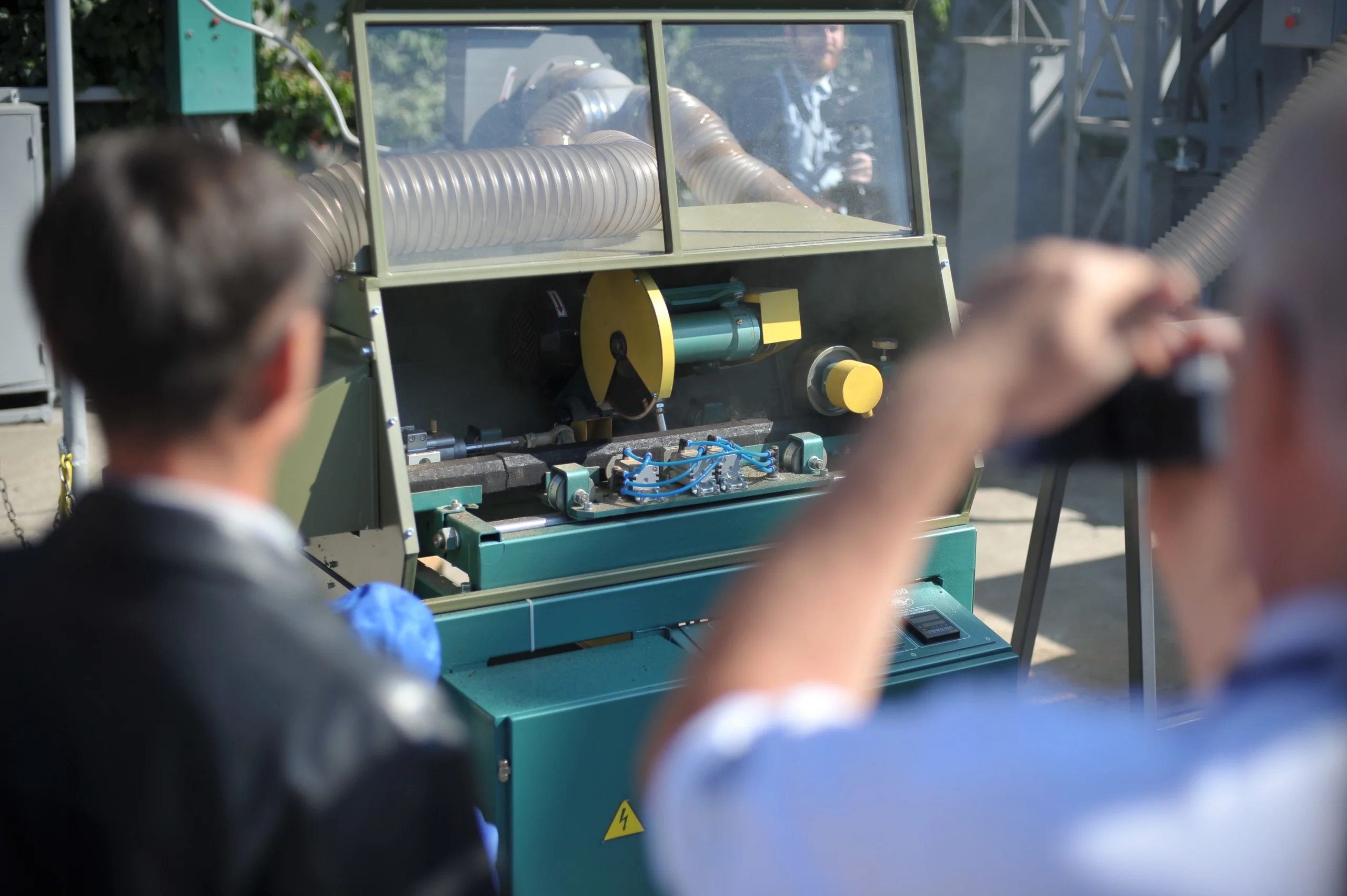
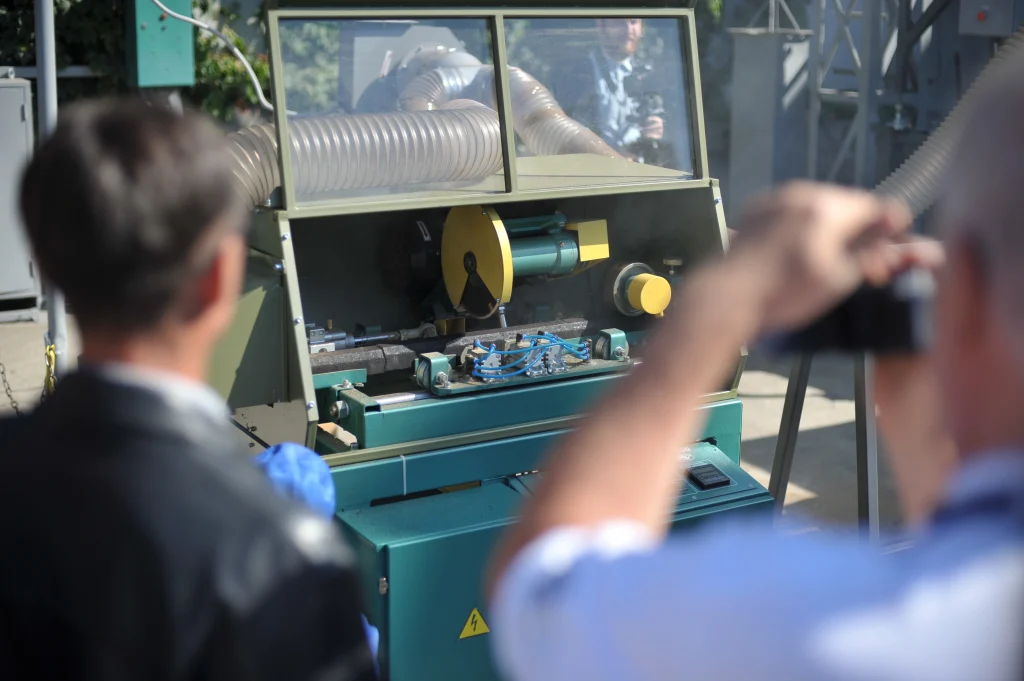
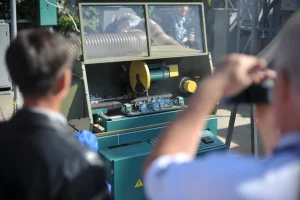
From the cooler, the briquette enters a mechanical divider or an AUTOMATIC TORCULATING DEVICE.
Here the length of the briquette is formed.
After cutting, the briquette is sent for cooling.