Technology and Equipment for Integrated Soybean Processing
Why process soybeans?
let's figure it out
We manufacture equipment, complete soybean processing production lines and support our products through technical representatives in 23 countries around the world. Our scheme allows for the sequential separation of soybean hulls, extrusion of soybean kernels, pressing of oil from full-fat soybeans and cooling of soybean meal with an oil content of 7-8%.
Why process soybeans?
Processing purpose: High-value protein
The main benefit of processing is to obtain products with a high content of digestible functional protein. Processing concentrates the protein by removing non-protein substances (such as oil).
Solving the problem of antinutrients
Raw soybeans contain trypsin inhibitors, anti-nutrients that block protein absorption.
Our solution is a short-term high-temperature pressure treatment in a soybean extruder. This process effectively reduces the trypsin inhibitor content, making the protein bioavailable.
Advantages of your own recycling
Our own processing plant guarantees feed consumers:
- Maintaining high protein conditions.
- Controlled, acceptable levels of trypsin inhibitors.
- Absence of non-protein impurities.
Our technology: Machining without compromise
There are two main methods of processing soybeans: extraction (chemical) and mechanical.
- Extractive processing uses chemical reactions (solvents) to extract fats.
- Mechanical processing (our method) uses crushing, sorting, grinding, compression, and high-temperature processing.
We manufacture equipment and complete lines specifically for mechanical processing of soybeans.
These methods can be combined: first, the oil is mechanically pressed to a cake (7-8% oil content), and then the meal is chemically obtained (0.5-2% oil content).
Technological chain “BRONTO”
Our equipment is designed for:
- Soybean processing.
- Production of soybean meal with oil content up to 8%.
- Production of soybean oil.
The process looks like this:
- Soybeans
- Soybean hulling
- Soybean kernel extrusion
- Mechanical oil pressing (oil and full-fat soybeans)
- Cake cooling
- Soybean meal settling in soybean oil
Our technology allows us to reduce the oil content of the cake to 7-8% in one pressing. The resulting cake can also be used as a raw material for the production of soy protein snacks.
Key requirements for a successful project
For a successful project launch, it is critical to adhere to clear requirements for both raw materials and premises.
Raw material requirements: optimal humidity for maximum oil yield – 8-9%; content of foreign impurities – no more than 3%; mandatory preliminary cleaning, drying and, if necessary, fractionation.
Requirements for production premises: a power line with a capacity of at least 145 kW; effective exhaust ventilation with a capacity of at least 2500 m³/h. The high requirement for ventilation is justified: during processing, up to 3% of moisture evaporates from the raw materials, which when processing 24 tons of soybeans per day amounts to up to 720 kg of water, which must be forcibly removed.
The most important parameter is the moisture content of the raw material. Although for storage of soybeans the normal moisture content is up to 12%, processing such raw materials is extremely inefficient. Processing soybeans with a moisture content of 12% (instead of 8%) will lead to sad consequences: the oil yield will decrease by 4-5%, the protein content in the meal will be lower by 3-4%, and the residual oil content of the meal will be 10-12% instead of the target 7-8%. Thus, proper drying to 8% allows you to increase oil production by 0.7-0.9 tons per day (for a 24 t/day line).
Efficient operation and quality control
Operating mode and loading
Our equipment is designed for continuous operation. It is much more efficient to start the line and work 40 hours without stopping than to start and stop the equipment 5 times a week. For effective loading, a minimum of 450 tons of soybeans per month is required.
Quality control
Regularly monitor urease activity – this is the main operational method for assessing trypsin inhibitor content and overall meal quality.
Target value: 0.05 – 0.2 pH.
- If the pH is > 0.2: The treatment was insufficient, the trypsin inhibitor content remains too high.
- If the pH value is < 0.05: The protein has been subjected to excessive heat treatment (“overcooked”) and has lost its functional properties (solubility, fat- and moisture-binding capacity).
A pH of 0.05–0.2 indicates high protein conditions in the produced meal.
Cost and implementation of your project
What does the cost consist of?
When processing soybeans, the main operating costs are electricity, wages (min. 2 employees), and consumable parts of the extruder and press.
The total cost of the plant (capital expenditure) consists of:
- Complete set of production equipment.
- Complete set of transport equipment (lifts, conveyors).
- Costs for connecting electricity sources.
- Preparation of production premises and warehouses.
- Automation and line control systems.
- Laboratories (for monitoring humidity, fats, protein and urease).
We suggest consulting with our specialists to calculate the cost of your project, as it depends on many features (raw materials, product requirements, logistics, premises, energy sources).
Project implementation procedure with “BRONTO”
- Goal: Organize the production of high-quality soybean meal and oil in your production facilities.
- Task: Adapt our technological scheme to your buildings, territories, logistics and energy resources. This will reduce the costs of creating and further operating the plant.
The project implementation procedure with “BRONTO” aims to adapt our technological scheme to your unique conditions (buildings, logistics, energy resources) to reduce costs. We offer a “Component Solution” service, which includes a specialist visit, production of a line sketch at your premises and preparation of an accurate equipment list.
“BRONTO” Warranty and Global Support
Launch and warranty
- Setup: We are ready to perform a full setup and launch of BRONTO equipment at your site.
- Warranty: Warranty period is 1 year. Our production is certified according to ISO 9001. Our machines are designed for continuous and trouble-free operation.
Post-warranty and technical support
We provide full support at all stages. We are ready to perform setup and launch of BRONTO equipment at your site. The warranty period is 1 year. Our production is certified according to ISO 9001, and the machines are designed for continuous operation. After the warranty period, we will definitely continue to support the sold equipment, supplying spare parts and performing maintenance. Continuous technical support is provided by our regional technical representatives in 23+ countries around the world.
Ongoing technical support is provided by our regional technical representatives in Argentina, Egypt, Algeria, Kenya, Nigeria, India, Serbia, South Africa, Romania, Thailand, Hungary, Poland, Greece, Brazil, Moldova, Italy, Slovakia, Belarus, Great Britain, Spain, Uzbekistan, Germany, Ireland and Iran.
it might be interesting
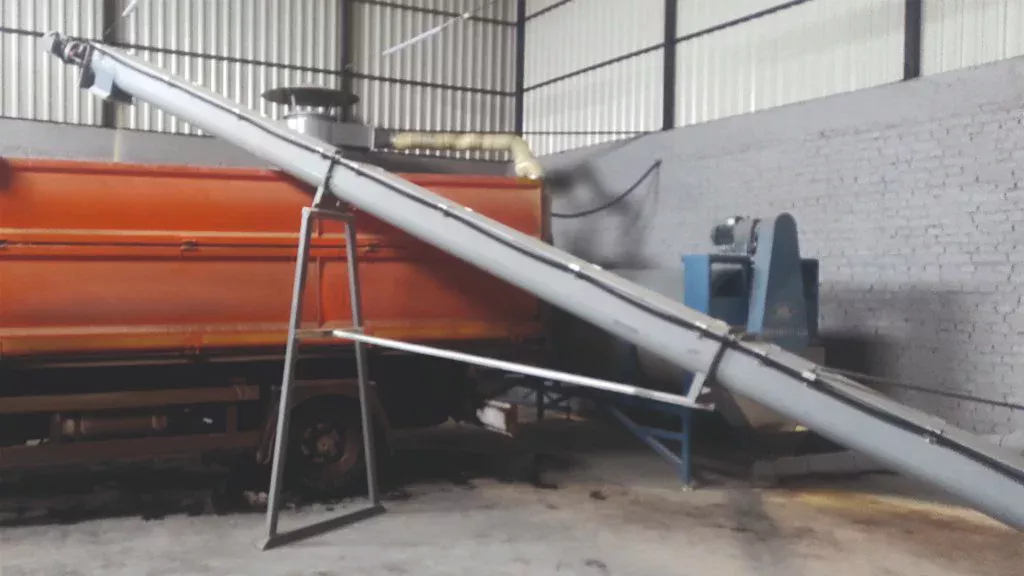
What to do if the cake has too high a residual oil content? Analysis of typical mistakes
Are you no longer satisfied with the oil content of soybean meal? What can you do to return to 7-8% oil content?
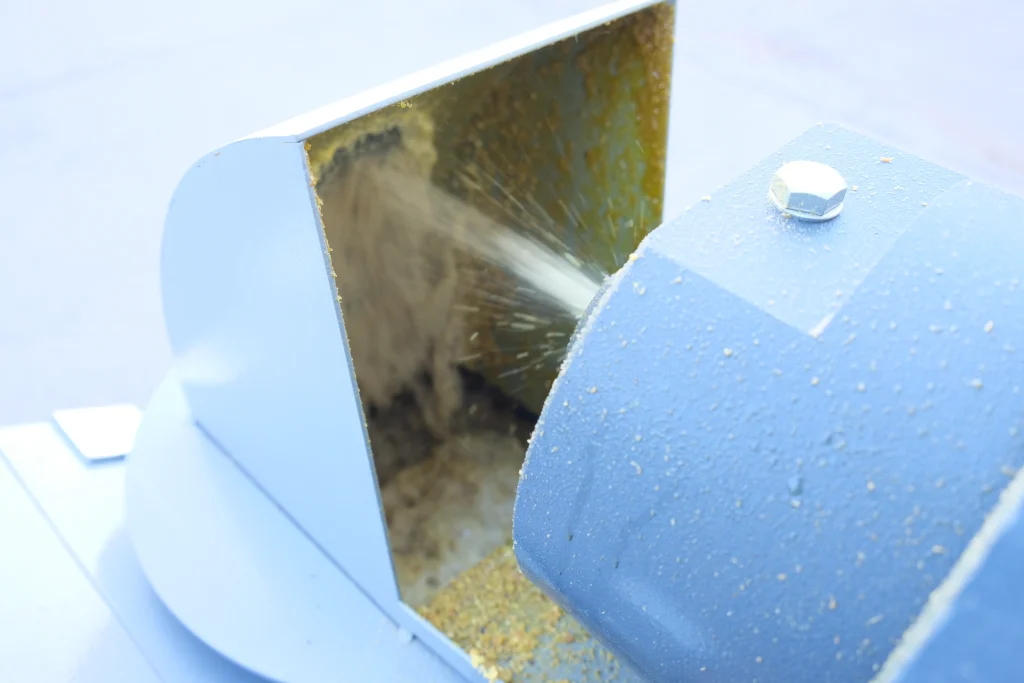
Soybean Oilcake vs. Soybean Meal.
At first glance, soybean oilcake and soybean meal appear to be similar products: both are by-products of soybean processing and a valuable source of protein for animal feed. However, their production technology differs significantly, which directly affects nutrient content, digestibility, and cost-effectiveness.
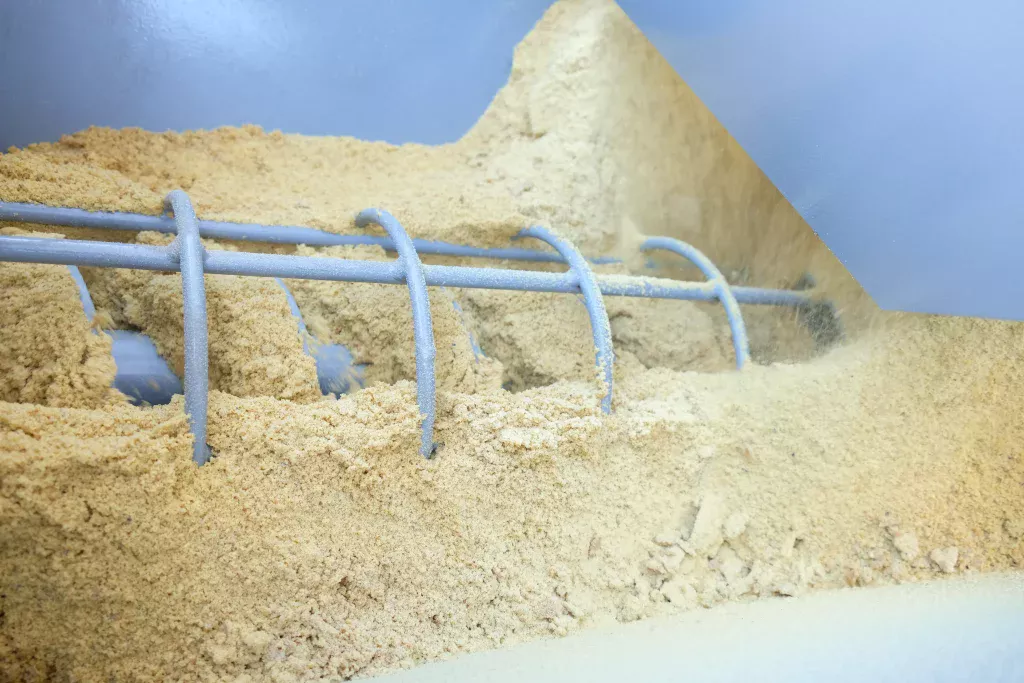
Soybean oil production technology
Soybean oil is one of the key and most liquid products on the global agro-industrial market. It is a strategic raw material that forms the basis of many industries: from feed and food industries to pharmaceuticals, perfumery and biofuel production.

How to sell soybean processing equipment in Latin America
South America is the global epicenter of the soybean industry. Today, Brazil and Argentina grow three times more soybeans than the United States. In order to enter this market with processing equipment and gain a foothold in it, the manufacturer must first prove its quality and reliability in practice under conditions of intensive loads. Competition in this region is high, so buyers choose suppliers very carefully.