
equipment production and assembly

up to
12 t/d
chemical free
long shelf life

up to
18 t/d
protein content up to 42%
oil content up to 7-8%
We manufacture machinery that seamlessly integrates into a complete mustard processing line, tailored to meet our clients’ specific needs.
Main steps:


Energy-efficient mustard processing technology: from raw material to high-quality protein and oil
Our technological scheme is designed to maximize the benefits from every ton of mustard seeds. We offer a comprehensive solution that ensures stable output quality of oil and premium cake quality for animal feed.
Thermal preparation: An automatic system heats the raw material to 10–15°C in cold seasons. This stabilizes the technological process and prevents oil loss due to temperature fluctuations.
Preliminary cold pressing: Primary oil extraction in a screw press at up to 60°C. This approach preserves the product’s natural vitamin content and low acid number.
Extrusion (or toasting) and final pressing: Fat-rich cake (oil content 25–30%) is heated to 110–130°C.
This ensures:
Purification and storage: Oil passes through a purification system (separator or filter press) to remove impurities, then is pumped into storage tanks. Cake is cooled to a safe temperature and transported to floor storage.
Output result: High-protein cake with protein content of 34–36% and low residual oil content—only 8–10%.
Having your own processing line means moving from selling raw materials to selling high value-added products:
High product yield: From 1 ton of mustard seeds, you get 330–380 kg of natural vegetable oil (depending on seed oil content)
Protein concentration: The protein level in the output material significantly increases in the finished cake (compared to the original raw material), making it a valuable component of compound feed
Safety guarantee: The extrusion/toasting process ensures microbiological purity of the cake and absence of foreign impurities
Want to calculate the payback of a line for your farm?
To ensure maximum line productivity and oil yield, mustard seeds must meet the following criteria:
Optimal moisture: 7–8% (critical for quality pressing)
Cleanliness: mandatory removal of light and heavy impurities
Impurity content: no more than 2-3%
We don’t just sell machines—we implement ready-made business models:
Specialization: We professionally design lines specifically for oilseed crops, considering the specifics of working with small-seeded mustard
Global support: We provide service, commissioning, and spare parts supply through official representatives in 23 countries
Reliability: Our extruders and presses are designed for round-the-clock operation in demanding conditions
Our equipment meets your space
Making a layout ahead of time helps you picture the project. It also gives you a clear idea of what is needed for construction, where equipment will go, how much energy will be used, and how materials will move through the facility.
It helps answer these questions:
Includes:
 EXPERTS
We ensure this
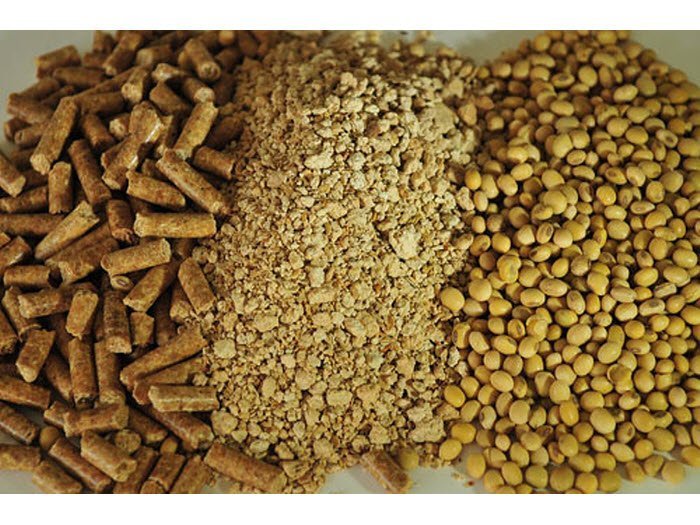
One of the key limiting factors in improving compound feed quality is the deficit of protein raw materials, a replenishable source of which is the grain of leguminous crops. Legumes (lupines, vetches, field beans, field peas, soybeans, chickpeas) contain 25% to 40% protein, 37–45% starch, 1.5–4.5% fat, vitamins, and micronutrients. The proteins of leguminous crops are characterized by good solubility: water- and salt-soluble fractions account for 70% to 90% of the protein. The amino acid profile includes all essential amino acids, with methionine + cystine being the limiting amino acid. Seeds of vetch and field beans have lysine as their second limiting amino acid.
The market for pet food (dogs and cats) is one of the most dynamic and profitable segments of the feed-milling industry. While the profitability of traditional compound feed for farm animals typically ranges from 5% to 15%, the production of dry pet food achieves a profitability of 50% to 250%.
There is currently frequent discussion regarding lowering the upper limit of permissible urease activity to 0.050 pH units.

A common question arises: How long does it take to fill and empty the MOS-500 mechanical oil separator?
EXPERTS

