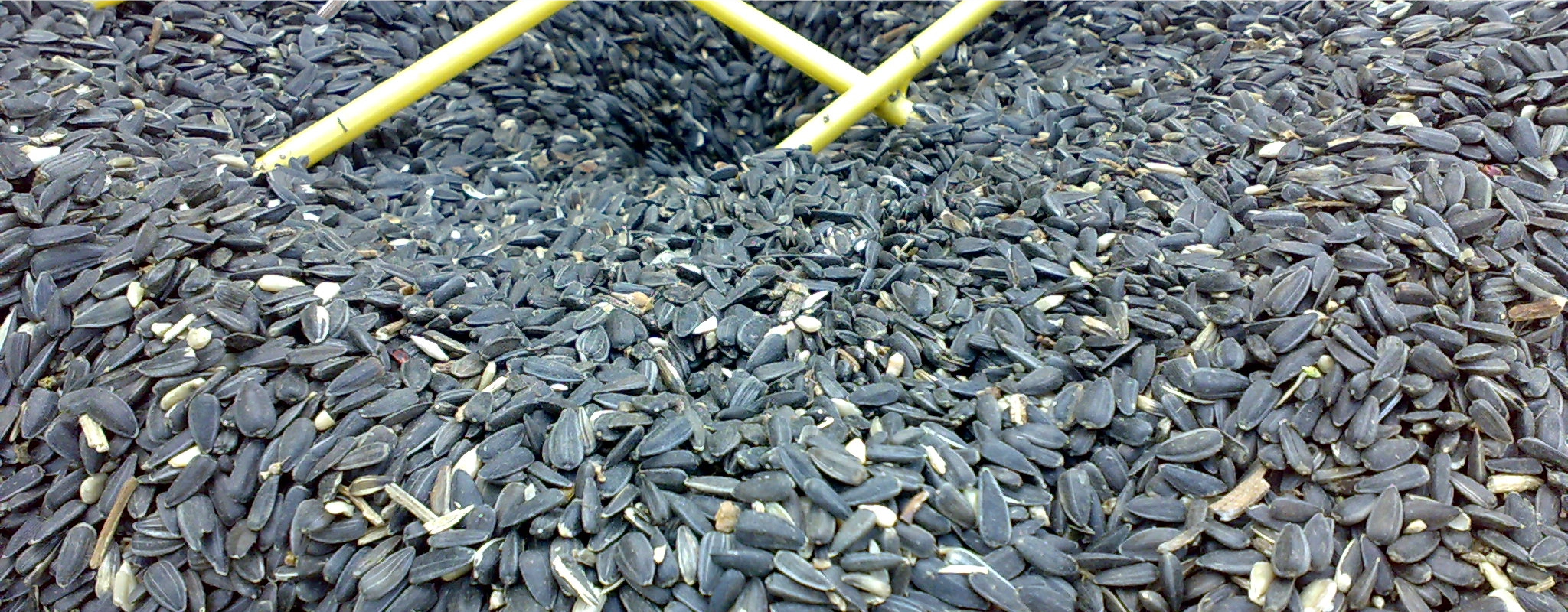
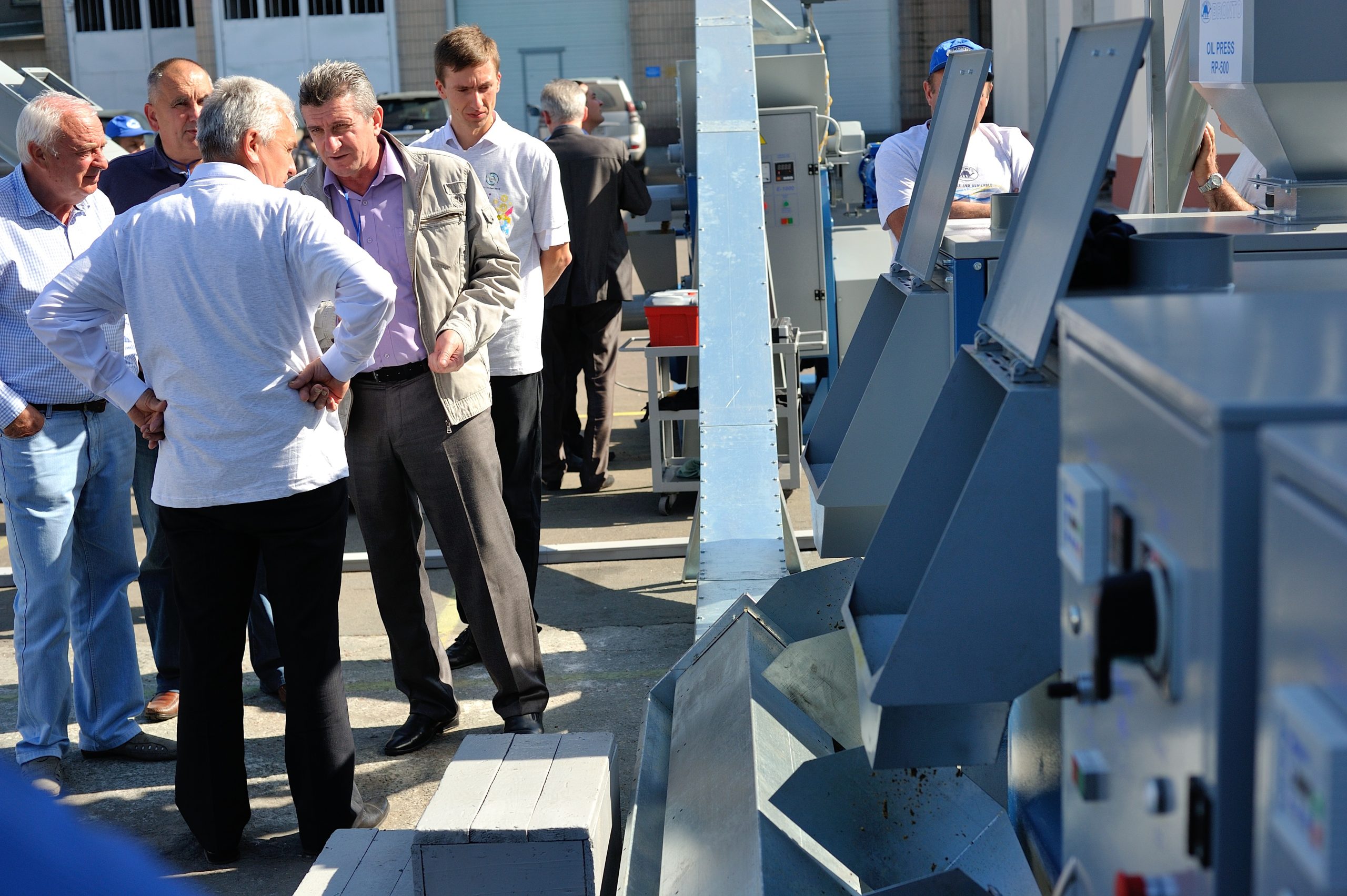
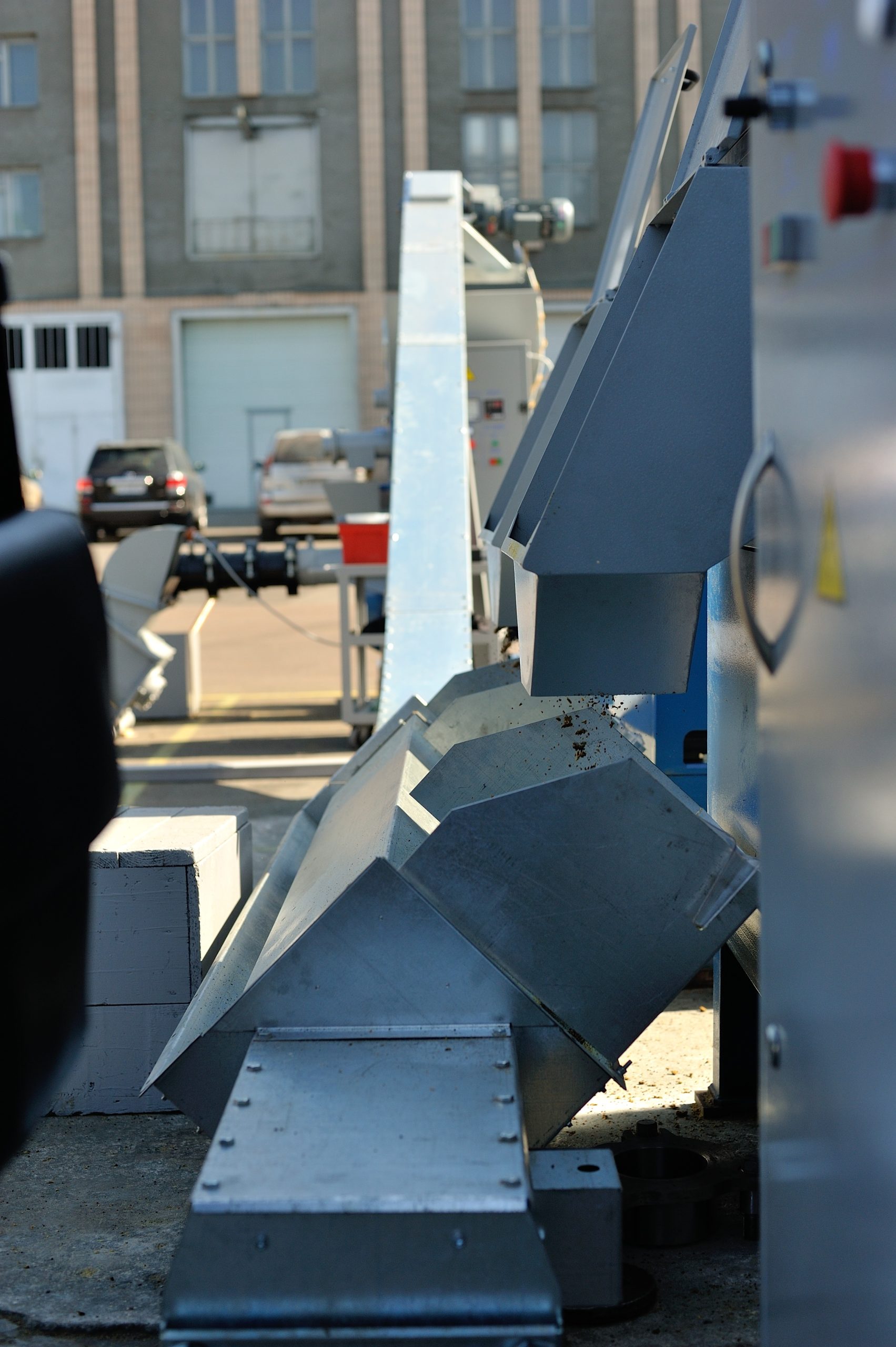
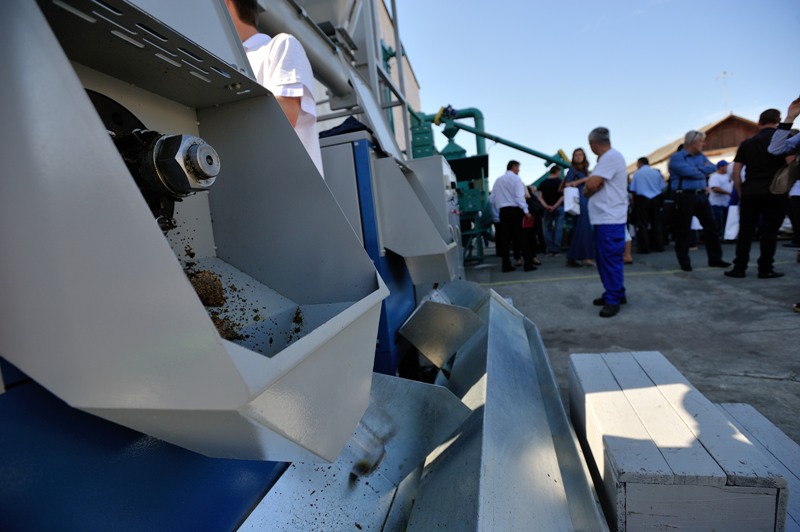
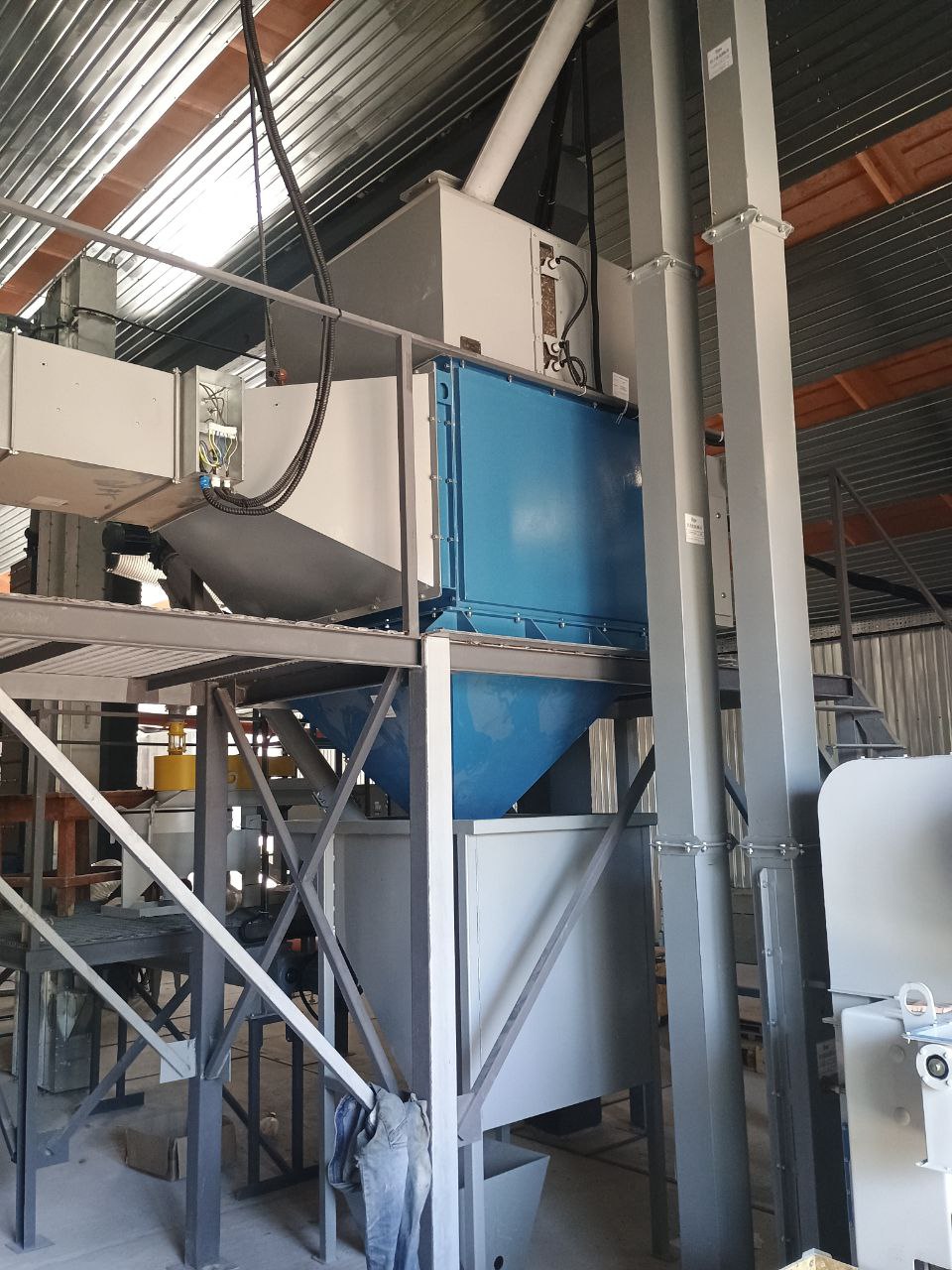
The seeds are cleaned, crushed and separated.
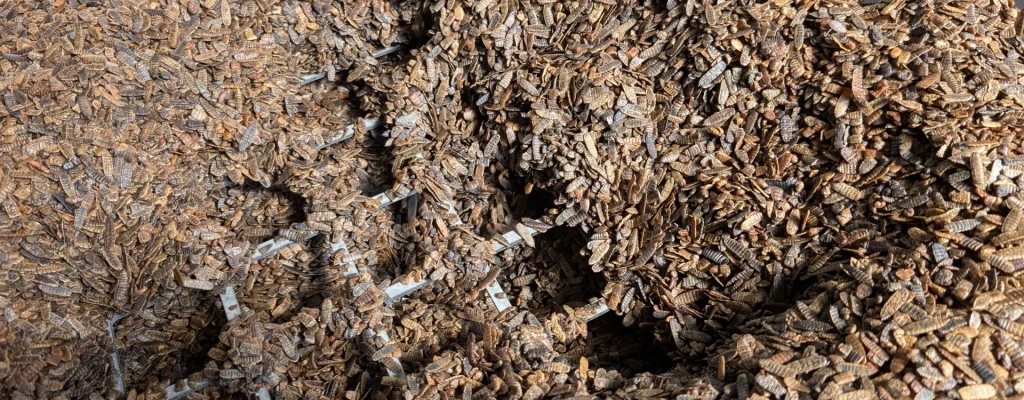
The resulting product passes through a rolling machine: sunflower mint is made.
Mint is fed into storage tanks of the sunflower processing line.
Technological process
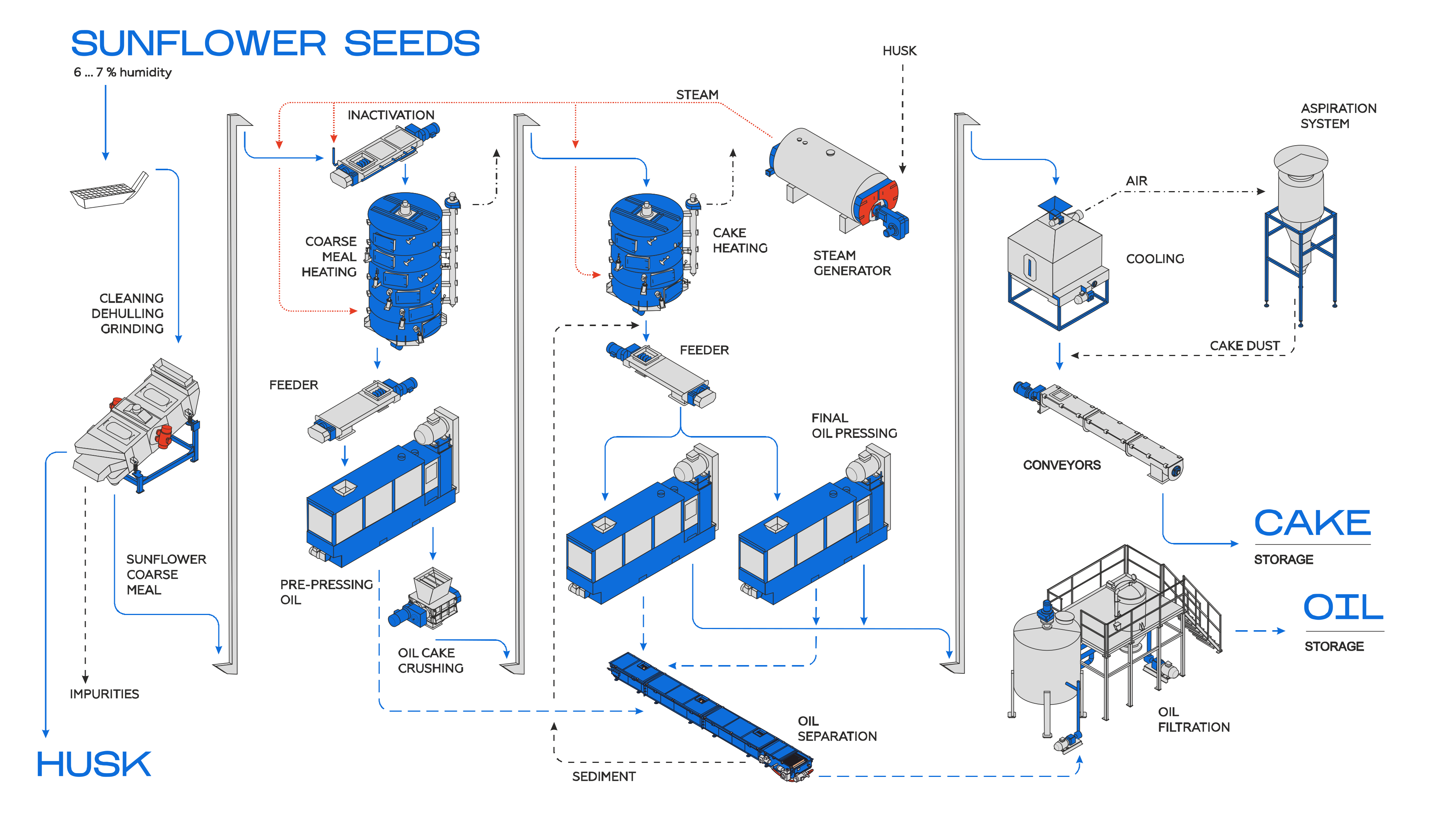
The technological process of mechanical extraction of oil begins (without the use of chemical reagents) according to the scheme:
- Warm up;
- Spin;
- Overheat;
- Hold;
- Clean;
- Cool.
Raw materials are taken from storage tanks:
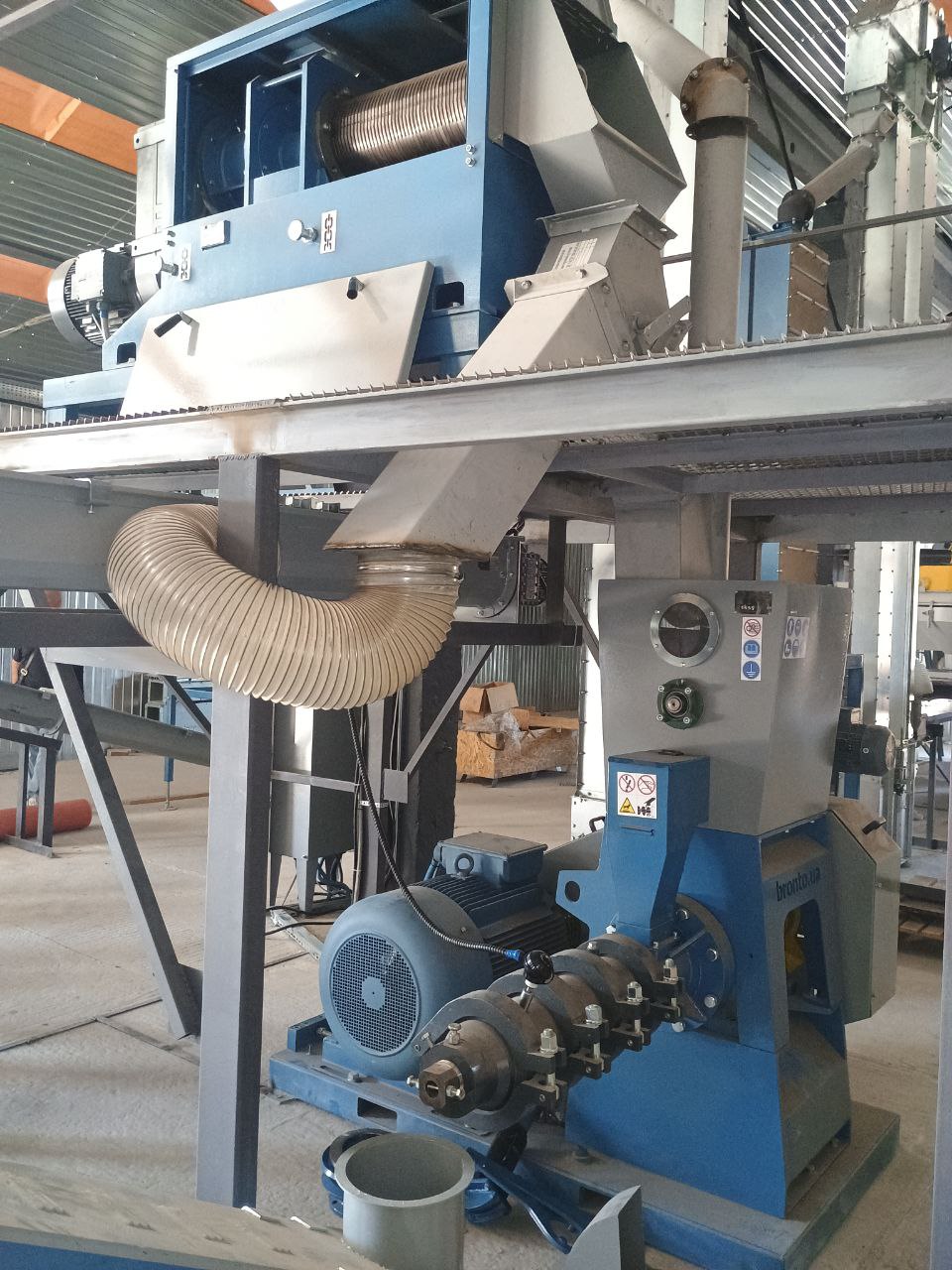
feeder-preconditioner (with water and steam input system)
Preconditioning ensures that the humidity and temperature of the mint is brought to standard indicators:
humidity – 12.5%
temperature – min 15 °C
The feeder-preconditioner controls the amount of raw material supplied to the upper, steaming tank of the first roaster. Level and temperature sensors are installed in this tank, which turn on and off the preconditioner feeder, steam and water supply.
In the first roaster, raw materials are moved, mixed and poured over the vats from top to bottom. Steaming takes place, heating the mint to 115 °C and roasting to 6% moisture.
The sunflower seed is taken from the lower tank by a feeder with frequency control of shaft rotation.
The feeder controls the amount of raw material supplied to the first press depending on the load of the electric motor of the press.
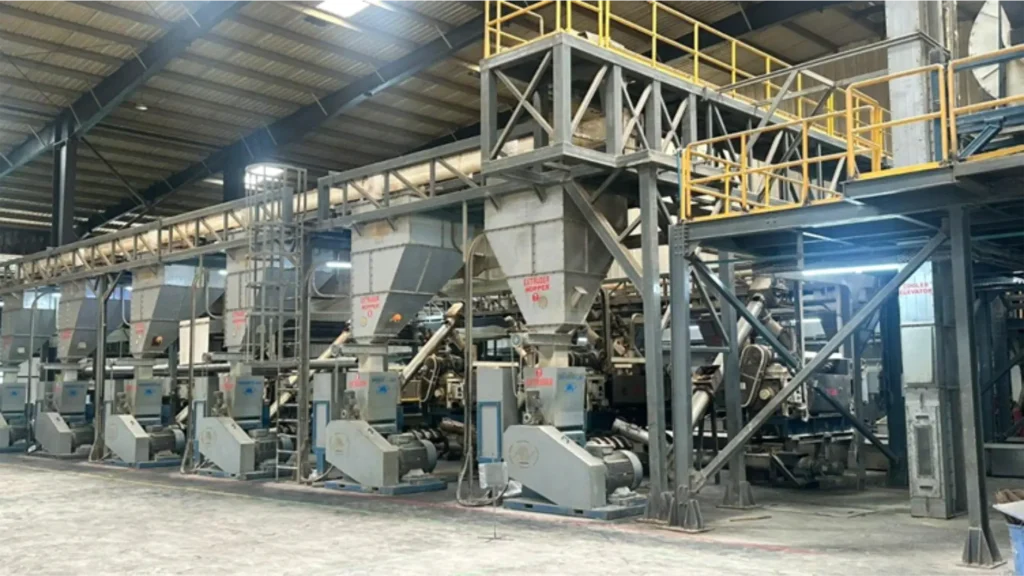
In the first press (forepress), oil is preliminarily squeezed out of the mint through the gaps in the seer chamber with the help of a screw shaft. The product is a semi-defatted sunflower cake with an oil content of 22 … 26%.
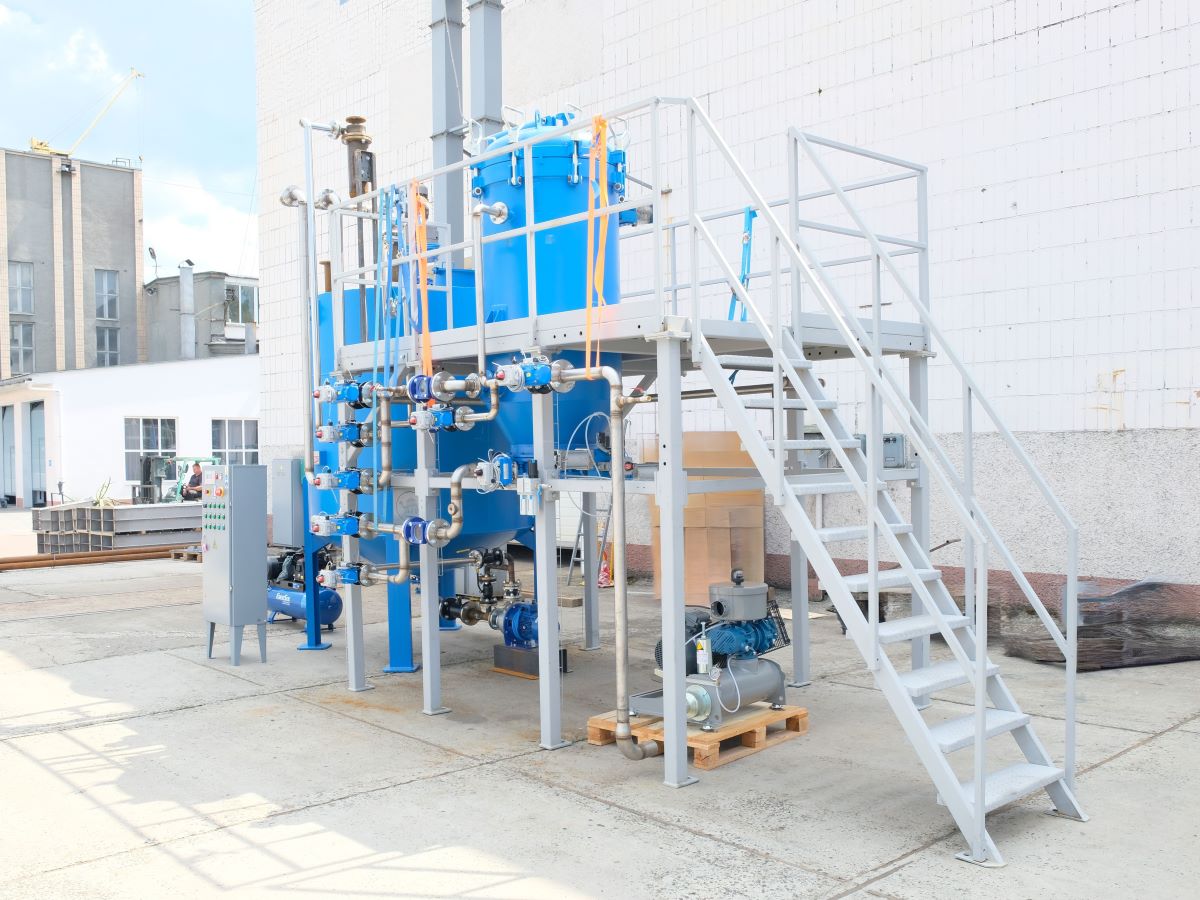
The resulting cake is sent for grinding, and pressed sunflower oil – for preliminary cleaning in a thickener, filtering and storage before shipment.
The crushed cake is fed to the second frying pan for reheating.
The preheated sunflower cake is taken from the lower tank by a feeder with frequency control of shaft rotation.
The feeder controls the amount of raw material supplied to the second press – depending on the load of the electric motor of the press.
In the second press (expeller), the final extraction of oil from the cake takes place. The product is a sunflower cake with an oil content of 8 … 10%.
The cake is sent for cooling, and the pressed sunflower oil is sent for pre-cleaning in a thickener, filtering and storage before shipment.
Cooling the cake in a cooler is a process necessary to prevent protein caking and preserve the nutritional condition of the cake during storage before shipment.
Cooled to a temperature of max 40 ± 5 °С, it is served for storage.
The actual structural solution of the technological line of the technical characteristics of the equipment, drew attention to the fact that
For the effective operation of the actual layout solution of the process line, it is necessary to ensure sufficient steam generation and provide an aspiration system that will allow regulating the removal of moisture, heat and dust from the equipment.
Our support for your project
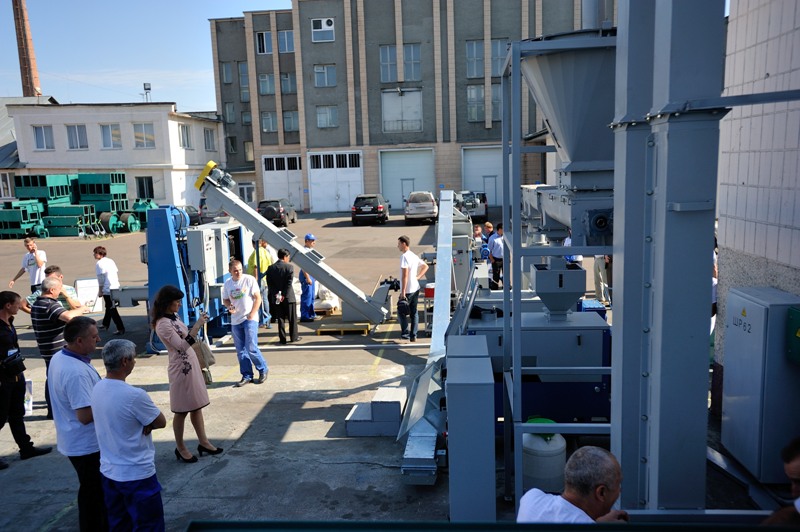
Our company provides consulting support during the installation of equipment and its connection to the power grid. After completion of these works, we can perform commissioning of the line and put it into operation.
We also provide warranty support for our sunflower meal and oil processing equipment in 23 countries around the world. And after the end of the warranty period, we will gladly provide you with post-warranty support and supply of spare parts throughout the entire life cycle of the sold products (we do this in 51 countries).
Please contact our service center if you have any questions regarding the installation, adjustment or post-warranty maintenance of our equipment.