Aqua Feed Production: How to Achieve Ideal Feed Buoyancy
In modern fish farming, feeding efficiency depends not only on the composition of ingredients but also on the physical properties of the pellet. The choice between floating, sinking, or slow-sinking feed is determined by the biological characteristics of each fish species.
The most challenging to produce is slow-sinking feed (neutral buoyancy feed), which must remain suspended in the water column for an extended time, without rising to the surface or sinking immediately to the bottom.
Technology for Creating Slow-Sinking Feed
The main secret to creating feed that “slowly sinks” in water lies in controlling the degree of expansion of the raw material. To prevent the pellet from acting like a “float,” we intentionally reduce the extrusion effect:
- Lowering temperature: prevents abrupt moisture evaporation at the die exit.
- Expansion control: minimizes the formation of internal air pockets that give the pellet excess buoyancy.
This process requires utmost precision, as the result is influenced by many variables: from fat percentage and moisture content to the presence of untoasted proteins in the recipe.
Flexibility of the E-1500 Extruder Settings
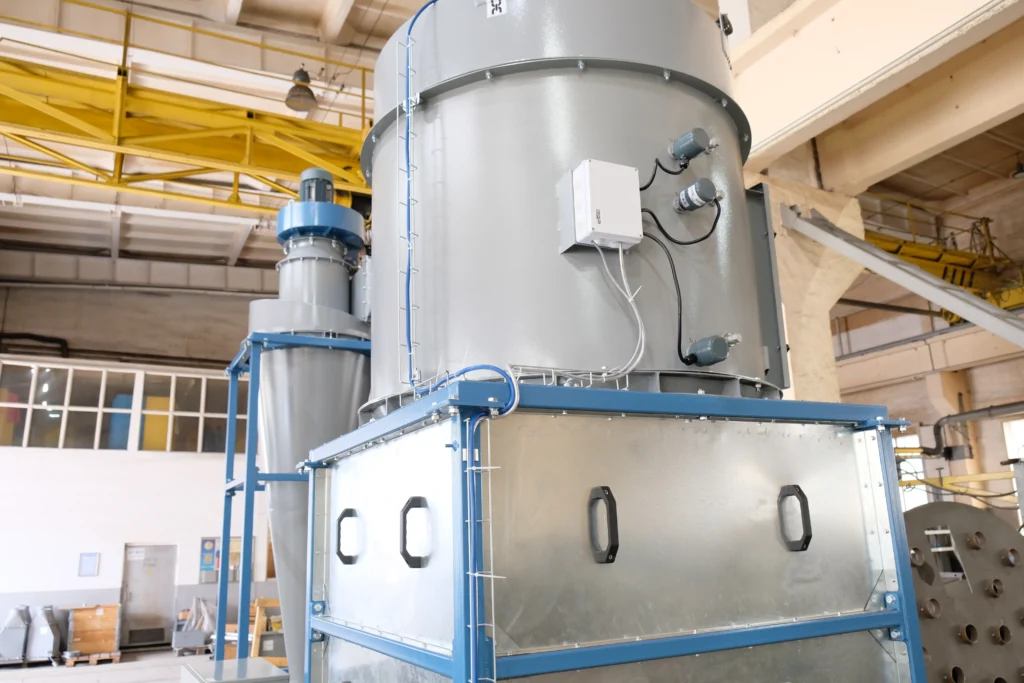
To make the production line versatile and enable the manufacturing of quality slow-sinking feed, our E-1500 extruder is equipped with three control systems:
1. Pressure Control System in the Screw Section
Allows the operator to quickly adjust the pressure inside the working unit. This enables precise regulation of pellet density—the main factor affecting its behavior in water.
2. Screw Section Cooling System
For the production of suspended feed, excess heat is an enemy. The cooling system maintains a stable temperature regime, preventing excessive extrusion swelling of the raw material and keeping the feed structure more monolithic.
3. Semi-Automatic Additive Dosing
The extruder is equipped with a semi-automatic system for dosing:
- steam and water (to control moisture and hydrothermal treatment);
- fats and liquid mixtures (directly during extrusion).
This allows the machine to be adjusted to the required recipe in real time, ensuring high productivity without loss of quality.
When Is Slow-Sinking Feed Needed?
The use of neutral buoyancy feed is critical in the following cases:
- Growing fish that feed in the middle water layers: Many species (for example, some salmonids or specific aquarium fish) do not rise to the surface or gather feed from the dirty bottom.
- Maximum absorption: Slow-sinking feed remains available to fish for longer, reducing losses of expensive raw materials.
- Water ecology: Since the feed settles to the bottom slowly, it is consumed by fish rather than decomposing in the silt. This prevents water pollution by ammonia and phosphates.
- Intensive systems (RAS): In recirculating aquaculture systems, buoyancy control improves feeding and filtration processes.
A production line based on the E-1500 is your tool for creating professional feeds that meet global aquaculture standards.